Product Overview
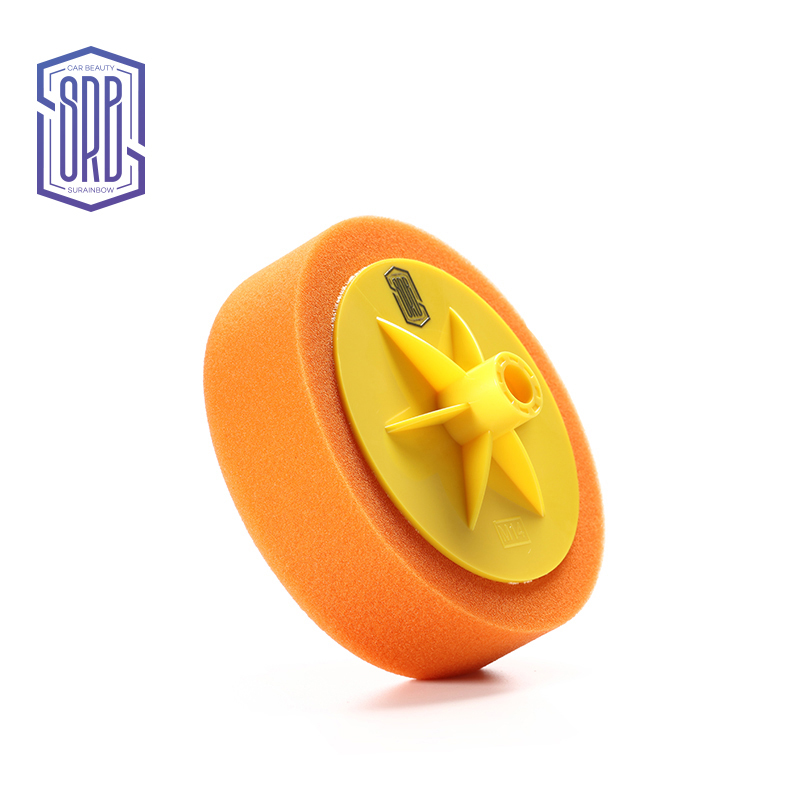
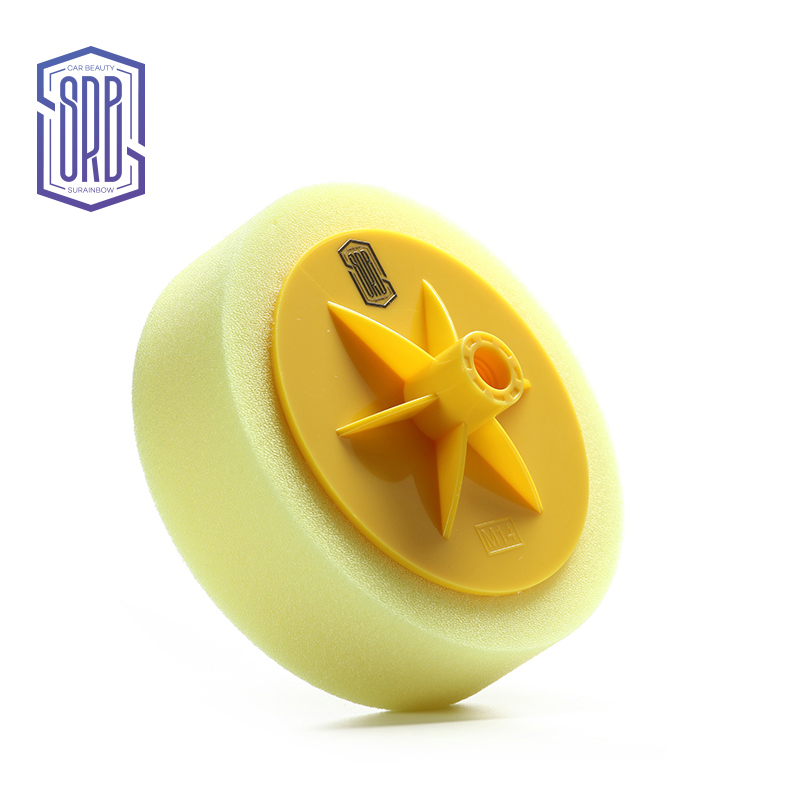
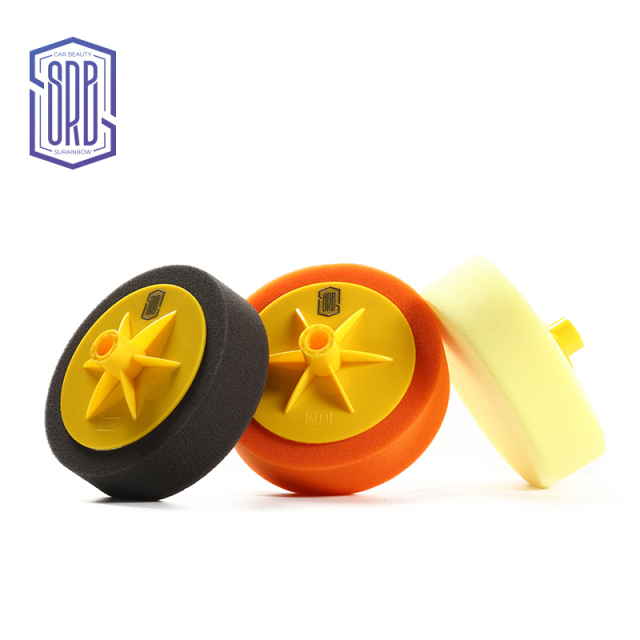
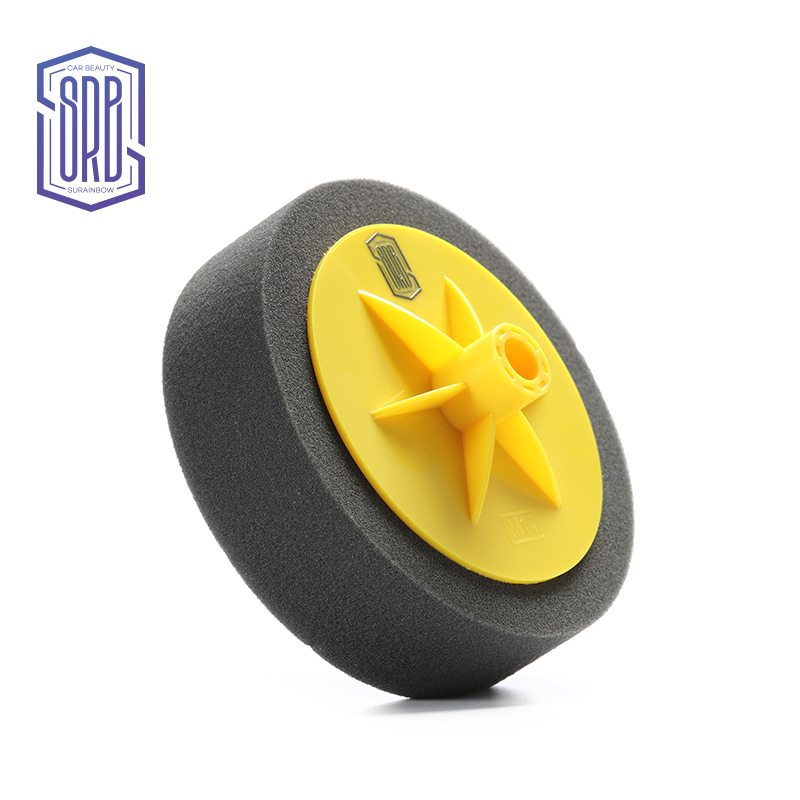
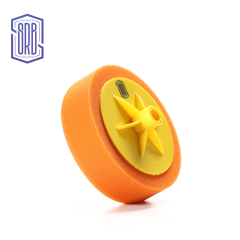
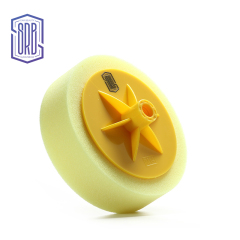
The 5.5 Inch Polishing Sponge Pad is a round disc of imported open-cell sponge bonded to a rigid yellow backing plate — the format that often gets listed as a polishing sponge ball, though the working face is flat. It exists for one part of a detail: laying wax, glaze or a cleaning product evenly across painted car body panels. As a car polishing sponge pad it sits in the middle of a working set. Five and a half inches covers a door or a bonnet in a handful of overlapping passes, and it is still small enough to follow a wing mirror or a wheel arch without running off the panel edge. It spreads product rather than working it hard. Load it with a wax, a cleaner wax, a glaze or a finishing polish and the foam carries the film across the paint; it is the tool that closes a job out, not the one that opens it. Shops take them a few at a time through the season; distributors take them to put a pad next to the wax it belongs with. Most orders arrive as a wholesale polishing sponge pad line rather than a single item, because a pad only earns its place in a kit when the product beside it does too. Wax, glaze, compound and pad ship together, and the pad has to match the step it is being bought for.
Foam, Backing and Build
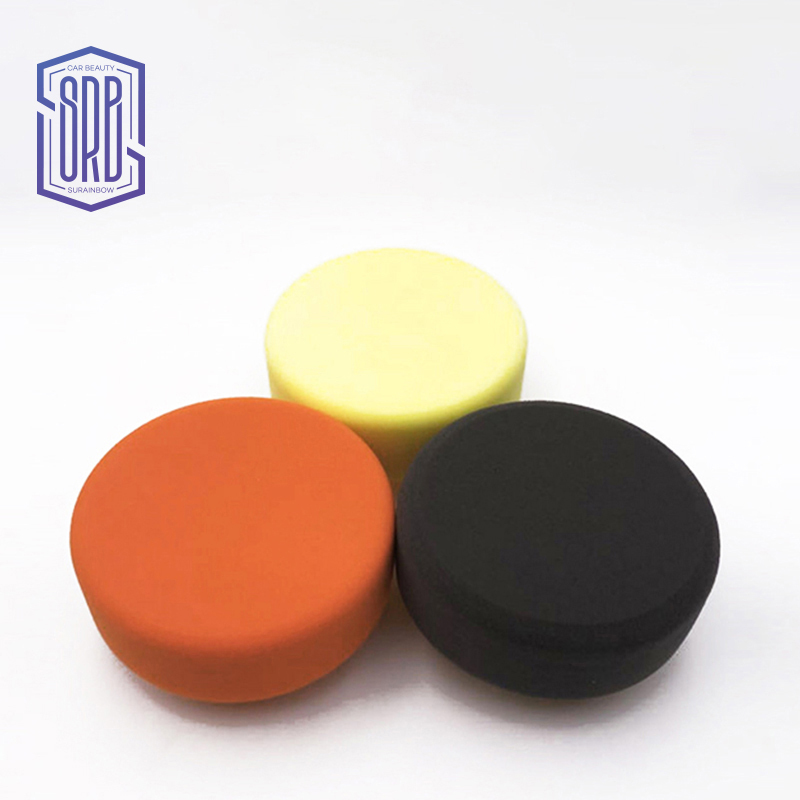
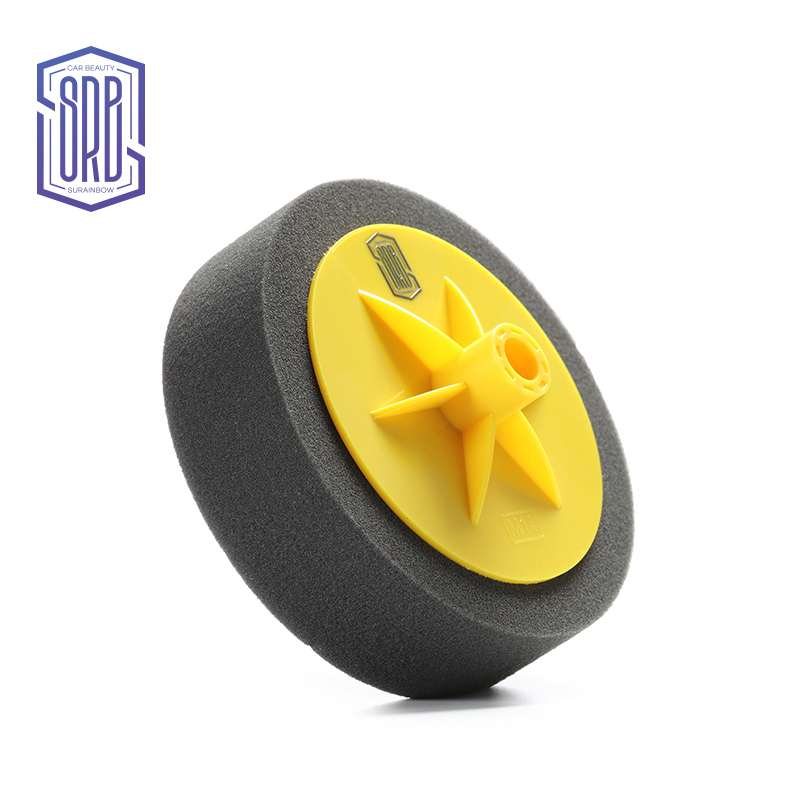
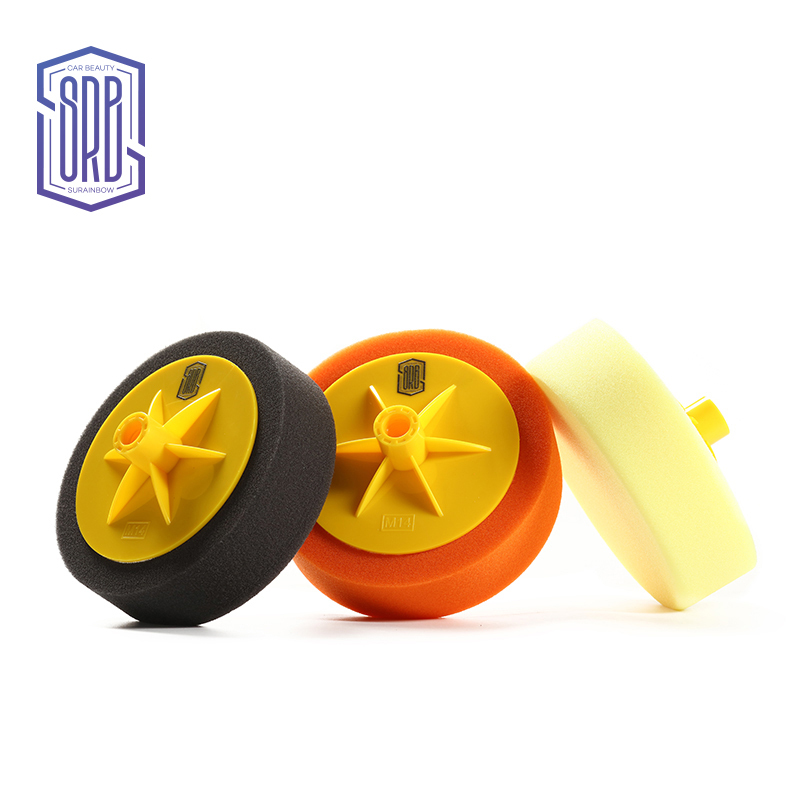
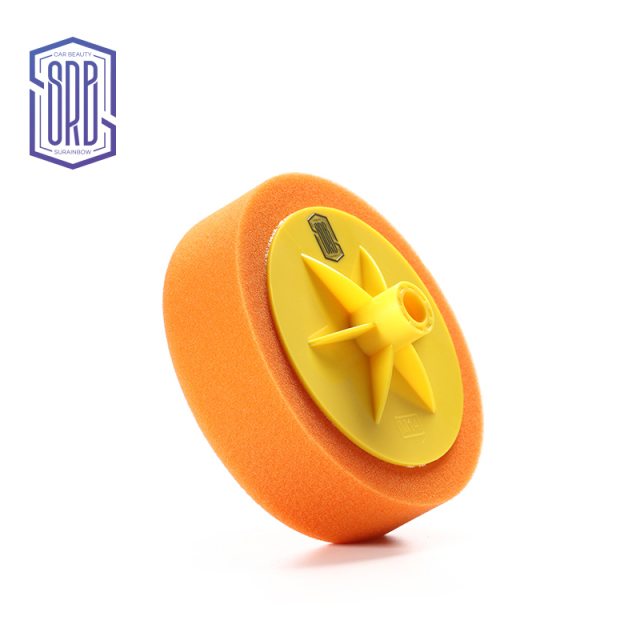
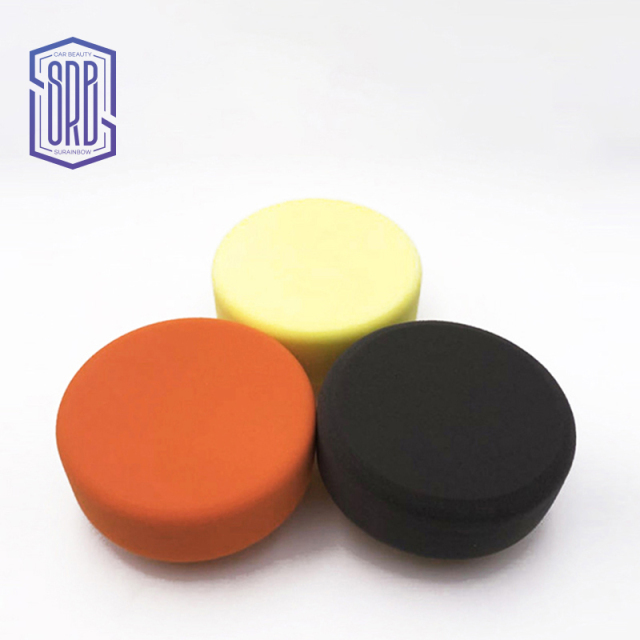
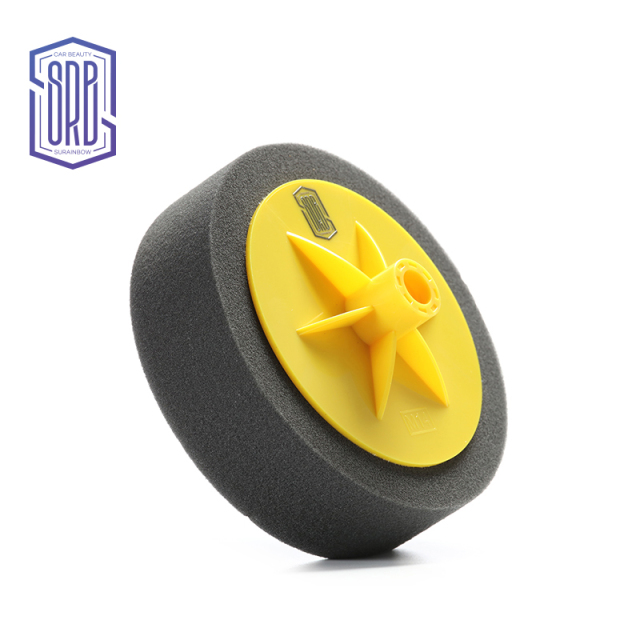
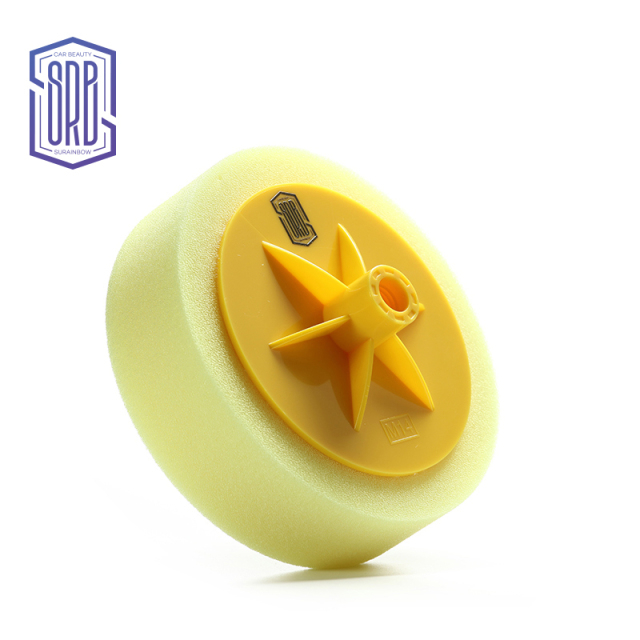
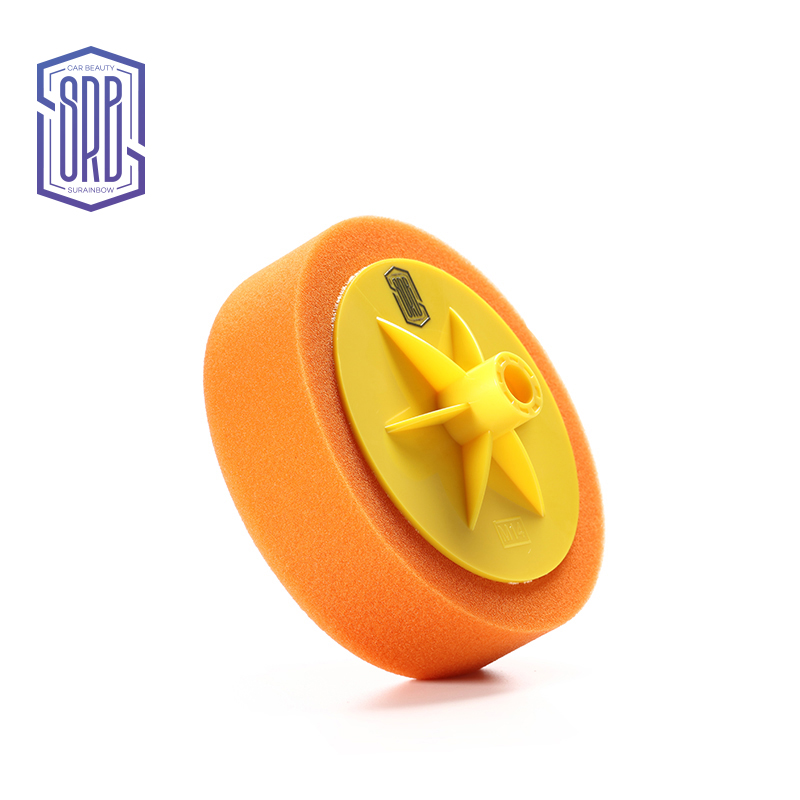
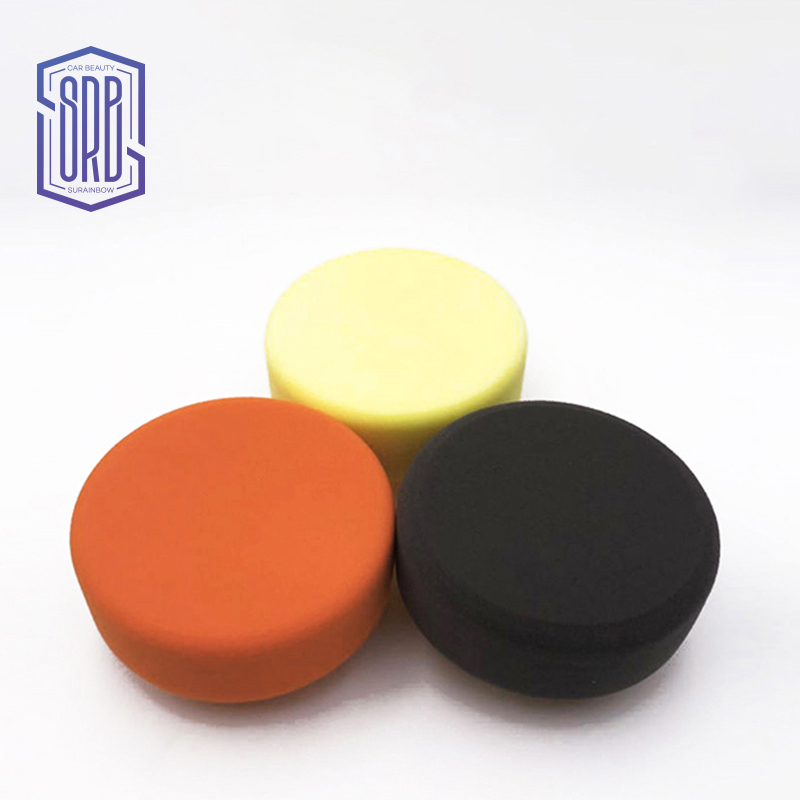
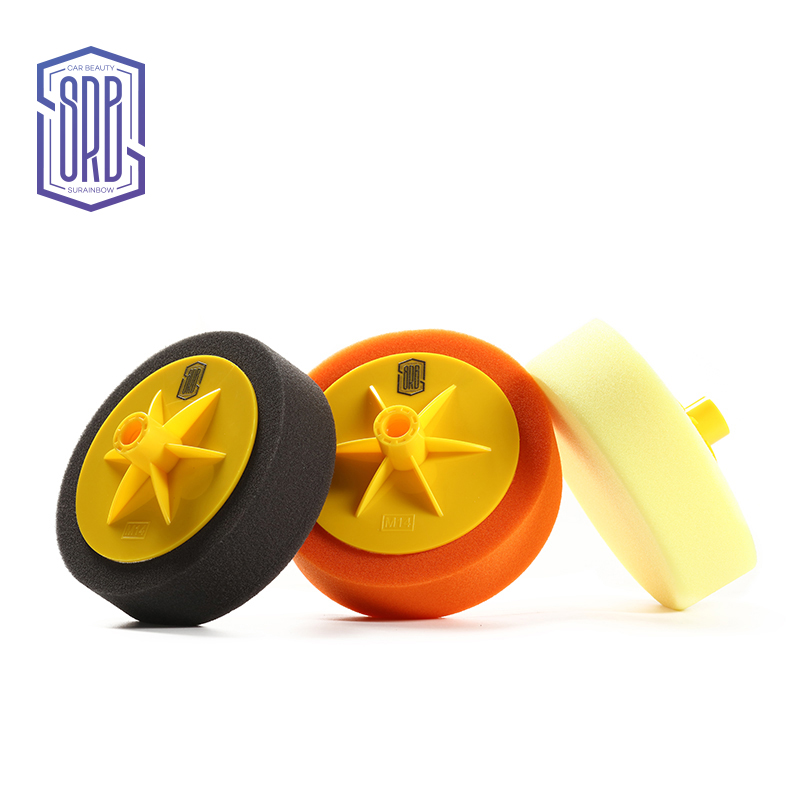
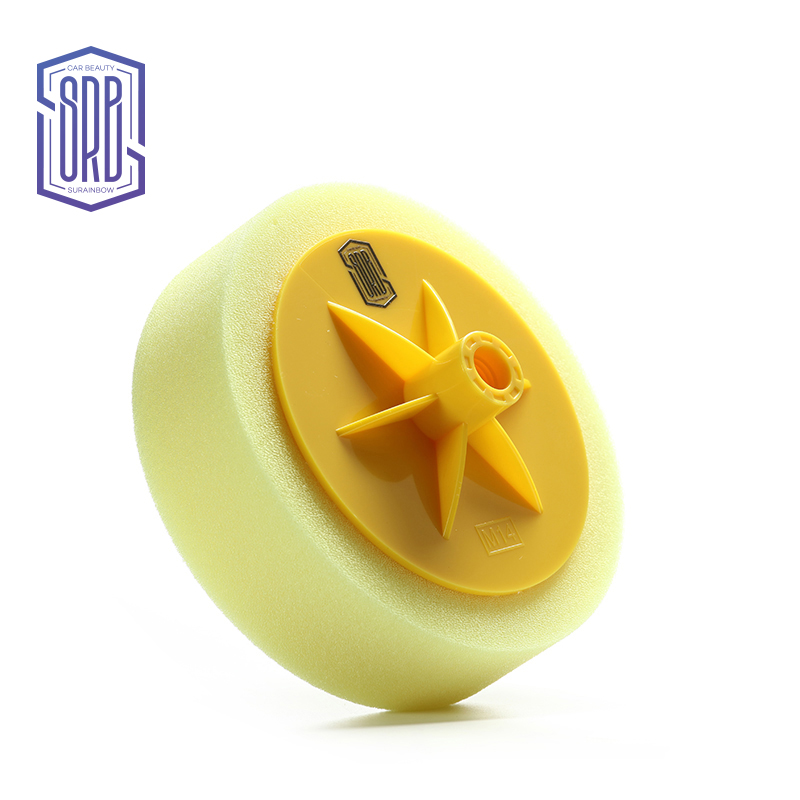
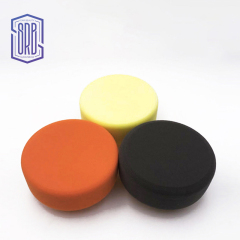
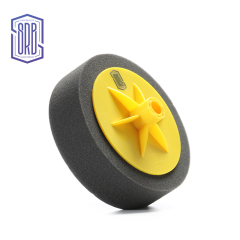
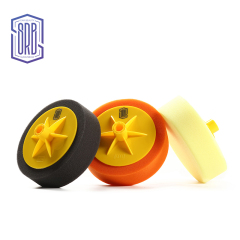
Foam. The working face is imported open-cell sponge, cut into a thick, flat-topped disc. Open cells hold product on the face and release it as the pad turns — the behaviour that makes a polish pad for car detailing predictable from one panel to the next, instead of sealing over and skidding. Backing plate. Behind the foam sits a rigid yellow plastic plate with star-shaped ribs running out from the centre. Those ribs keep the plate flat under pressure; a plate that dishes in the middle puts the pad on its edges and leaves the finish uneven. Mounting. A central hole in the plate takes the machine spindle, and the pad threads on flush against the backing plate. Spin it by hand before switching the machine on, because a pad that is not seated will not straighten itself once it is running. Foam grades. The range is shown in orange, yellow, black and pale yellow foam. On pads of this type the colour marks a grade — a denser or more open cell giving a different amount of work and a different finish — so treat colour as a code and confirm which grade suits your step. Bonding is where a pad lives or dies. The joint between foam and plate takes the heat and the shear of every pass, and it is the first thing to go on a pad that is used hard. What changes between grades. When a buyer asks a polishing sponge pad manufacturer for a custom pad, density is the first thing we discuss: firmer foam holds its shape and works product harder, softer foam spreads it more gently. After density come the plate, the diameter and how the pad is marked.
Size and Machine Fit
- Matched to a plate smaller than the pad.
- A 5.5 inch polishing pad mounts on a backing plate that is deliberately narrower than the foam, so the pad overhangs the edge and the hard plate never reaches the paint.
- Measure the plate you plan to use before the first order.
- Dual action or rotary.
- On a dual-action polisher the soft face forgives an unsteady hand and keeps the finish even.
- On a rotary it asks for a lighter touch, a slower pass and a pad kept flat — same pad, different technique.
- Compared with a 6 inch pad.
- A six-inch pad eats up a flat bonnet or roof faster, but it stalls on curves and covers more of the panel than you can watch at once.
- The smaller pad keeps turning on contoured panels and lets you see the finish as it develops.
- Compared with a 3 inch pad.
- Three-inch pads reach pillars, bumper corners and the strip around door handles where this one cannot go.
- Most shops keep both, running the bigger pad across the open panels and the small one on the tight work.
- Clearance is the thing buyers get wrong.
- The plate has to sit flat inside the pad with no lip lifting at the edge.
- If you are stocking a foam polishing pad 5.5 inch in diameter for a workshop, have the team confirm the plate diameter and mounting thread before the first case ships — that is the one check a polishing sponge pad manufacturer cannot make for you.
- Speed and pressure. Let the product and the machine set the pace rather than pushing the pad into the paint. Extra pressure flattens the foam, builds heat and shortens the pad's life without speeding the work up.
- Plan the size mix.
- A wholesale polishing sponge pad order usually covers more than one diameter, because a bay that buys only open-panel sizes ends up improvising on bumpers.
- Tell us which panels your buyers work on and the sizes get quoted together.
Applications
| Application | How the pad is used |
| Machine waxing | A clean, dry panel, a few dots of wax and overlapping passes until the film is even — the job a 5.5 inch polishing pad is cut for |
| Cleaner wax on daily drivers | Spreads a mildly abrasive film and lifts light surface contamination in the same pass |
| Glaze before handover | Run slowly on a soft, flat face so it fills and brightens without dragging |
| Finishing polish after compounding | Brings the gloss back after a cutting step; a polish pad for car detailing should be kept for this stage alone, never one that has carried compound |
| Wheels, painted trim and mirror caps | Small enough to reach wheel faces and bumper sections that a larger pad cannot follow |
| Starter kits and resale | A polishing sponge pad for car kits sold to enthusiasts has to suit hand application and a starter machine alike |
| High-volume wash lines | Fast coverage, quick wash-out between vehicles and a face that keeps its shape through a shift |
Using and Caring for the Pad
- Wash and dry the panel first, then look at it under a light for bonded contamination.
- A pad dragged over grit does more damage than the wax does good.
- Fit the pad to the backing plate and turn it by hand to seat it.
- If the edge lifts anywhere, reseat it before the machine is switched on.
- Prime the face with a small amount of product and spread it at low speed.
- A dry pad grabs; a primed pad glides and lays an even film from the first pass.
- Work three or four dots of product per section, not a full ring.
- A polishing sponge pad for car panels is easily overloaded, and an overloaded pad is the usual reason for sling, smears and a pad that clogs halfway round the car.
- Keep the pad moving and stay off sharp edges, panel gaps and badges.
- Foam loses its shape quickly when it is held against an edge at speed.
- Brush or blow the pad out between panels and wash it at the end of the session.
- A car polishing sponge pad loads up with dried product, and a loaded pad stops spreading and starts smearing.
- Dry it face up in the open air, never sealed in a bag and never stacked wet.
- Damp foam is where the smell and the breakdown begin.
- Retire the pad when the face glazes over, tears or stops holding its shape.
- A worn pad still spreads product, but it will not give the same finish twice, and that inconsistency is what a customer notices first.
Specifications
| Specification | Detail |
|---|
| Product name | 5.5 inch polishing sponge pad |
| Model codes | M16 / T-604C / T-604B / T-604A |
| Diameter | 5.5 inch |
| Foam | Imported open-cell sponge |
| Backing plate | Rigid plastic, star-ribbed |
| Mounting | Central hole through the backing plate |
| Weight | 0.8 kg |
| Application | Car body surface — waxing and surface cleaning |
| Working character | High efficiency |
| Brand | SURAINBOW |
| Place of origin | Guangdong, China |
| Shelf life | 3 years |
Ordering, Packing and Delivery
- Send the brief.
- Which foam grade or grades you want, how many pads, the destination market and whether you sell to detail shops, distributors or end users.
- That is enough for the team to quote a wholesale polishing sponge pad order at the right level.
- Sampling, testing and sample approval.
- Ask your sales contact about sample availability and the courier arrangement — the sample scope and any charges are confirmed before dispatch.
- If you already stock the foam polishing pad 5.5 inch format and only need a matching bulk run, say so and the team works from your last approved reference.
- Packaging design, proofing and approval.
- Bag, sleeve, label and carton are specified together.
- Send artwork, label text, barcode data and shipping marks for review, then approve a proof; the approved pack version becomes part of the order record.
- Commercial confirmation.
- MOQ, price and Incoterm are quoted rather than fixed in advance, because they move with the foam grade, printing and packing chosen.
- A custom polishing sponge pad with your own label and carton is quoted on the same basis, with artwork and pack specification in the same offer.
- Production checks.
- As a polishing sponge pad manufacturer we run bulk production against the approved sample and written specification, with batch records and retained samples kept for later review.
- Balance payment, shipment and document handover.
- The payment schedule, shipping method and document set are confirmed in the order review; export paperwork can include MSDS/SDS, CoA, commercial invoice, packing list and customs documents, so tell us which set your market needs.
- After-sales and batch traceability.
- If a case arrives damaged or a pad does not match the approved reference, quote the order or sample reference, the batch number, the quantity affected and clear photos, so it can be compared with the sealed sample rather than guessed at.
Scale & Supply Capability
SURAINBOW is run by Guangzhou Liangdian Automotive Supplies Co., Ltd., a factory-trade operation set up in Guangzhou in 2010 and now 50 people strong. Sixteen years in car care have given us a one-stop supply position: our own SURAINBOW lines are held in stock for fast shipping, and an associate factory with modern production equipment and an established quality management system keeps replenishment moving. We take OEM and ODM work and our R&D team develops to your specification. Buyers in the Middle East, the United States, Southeast Asia, Europe, the UK, Russia, Africa and Australia already order from us.
FAQ
Is this a cutting pad or a waxing pad?
It is a waxing and finishing pad. Load it with wax, cleaner wax, glaze or finishing polish and it spreads the product evenly across sound paint. It is not built to remove scratches, sanding marks or oxidation — that work needs a firmer compound pad or a wool pad first, with a 5.5 inch polishing pad coming back at the end to bring the gloss up.
What do the different foam colours mean?
The range is shown in orange, yellow, black and pale yellow foam, and the colour marks the grade rather than the size. Different cell structures change how much work the face does and how much finish it leaves, so tell your sales contact which step you are buying for and they will confirm the grade. A polish pad for car detailing is only as good as the match between the grade and the product going onto it.
Will it leave swirl marks on dark paint?
Not when the surface is clean and the pad is clean. Marks come from a pad that has picked up grit, from too much pressure or from a panel that was not decontaminated first. Keep a car polishing sponge pad dedicated to finishing, never let it touch the floor and wash it at the end of the day, and a soft foam face will not add defects of its own.
Can we have the pads in our own grade and packed under our brand?
Custom work is quoted case by case. Density, diameter, plate type, pad marking and the pack it ships in can all be discussed, and the artwork and pack specification are reviewed together so the approved version is what goes into production. Ask your sales contact for a custom polishing sponge pad quote with the grade and the branding you have in mind.
Which backing plate does the pad fit?
A foam polishing pad 5.5 inch in diameter is normally run on a 5 inch backing plate, so the foam overhangs the edge and the hard plate never touches the paint. Check the plate diameter and the spindle thread on the machines in your shop before ordering, and tell the team if the thread is not standard so the pads are cut to suit.
Will it work with the polishing products we already sell?
It is built to spread rather than cut, so it sits naturally with waxes, cleaner waxes, glazes and finishing polishes — the products a shop reaches for at the end of a job. If you supply a polishing sponge pad for car kits alongside a compound, keep a separate pad for the compound stage; a pad that has carried compound will not finish cleanly afterwards.