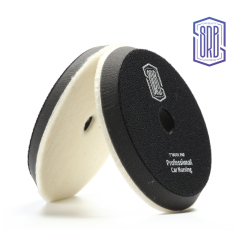
Product Overview
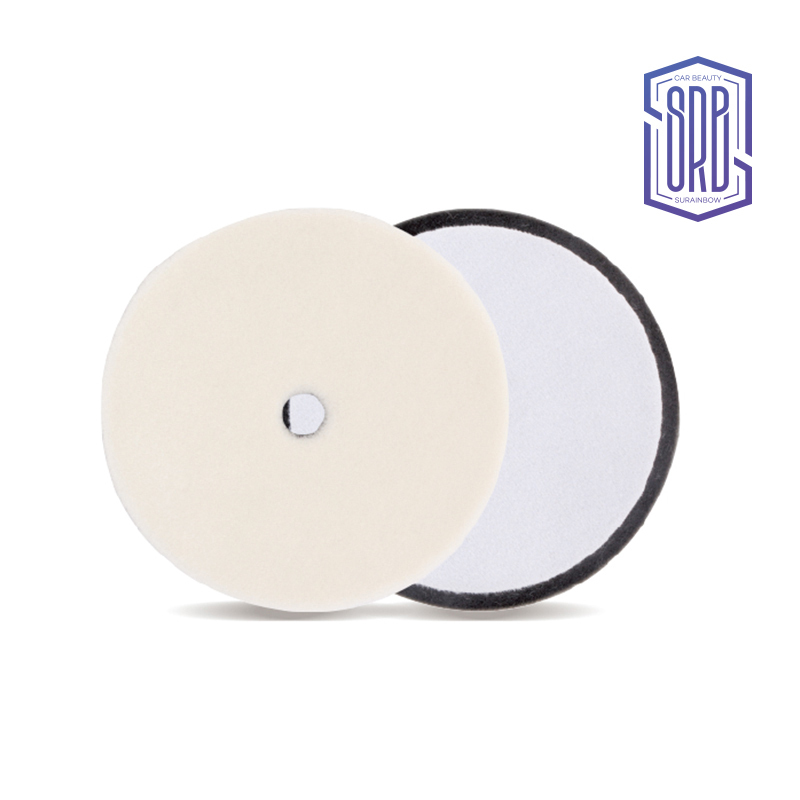
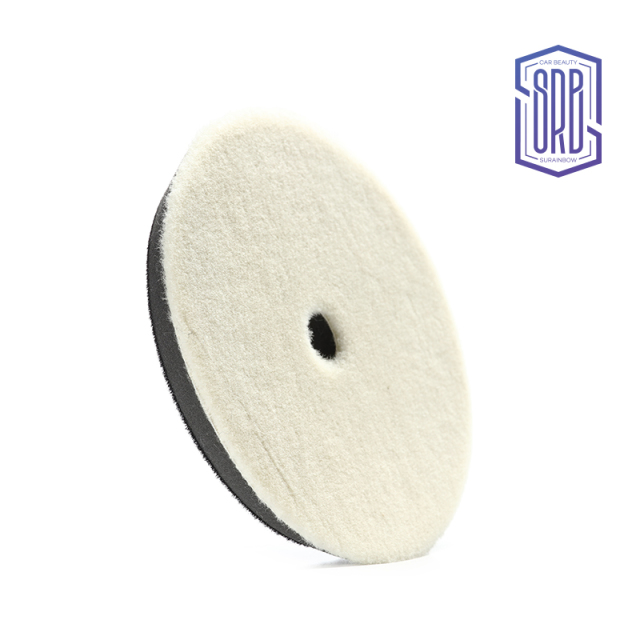
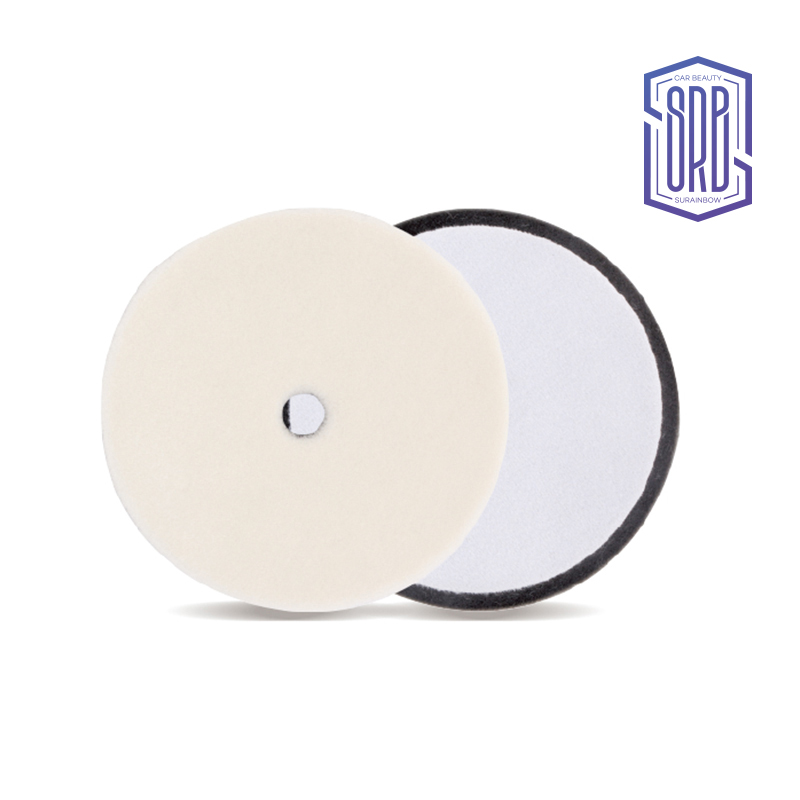
This is a 7 inch wool polishing pad with a foam interface and a hook and loop backing, supplied as model T-601 A in the SURAINBOW polishing range. The wool is the working surface and the foam underneath gives the pad enough give to stay flat on a panel instead of tipping onto its edge. It is the pad a shop reaches for when the paint needs cut, not a final polish. Buyers come to it for different reasons: a shop that wants cut on the panel, a distributor restocking wholesale wool polishing pads, or a detailer after a pad that matches the polish already on the shelf. Where it fits in the job. Wool sits at the front of the process. Finishing work comes after it, on foam. Why seven inches. A face this size covers more paint per pass than a smaller pad, so long panels come up with fewer overlaps and a more even cut. It also keeps the working area further out from the machine body, which helps the pad sit flat on a bonnet or a roof instead of riding on one edge. What it pairs with. A rotary or dual-action polisher already set up with a 7 inch backing plate. These hook and loop wool pads press straight on and pull straight off, so there is no adhesive, no spanner and no centring tool between one compound and the next. What to check before ordering. Run a thumb around the rim, look at how evenly the wool is bonded to the foam, and press the backing to feel the loop grip. Those three points are where a substandard pad fails first, and all three are visible before the pad ever touches paint.
Material & Build
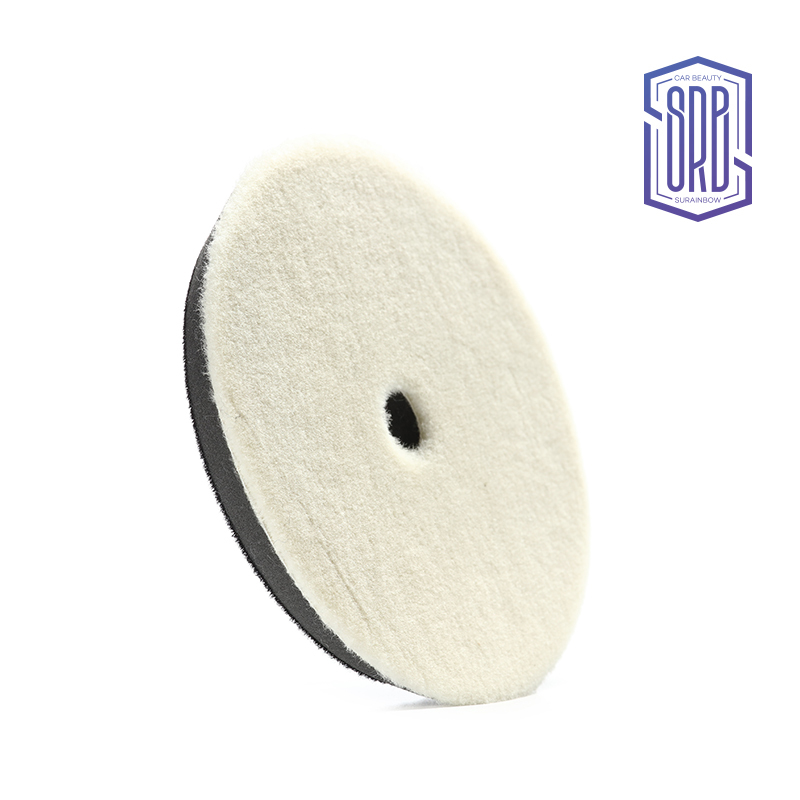
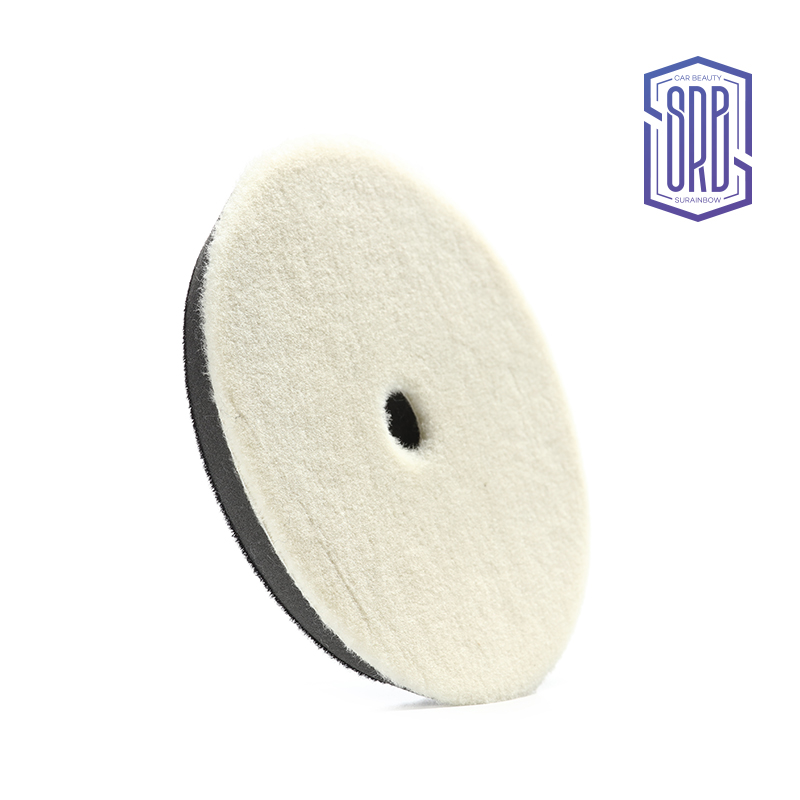
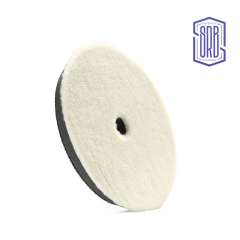
- Wool face. The cutting surface is wool, with a cream textured face that holds compound in the fibres instead of letting it run off the panel, so the pad keeps working through a whole section rather than loading and stopping.
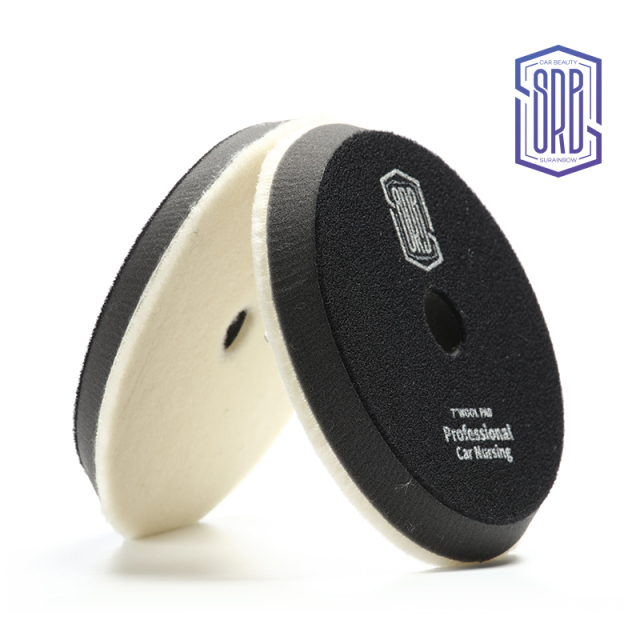
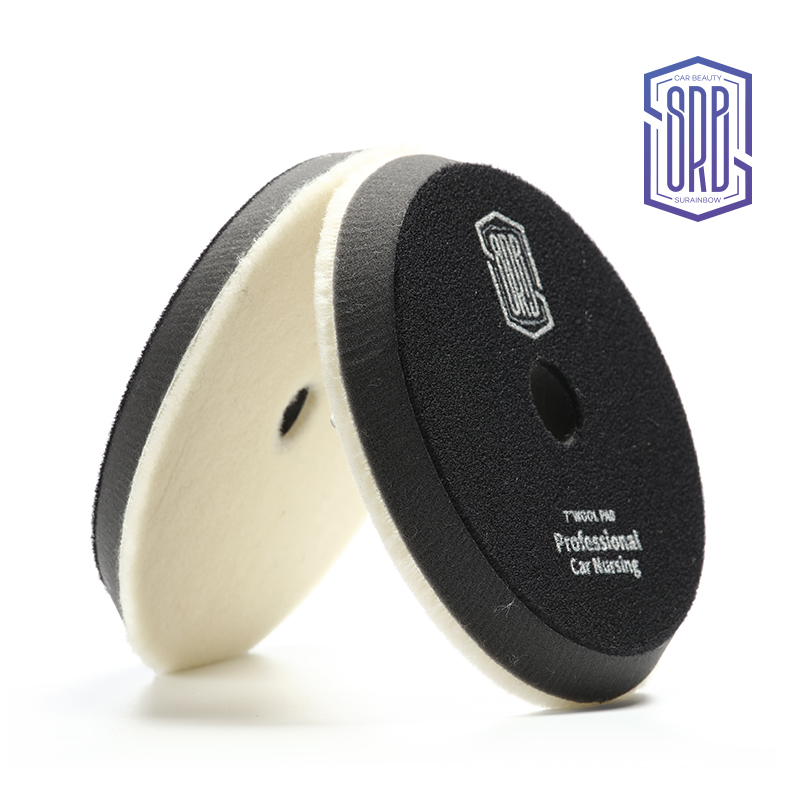
- Foam interface. A foam layer sits between the wool and the backing, absorbing machine pressure and letting the pad follow gentle curves instead of digging in on one edge.
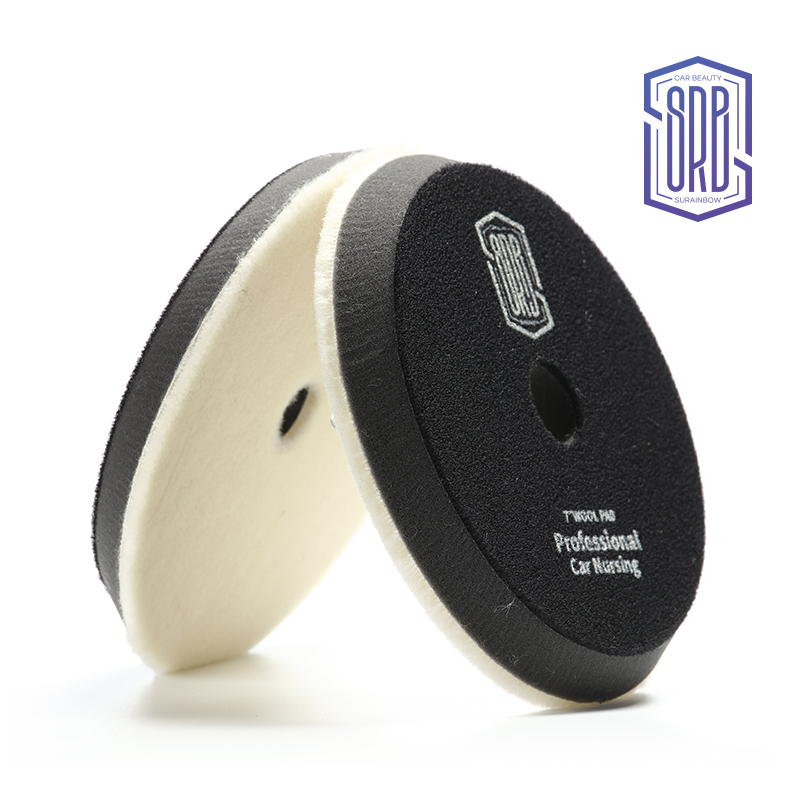
- Hook and loop backing. These hook and loop wool pads grip a hook backing plate and come off by hand, which keeps a heavy compound in its own pad rather than carrying it into the finishing step.
- Centre hole. The hole in the middle centres the pad on the plate spindle and gives heat and spent compound somewhere to escape on long passes.
- Edge bond. The join between wool and foam around the rim is what decides how long the pad lasts; a pad that starts lifting there will shed fibre long before the face is worn through.
- Marked backing. The backing carries the SURAINBOW mark, so a pad taken out of a mixed drawer at the end of a shift can be identified without measuring it; on OEM wool polishing pads the mark in that space is yours.
- Checked before packing. As a wool polishing pads manufacturer we inspect every batch at the rim and at the backing before the pads are boxed, because those are the two places a pad fails in service.
Fitting the Pad to the Machine
- Check the backing plate first. The pad is 7 inch, so it needs a 7 inch hook and loop plate; a plate that is much smaller leaves wool overhanging the edge, and overhang is what tears a pad apart.
- Match the machine to the plate. Auto wool polishing pads need a polisher with the torque to keep a 7 inch face turning; if your machine runs a smaller plate, step down to a smaller pad instead of forcing the fit.
- Line the centre hole up with the plate centre before pressing down, so the pad sits concentric and does not orbit off balance at speed.
- Press from the middle outward, then run a thumb around the rim: on hook and loop wool pads the loop should feel engaged all the way round, with no soft spot at the edge.
- Spin the machine at working speed with the pad held off the paint before the first pass, and watch the edge for any lift.
- Re-check after the first panel. Heat softens a backing, and a pad that sat flat when cold can start to creep once it is warm.
Applications
- Full-panel compounding. Bonnets, roofs and door skins on full-size cars are where this size pays for itself — auto wool polishing pads this wide cover a panel in fewer passes and with fewer overlaps.
- Oxidation removal. Sun-faded, chalky paint on older vehicles, where a whole panel has to be brought back before anything else can be applied on top.
- Sanding refinement. After fine sanding on a repaired panel, when the machine step has to level the surface before the finishing passes — car wool polishing pads give the cut that foam alone will not.
- Wax and protection work. The pad is listed for waxing the car, and a wool face spreads wax thin and even across a large panel instead of leaving it heavy in one area.
- Coating preparation. Cutting back to a clean, uniform surface before a ceramic or graphene coating goes on, so the coating has something consistent to bond to.
- Trade and resale preparation. Used-car lots and trade-in work, where a whole vehicle has to come up quickly and the pad is expected to do the heavy part of the job — the volume work that wholesale wool polishing pads are stocked for.
- Larger flat panels. Vans, light commercials and anything with big flat sides, where a smaller pad would mean a lot of chasing across the same area.
Cleaning, Storage & Replacement
- Brush the face after each panel. A pad spur or a stiff brush lifts spent compound out of the wool while it is still soft; leave it in and the fibres mat down and stop cutting.
- Wash after the job, not the morning after: warm water and a little detergent worked into the face by hand, then rinsed until the water runs clear. Wool buffing pads 7 inch across take only a couple of minutes each this way.
- Keep water out of the backing. Soaking the loop face softens the bond, so rinse the wool side only and keep the back dry.
- Squeeze, never wring. Press the water out flat between towels and reshape the face while it is damp so it dries round.
- Dry face up in moving air. Not direct sun, not a heater, and nothing stacked on top of the wool.
- Retire on condition, not on looks. Car wool polishing pads are finished when the face has gone matted and thin, when the wool has worn away at the rim, when the edge lifts from the foam, or when the backing no longer grips the plate.
- Keep one pad per compound. Two pads, two compounds, and no dragging heavy cut into a finishing step.
Specifications
| Property | Value |
|---|
| Model | T-601 A |
| Product type | 7 inch wool polishing pads |
| Diameter | 7 inch |
| Polishing face | Wool, cream textured |
| Interface layer | Foam / sponge |
| Backing | Hook and loop |
| Shape | Round, with centre hole |
| Brand | SURAINBOW |
| Unit weight | 0.03 |
| Working stage | Cutting and compounding, ahead of finishing |
| Machine type | Rotary or dual-action polisher |
| Plate fit | 7 inch hook backing plate |
| Stated use | Wax the car |
Ordering, Packing & After-Sales
Stock and dispatch. In stock and fast shipping, so a repeat pad order does not sit behind a production run and a busy month does not stall on a consumable.
Samples and approval. Ask your sales contact about sample availability and what to evaluate on it — face texture, edge bond, backing grip. Approval on a physical pad is worth more than any photo, and it gives both sides a reference to compare a bulk batch against.
Labels, cartons and own-brand work. OEM wool polishing pads can carry your artwork on the backing mark, the label and the carton, with proofs approved before production so nothing is printed on assumption.
Documents and dispatch. Confirm the document set your market needs, along with the balance and shipping schedule, with your sales contact; paperwork is prepared to travel with the consignment rather than after it.
Batch records and after-sales. Each order keeps a batch reference and a retained sample, so if a pad underperforms the order, the batch and the reference can be checked together. Send the order reference, batch number, quantity affected and photos or video, and the case can be reviewed against what was approved.
Wholesale supply. Wholesale wool polishing pads ship in carton quantities for distributors, studios and e-commerce sellers, packed so they reach the warehouse in a condition that can be resold.
Scale & Supply Capability
SURAINBOW is run by Guangzhou Liangdian Automotive Supplies Co., Ltd., a wool polishing pads manufacturer and factory-trade operation set up in Guangzhou in 2010 and now 50 people strong. Sixteen years in car care have given us a one-stop supply position: our own SURAINBOW lines are held in stock for fast shipping, and an associate factory with modern production equipment and an established quality management system keeps replenishment moving. We take OEM and ODM work and our R&D team develops to your specification. Buyers in the Middle East, the United States, Southeast Asia, Europe, the UK, Russia, Africa and Australia already order from us.
FAQ
Will this pad fit the backing plate I already have?
It will if your plate measures 7 inch across its face. Measure the plate rather than trusting the machine's stated size, because plates get swapped between machines. A 7 inch pad on a smaller plate will overhang and run off balance, and if your plate is smaller, a smaller pad is the correct buy.
Is this a cutting pad or a finishing pad?
The wool face puts it on the cutting side — it is the pad that takes out oxidation, swirls and fine sanding marks with a compound, and it also works for waxing the car. Most shops finish on foam after the wool step: car wool polishing pads do the heavy work, foam does the refinement.
Can I run it on a dual-action machine as well as a rotary?
Yes, as long as the machine is set up with a matching 7 inch plate. Auto wool polishing pads this size behave differently on each: a rotary cuts faster and asks for a lighter hand, while a dual-action machine is more forgiving but needs more passes over the same area.
How many pads should I keep in rotation for one vehicle?
Enough that a loaded or warm pad never has to go back onto the paint. Most shops keep several in rotation and change at panel boundaries, keeping one pad per compound so a heavy cut does not follow the job into the finishing step. Wool buffing pads 7 inch across change quickly by hand, so rotation costs very little time.
How do I know when the pad is worn out rather than just dirty?
Dirt washes out; wear does not. A worn pad has a matted, flattened face, wool that has thinned at the rim, an edge lifting away from the foam, or a backing that no longer grips the plate. If it still wobbles on the spindle after a clean and a proper dry, it is finished.
How does this differ from a full wool bonnet?
The foam layer between the wool and the backing is the difference. A full wool bonnet is all fibre, so it cuts harder but loads faster and loses its shape; the foam here keeps the face flat, lets the pad follow a curve without tipping, and gives a more controllable cut. For a shop that wants one pad to handle compounding and wax work, the foam-backed version is the easier one to live with.