Product Overview
This is a 6 inch foam pad built for the last polishing pass, the one that goes on after the compound has finished cutting. SURAINBOW has worked as one of Guangzhou's car cleaning products manufacturers since 2010, and this pad comes from the tools side of that range rather than the chemistry side. Detailing bays use it after compounding, dealership prep teams use it before handover, and resellers stock it because it is a consumable a shop replaces steadily rather than a one-off purchase. It belongs with the cleaning tools for car that a bay reaches for at the end of a job, not the beginning. Wash chemicals, decontamination, compound and a cutting pad all come first; this is the piece that turns a corrected panel into a finished one, and using it earlier only wastes product and time. Stock it on its own or as part of your car care supplies order — the glaze, the finishing polish and the wax it carries sit in the same range, so a shop can restock the entire finishing step in one delivery instead of matching brands across three suppliers.
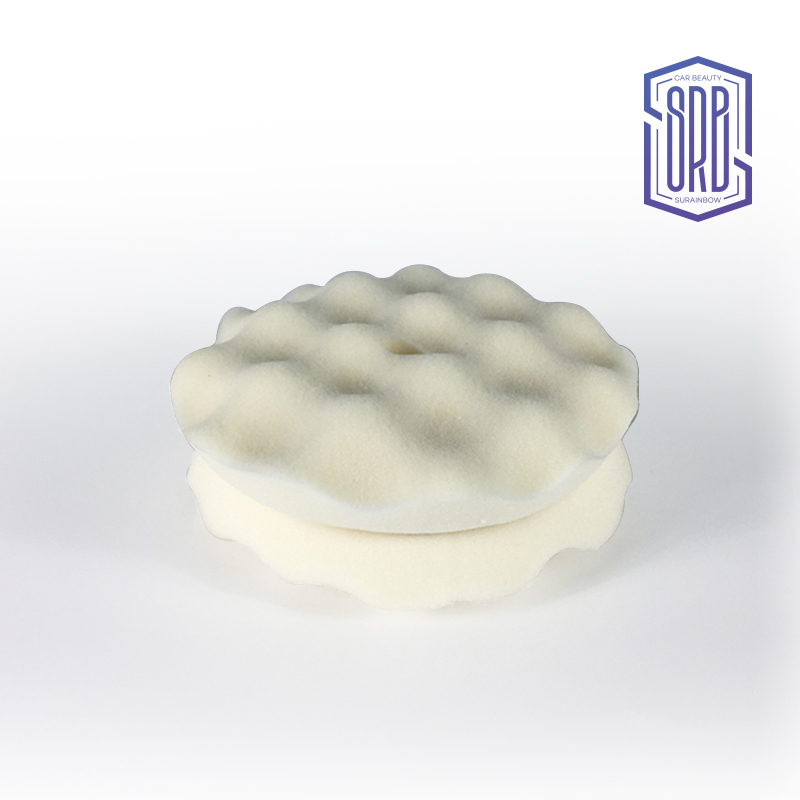
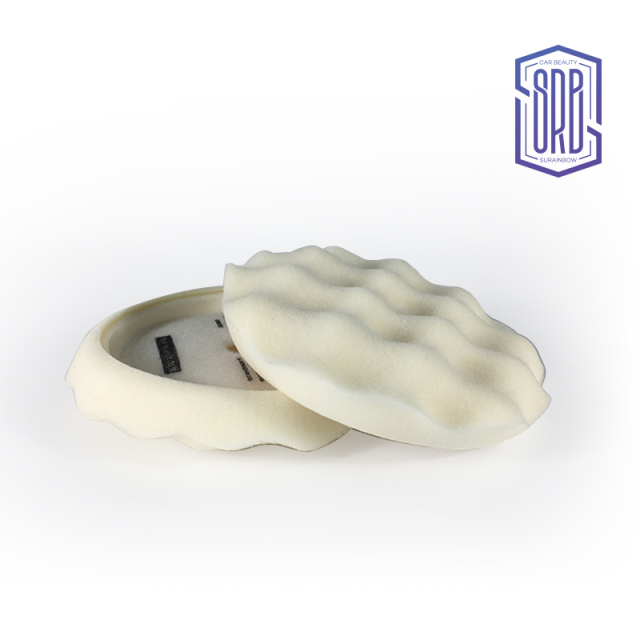
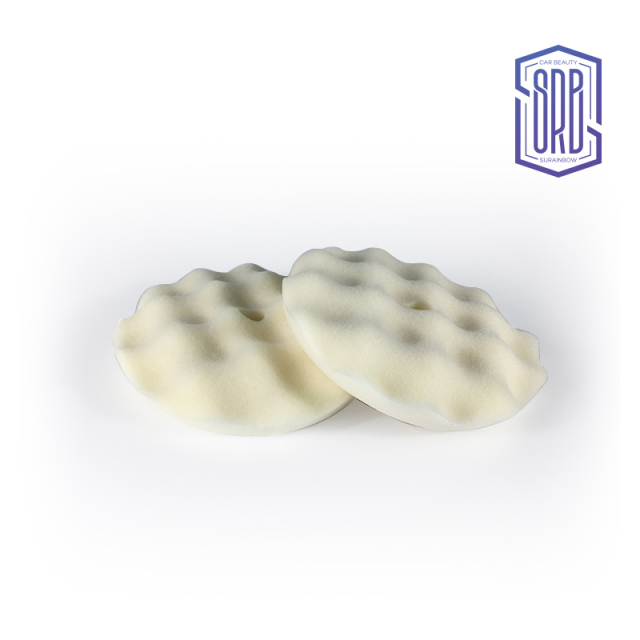
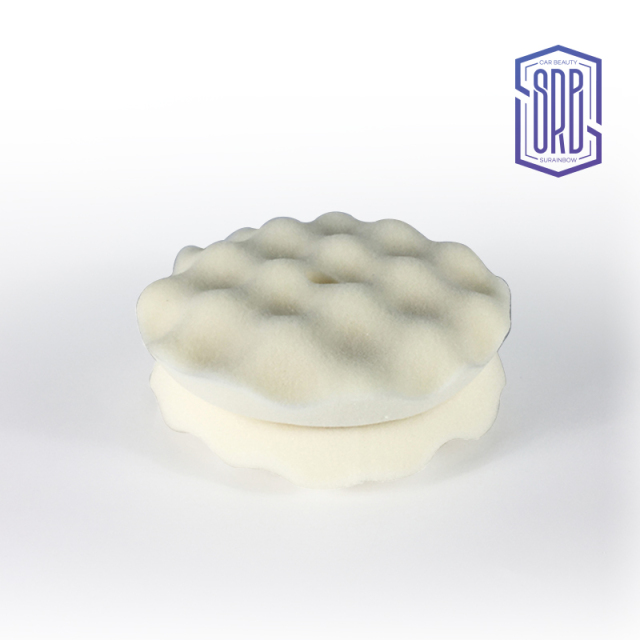
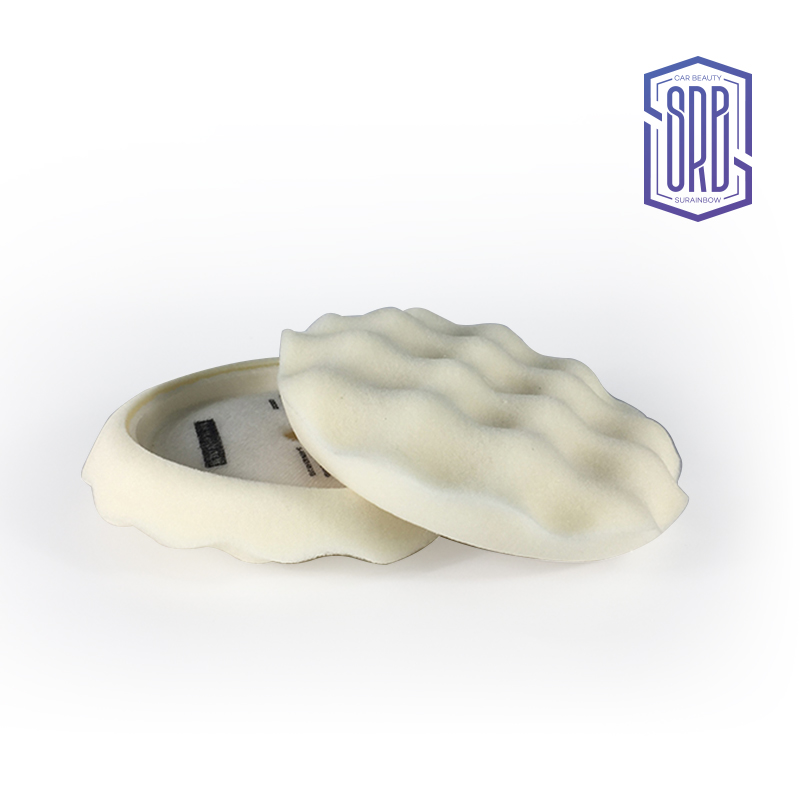
Wave-Face Design
- A contoured face, not a flat disc.
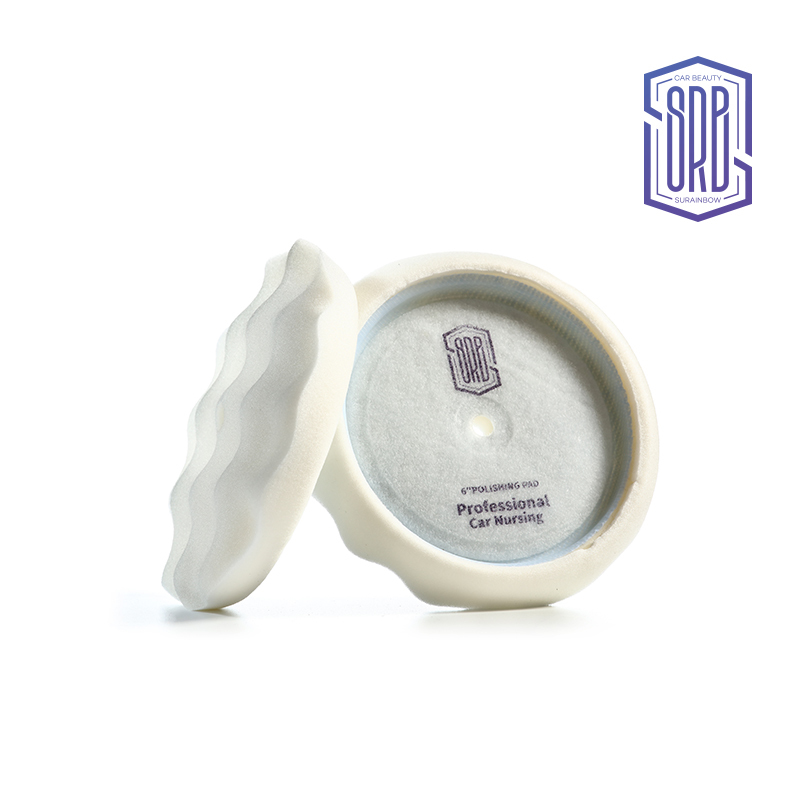
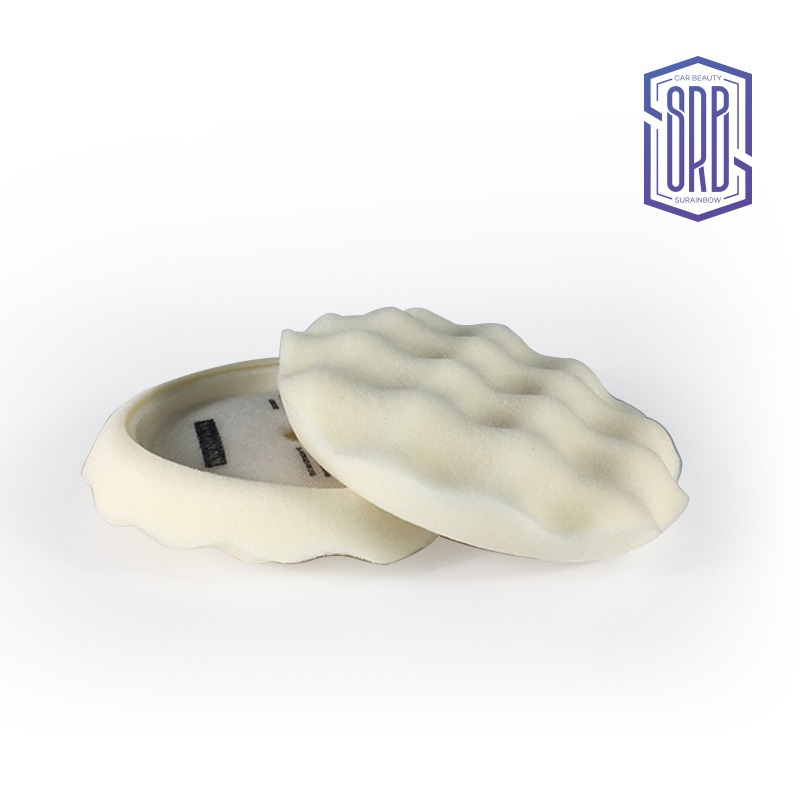
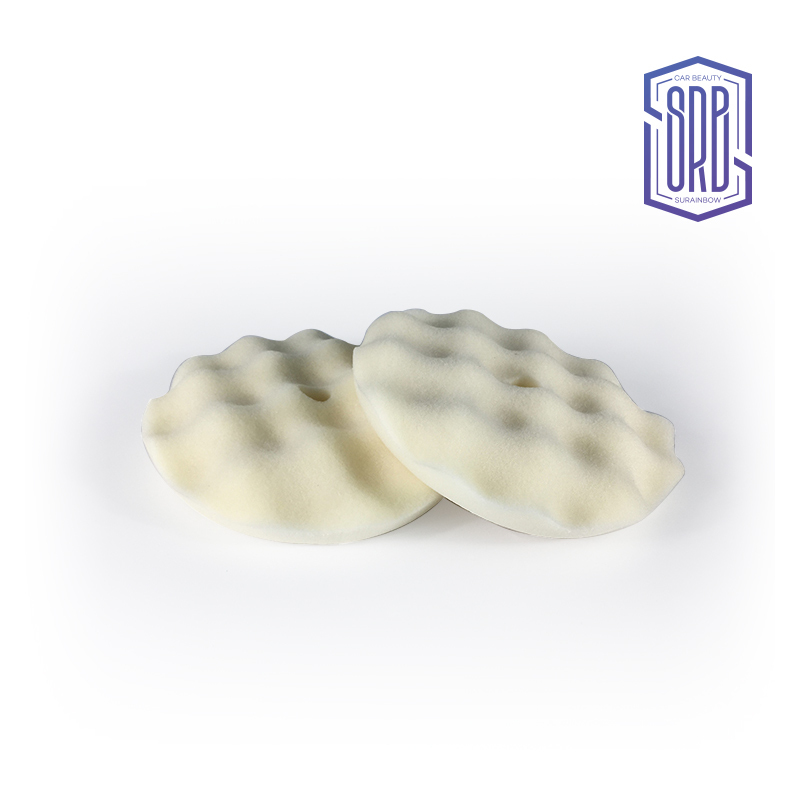
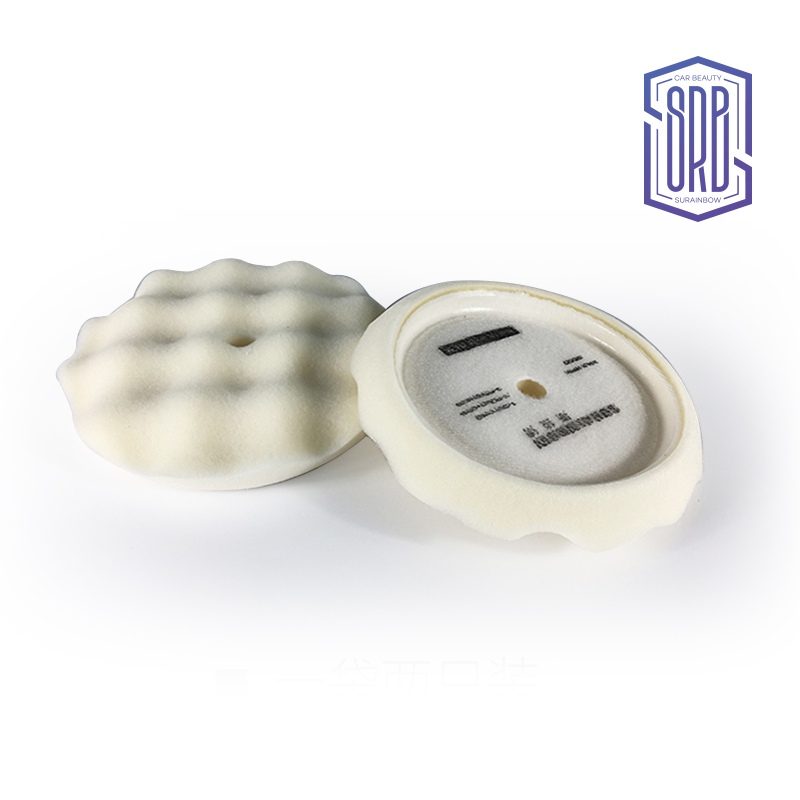
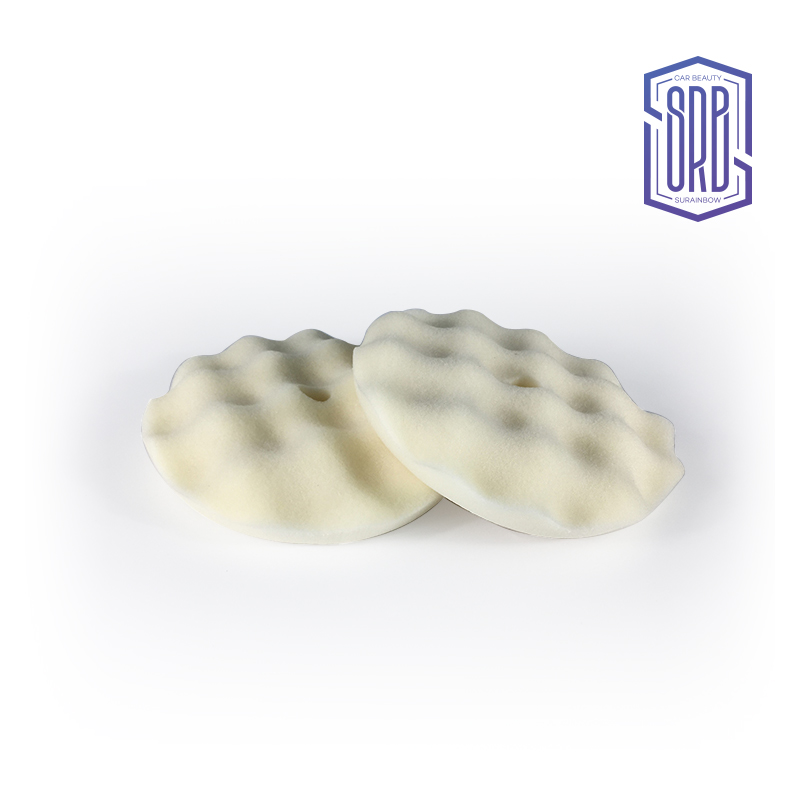
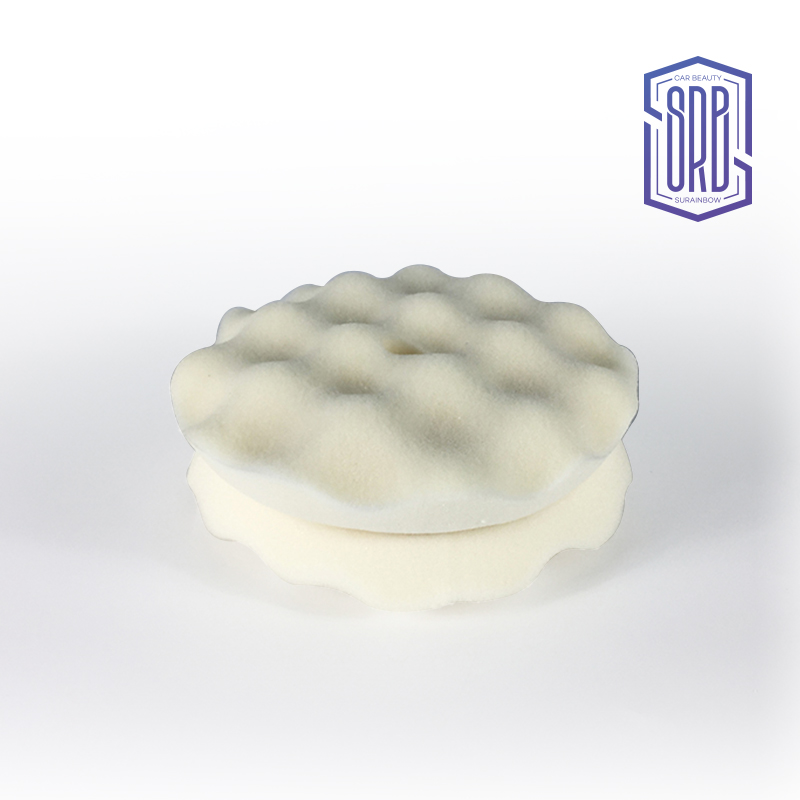
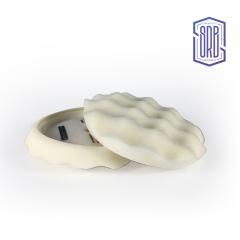
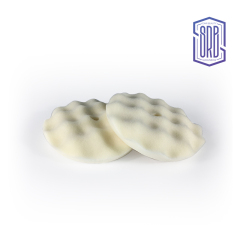
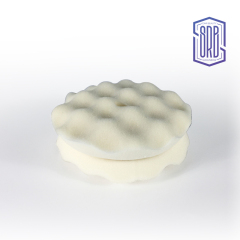
- The working surface is moulded into a shallow wave, so pressure spreads across a series of soft ridges instead of concentrating in the middle of the pad.
- That is what keeps a finishing pass even along a long door or bonnet.
- One range, one finishing step. Because the pad sits inside a full car care products range, the glaze, the finishing polish and the wax used on this face come from the same source as the foam, which makes it easier to keep a shop's finishing result consistent between restocks.
- Runs cooler on soft paint.
- A waved face touches the panel over a smaller total area than a flat pad, so friction heat builds more slowly.
- On dark colours and soft paint systems that shows up as less haze and fewer surprises when you lift the machine.
- Waxing, not only glazing.
- The pad is made for wax the car and cleaning car work as well as for glaze: the wave face spreads a thin, even film of car wax without the heavy drag a saturated flat foam pad gives you, and it wipes off cleanly afterwards.
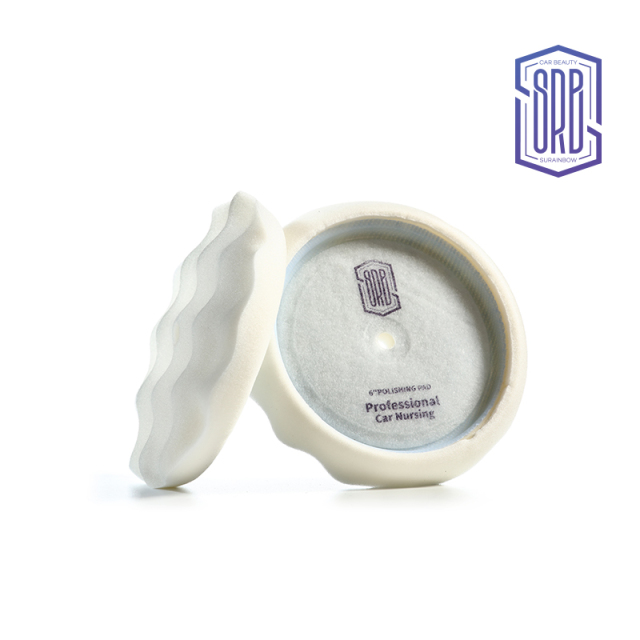
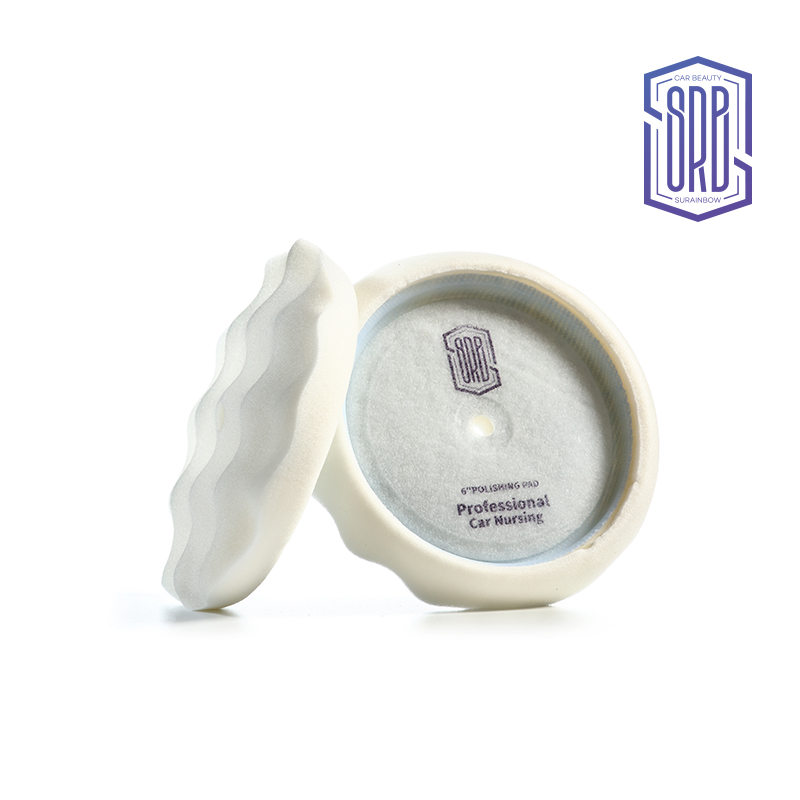
- Printed backing label.
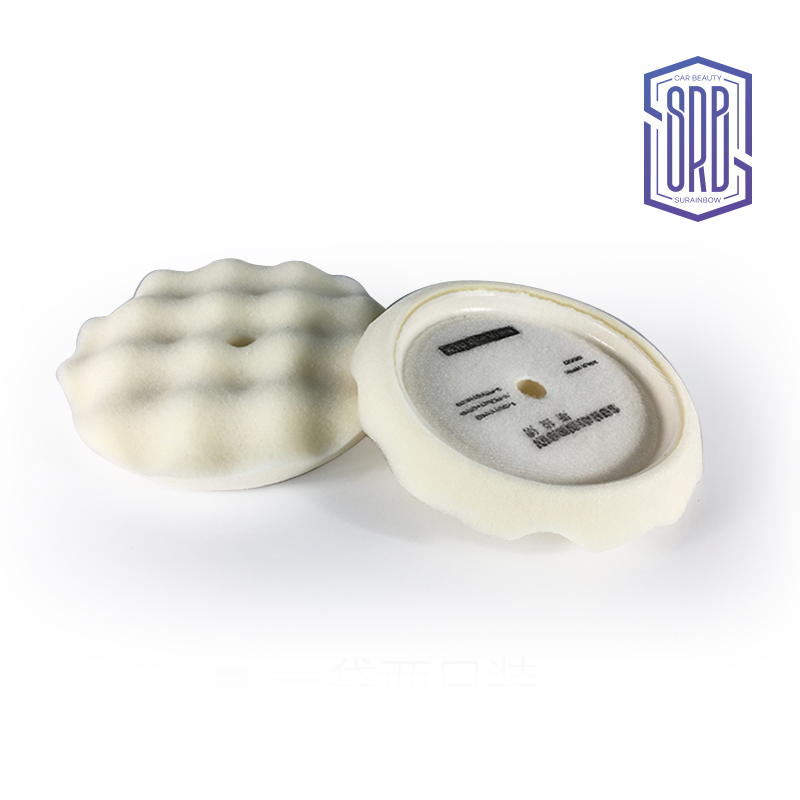
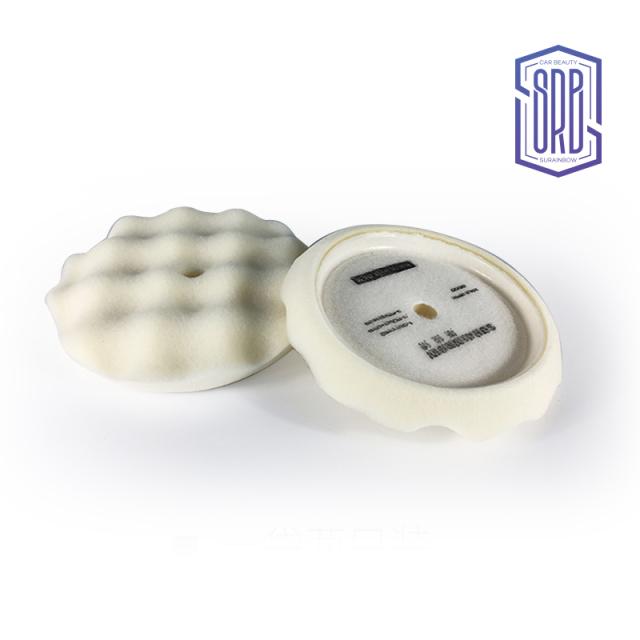
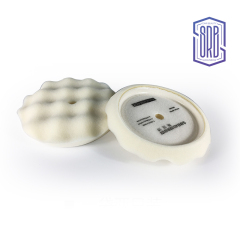
- The gray backing face carries a printed label with the pad size, which matters once a drawer holds pads of several diameters and the difference is no longer obvious by touch.
- Checked by the people who make the chemistry.
- We are a car wax manufacturer as well as a pad supplier, so the foam is run against the waxes, glazes and sealants it will actually carry instead of being tested in isolation.
Machine Pairing & Setup
A 6 inch pad wants a backing plate of the same nominal size so the foam is supported right out to its edge; an undersized plate lets the rim flex and fold against the panel. It is the part of most car care kits that gets matched to the machine last, and it is the one that decides whether the pad runs flat.
On a dual-action polisher the pad is forgiving: keep it flat, let the machine do the work, and use moderate speed for glaze and low speed for wax. On a rotary the same pad needs a lighter hand, because the wave face spreads product quickly and too much pressure or speed builds heat faster than the foam can shed it.
Prime the face lightly before the first pass. A thin film worked into the ridges, then small drops for each section, is enough; the wave face carries product further than a flat pad, so a wetter face usually means more to wipe off afterwards rather than a better finish.
Work in overlapping passes across one manageable section at a time and check the finish as you go. A car polish that flashes clear tells you the pad is spreading evenly, while one that stays wet and streaky usually means too much product, too slow an arm or a face that needs cleaning.
Polishing Sequence
- Wash and dry the panel.
- A clean, dry surface is the only way to see what the paint actually needs.
- Dust and road film load a pad within one pass and leave you chasing marks that are not in the paint at all.
- Decontaminate.
- Bonded iron, tar and old wax have to come off before any pad touches the surface.
- The car care products that do that job are a separate step, and skipping it drives contamination straight into the foam.
- Cut with a wool or heavy foam pad.
- Real defects — swirls, oxidation, sanding marks — need a cutting pad and a compound or car polish with genuine cut behind it.
- This glaze pad is not the tool for that work and will simply skate over the damage.
- Refine where the paint needs it.
- On softer finishes a second pass with a lighter foam and a refining polish removes the haze the cutting step leaves behind.
- Check under a bright light before deciding; not every panel needs this stage.
- Glaze, finish or wax with this pad.
- This is the stage the 6 inch wave pad is made for: a glaze, a finishing polish, or a car wax applied by machine at low speed to leave gloss and protection without removing more paint.
- Wipe down and inspect.
- Remove residue with a soft microfiber, look along the panel from a low angle, and only then decide whether another pass is needed.
- Most finishing complaints come from one extra pass that was never necessary.
Pad Care & Working Practice
- Clean the face between sections.
- Brush the foam or blow it out with low-pressure air after every panel or two, because dried slurry is what turns a finishing pad into a scratching pad.
- A soft pad brush is one of the cleaning tools for car that belongs in your car care supplies before it belongs in a drawer.
- Wash with lukewarm water, never solvent.
- Hold the pad under lukewarm water with a drop of mild soap, work the residue out with your thumbs and squeeze it out — do not wring or twist, which tears the foam cells along the edge.
- Dry face-up in open air.
- Stand the pad on its backing or lay it face-up on a rack.
- Heat from a radiator, a hot bonnet or direct sun will deform the wave face, and nothing brings that shape back.
- Rotate pads instead of running one hot.
- Two or three pads per vehicle keeps each one cooler and cleaner.
- A pad loaded with dried car polish cuts differently from a fresh one, and that difference shows up as uneven gloss across panels.
- Keep them flat and separated.
- Store pads face-up in a lidded box, away from heavy bottles and open car wax tins that can crush the foam or leave residue on the face between jobs.
- Retire a pad when the face collapses.
- Once the wave ridges flatten, the edge softens or the backing starts lifting, the pad no longer spreads product evenly.
- Move it to wheel arches and door shuts rather than keeping it on paint.
Specifications
| Specification | Detail |
|---|
| Model | T-602B |
| Pad diameter | 6 inch |
| Pad type | Glaze and finishing foam pad |
| Face pattern | Wave-shaped contoured face |
| Face material | Foam |
| Backing | Gray backing face with printed label |
| Centre | Moulded centre hole |
| Weight | 0.04 kg |
| Brand | SURAINBOW |
| Place of origin | Guangdong, China |
| Intended use | Waxing the car and cleaning paintwork |
| Working stage | Glaze and final finish after compounding |
Sampling, Packaging & Ordering
- Tell us the job, not only the code.
- The machine you run, the pad diameter you use today and the stage you are buying for are what let us confirm this is the right pad.
- As car cleaning products manufacturers we work from the application detail rather than the number printed on the backing alone.
- Test a pad on a real panel.
- Ask your sales contact about sample pads so your team can run a test panel on a colour you actually work with and compare it against the pad in use today.
- That comparison is worth more than any description, and it is the step that decides a bulk order.
- Approve packaging and labels.
- Where the pad goes into your own sleeve, box or private-label line, artwork, label content and carton marks are proofed and confirmed before the production run.
- We work as a car wax manufacturer with OEM and private-label accounts, so this is a routine step rather than a special arrangement.
- If the pad forms part of a car care kits bundle for your market, confirm the pack count at the same time.
- Fix the bulk reference.
- The pad you approve becomes the reference for the batch — face pattern, backing, label and foam feel.
- Ask which inspection records come with your order, and keep one sealed pad from the approved sample so later deliveries can be compared against something solid.
- Confirm balance and dispatch.
- Payment terms, balance and shipping method are agreed on the order.
- In stock and fast shipping applies to standard SURAINBOW items, so confirm the current position for your quantity when you place it rather than assuming a date.
- Take delivery of the documents.
- Commercial invoice, packing list and any paperwork your market or your own customer requires are prepared together with the shipment.
- Tell us the list you need at quotation so nothing has to be produced after the container has closed.
- Handle any issue against the batch reference.
- If a carton arrives short or damaged, or a batch does not match the approved pad, send the order reference, the batch number, the affected quantity and clear photos.
- That is what makes a claim traceable instead of a conversation.
Scale & Supply Capability
SURAINBOW is run by Guangzhou Liangdian Automotive Supplies Co., Ltd., a factory-trade operation set up in Guangzhou in 2010 and now 50 people strong. Sixteen years in car care have given us a one-stop supply position: our own SURAINBOW lines are held in stock for fast shipping, and an associate factory with modern production equipment and an established quality management system keeps replenishment moving. We take OEM and ODM work and our R&D team develops to your specification. Buyers in the Middle East, the United States, Southeast Asia, Europe, the UK, Russia, Africa and Australia already order from us.
FAQ
Which machine and backing plate does the 6 inch pad fit?
It is built for a 6 inch backing plate on a dual-action or rotary polisher, and the moulded centre hole lets you centre it by eye before the machine starts. Most car care kits are built around one machine size, so measure the plate you already run: the pad needs a plate of the same nominal size that supports the foam out to its edge.
What is the difference between this glaze pad and a cutting pad?
A cutting pad is built to remove paint defects and works with a compound that has real cut behind it. This pad is the finishing step in the same car care products line: it carries glaze, finishing polish or wax, spreads them evenly and leaves gloss without taking more paint off. Keep both in the kit — the cutting pad does the correction, this one does the finish.
Which products are compatible with the wave face?
Glazes, finishing polishes, cleaner waxes and liquid waxes all sit comfortably on it. We are a car wax manufacturer as well as a pad supplier, so the face has been run against the waxes and glazes in our own range — that is why it spreads a thin film instead of holding product in the middle and releasing it in patches.
Will it work with the glaze or polish brand I already stock?
Yes. The foam is chosen to work with standard glaze and finishing polish formats rather than one specific formula. We are one of the car cleaning products manufacturers supplying this category, so tell us what you are running and we will say whether the face needs a lighter or a heavier product load.
How should I clean and store the foam pad?
Rinse it in lukewarm water with a drop of mild soap, squeeze rather than wring, and dry it face-up in open air. Treat it like the rest of your car care supplies: keep it flat, keep it clean and keep it away from heat, and the wave face will hold its shape between jobs.
What should I confirm before ordering pads for my shop?
Confirm the backing plate diameter on your machine, whether you want the pad for glaze, wax or both, and how many you need per vehicle so the first order covers a full rotation. Pads are among the cleaning tools for car that only work properly when they match the plate, so that measurement is the one to check first.