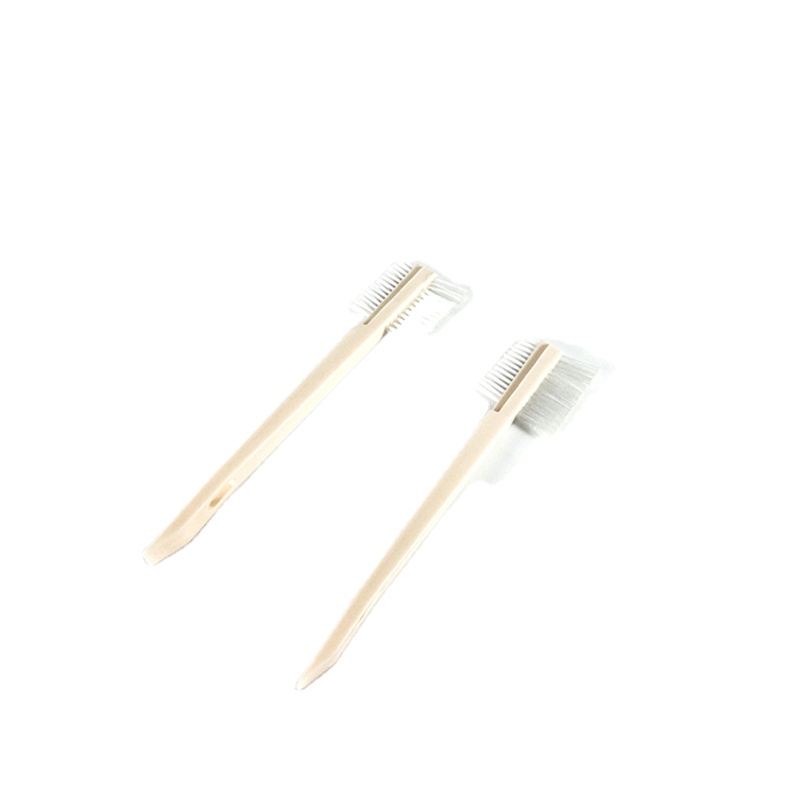
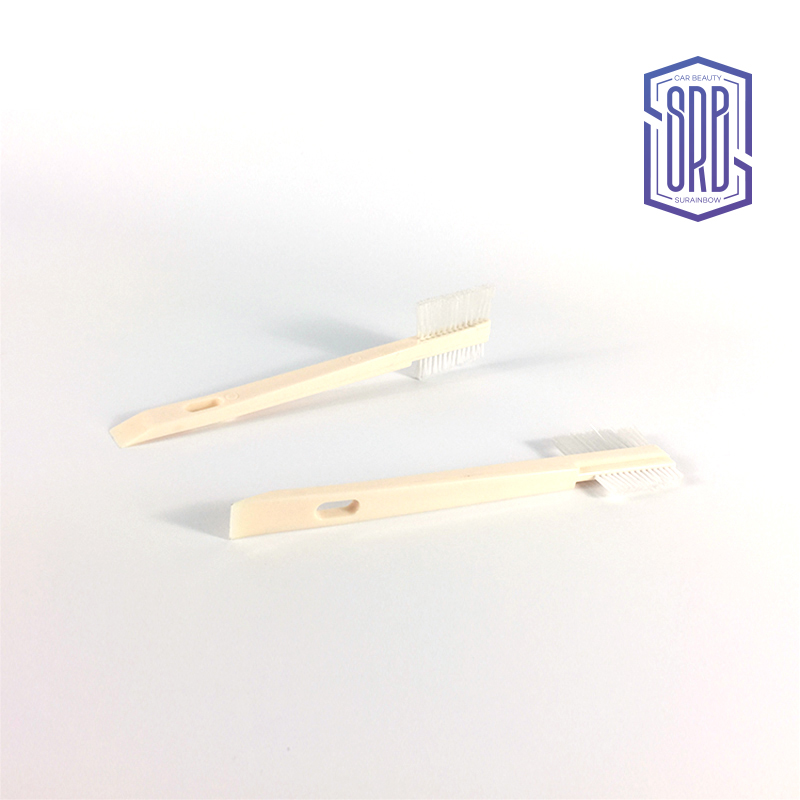
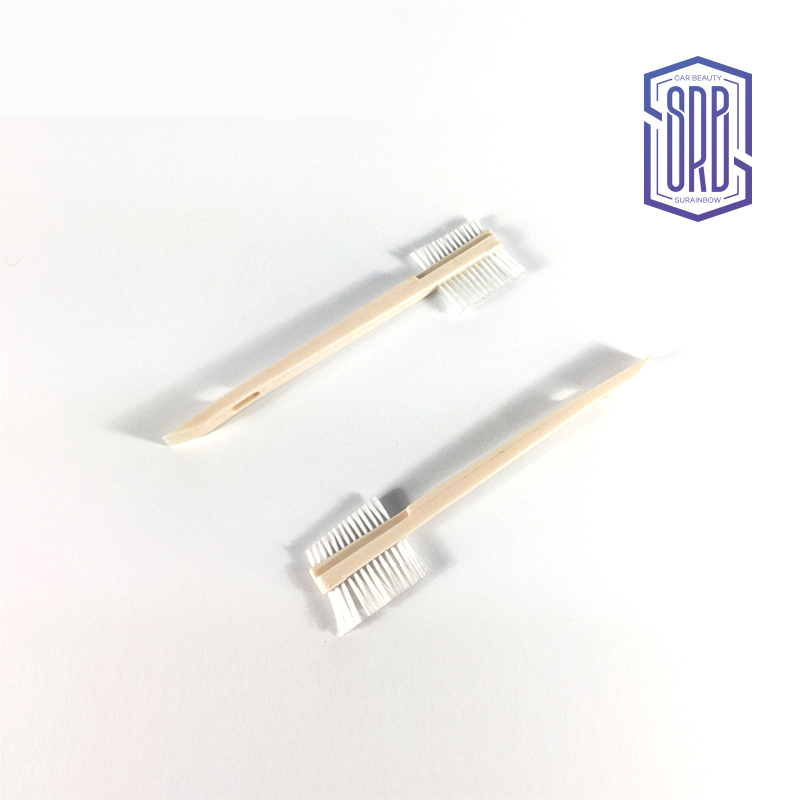
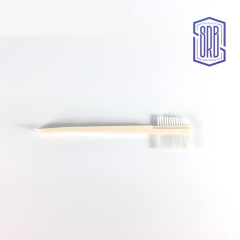
Product Overview
SURAINBOW is one of the car cleaning products manufacturers that detailing shops and distributors buy their brushes, sponges and pads from, and this engine brush sits in that same clean tools range. It is a small, light piece that fills out an order rather than carrying it, which is how most buyers treat it — a carton alongside the chemicals, not a line on its own. Nothing about the brush is complicated. That simplicity is the point: it is one of the cleaning tools for car detailing that a bay reaches for most often, because it is the one sent into the dirtiest parts of the job. It works wet or dry, in a bucket or in a spray bottle, on the bonnet or under it. Nothing needs charging, nothing clips on, and nothing stops working after it has been dropped in a bucket of shampoo.
Build & Materials
- PVC/ABS body with a PP handle — two materials doing two different jobs.
- The body takes the knocks and the chemical load, and the handle is a separate polypropylene moulding that stays firm in a wet hand instead of going slick.
- Built for the chemicals a bay actually uses — alkaline degreasers, the acidic car wash cleaner that goes on wheels, traffic-film removers and the sort of engine bay chemicals car cleaning products manufacturers build a detailing brush to handle.
- Rinse the brush after the job and the body keeps its shape rather than softening at the head.
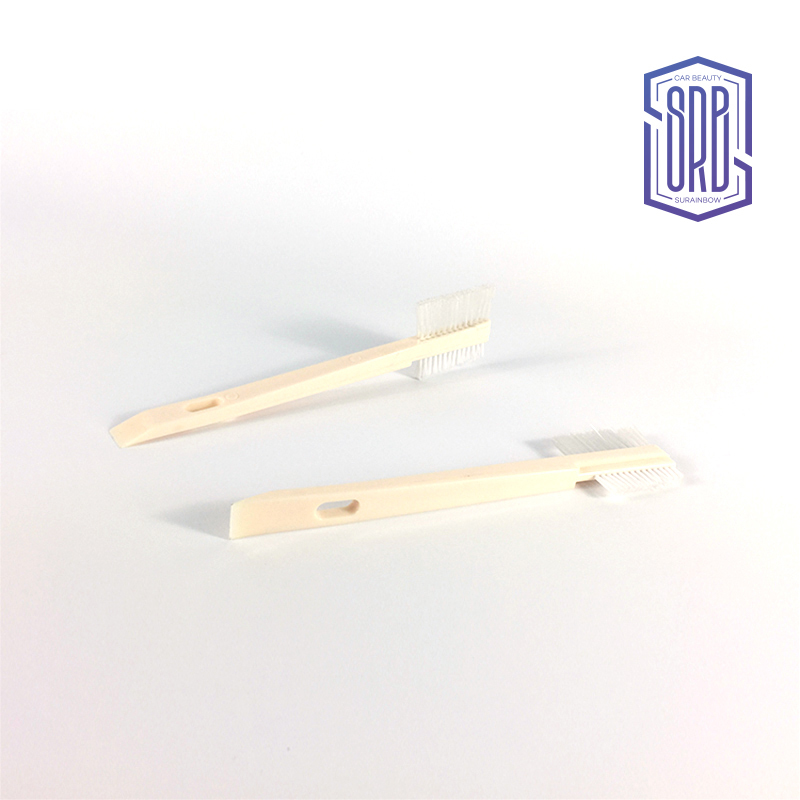
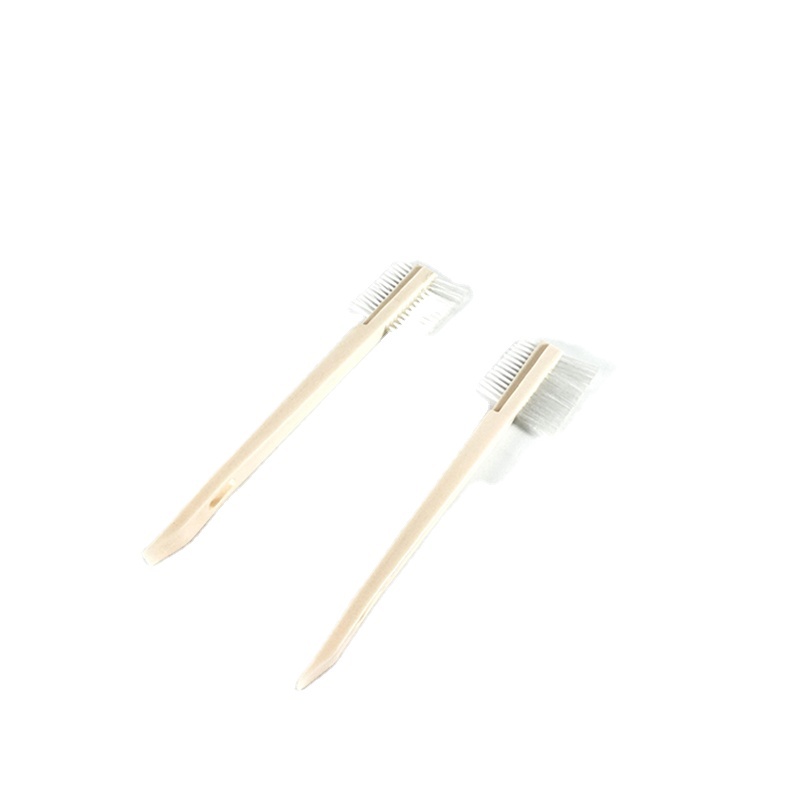
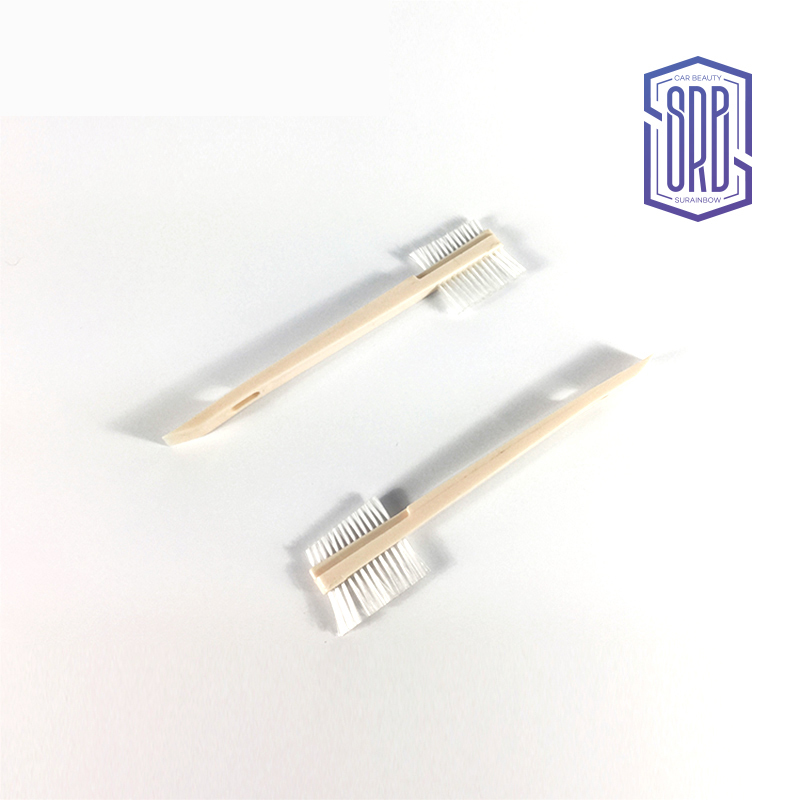
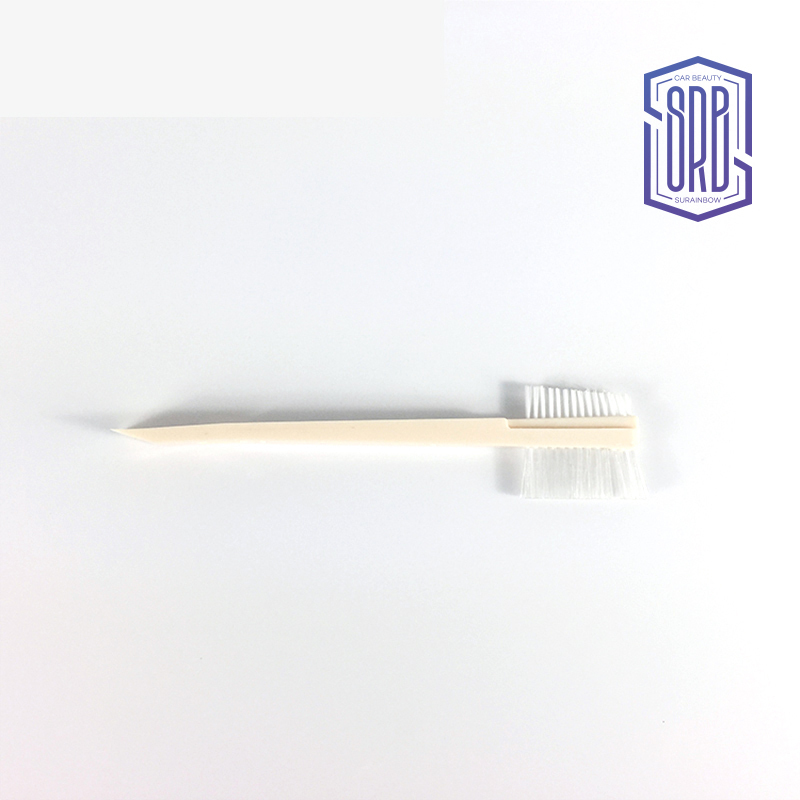
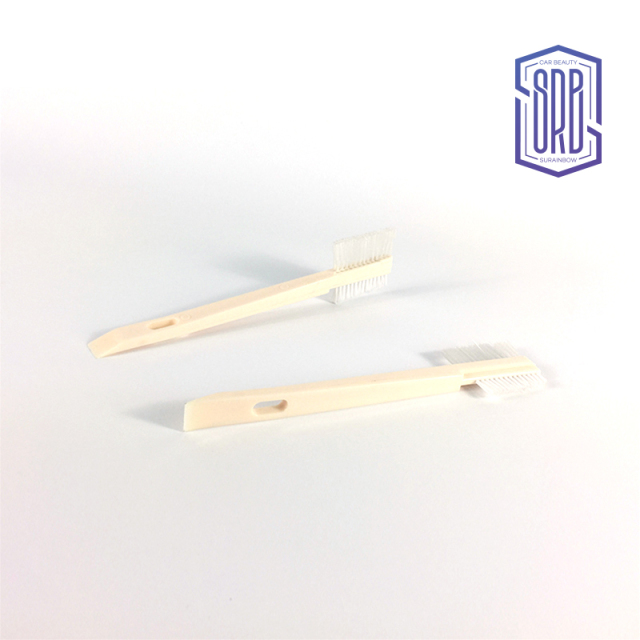
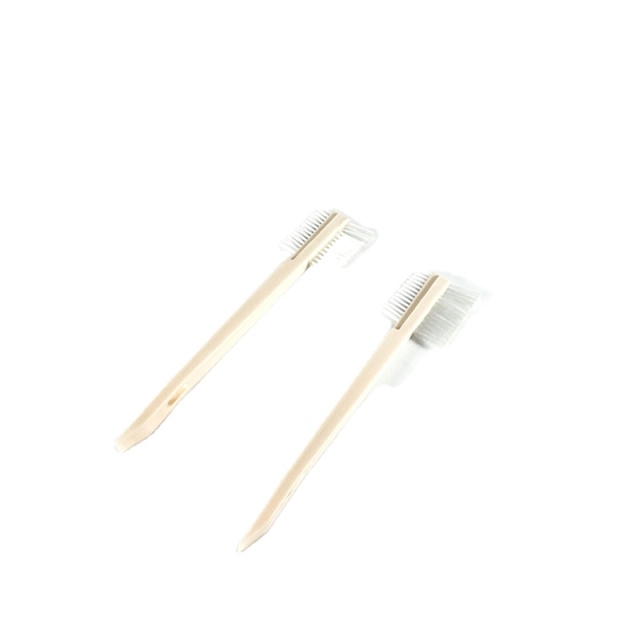
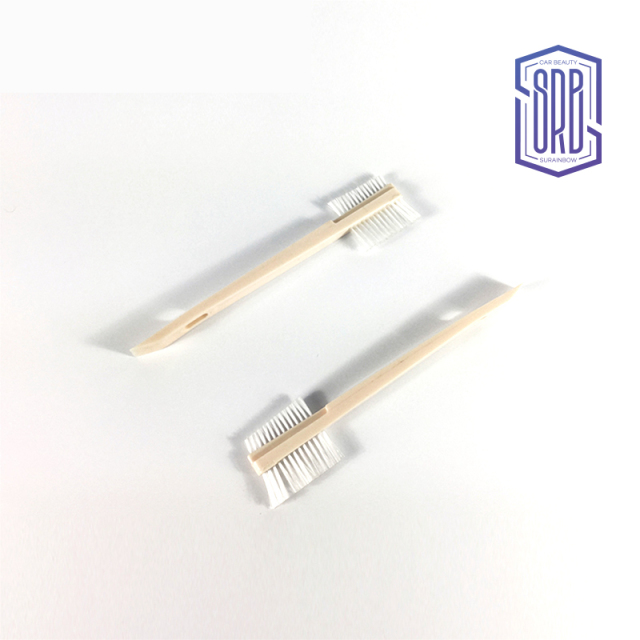
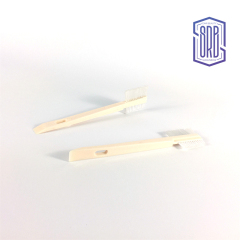
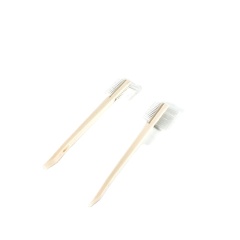
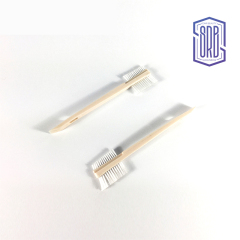
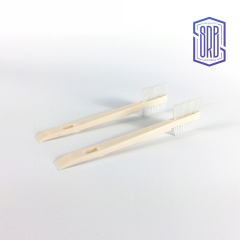
- Side seam construction — the head is built as a side-seam brush, the shape that keeps the bristle rows tight and square, so the head holds its line when you push it into a gap instead of splaying under pressure.
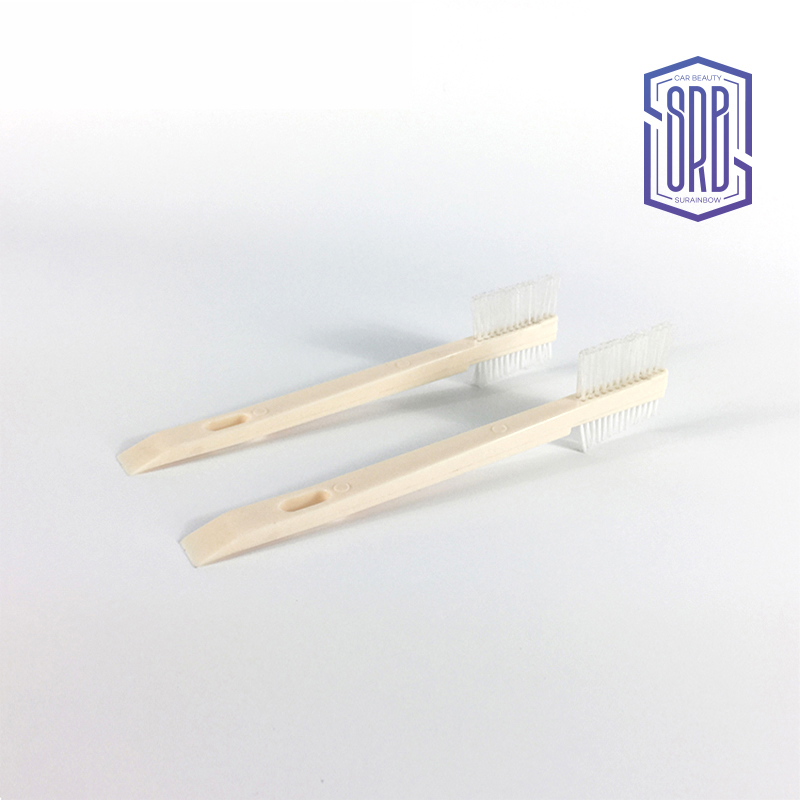
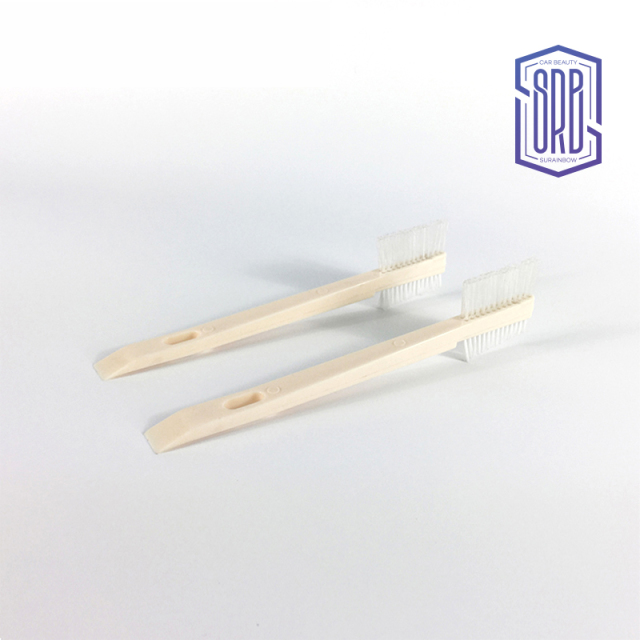
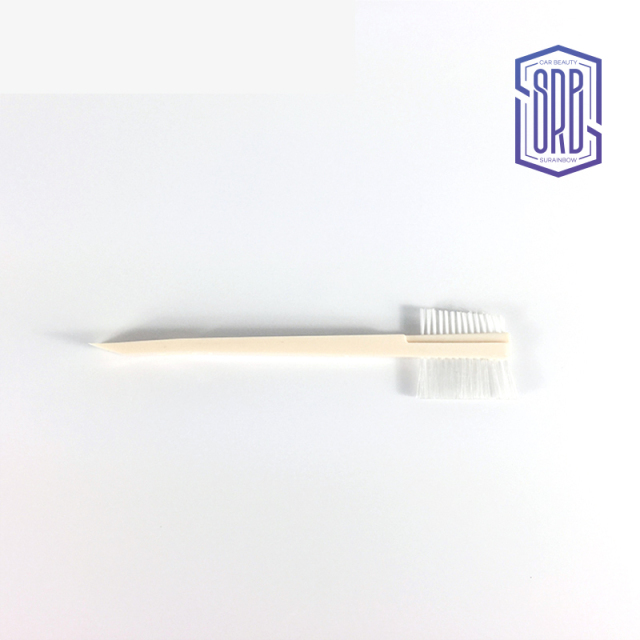
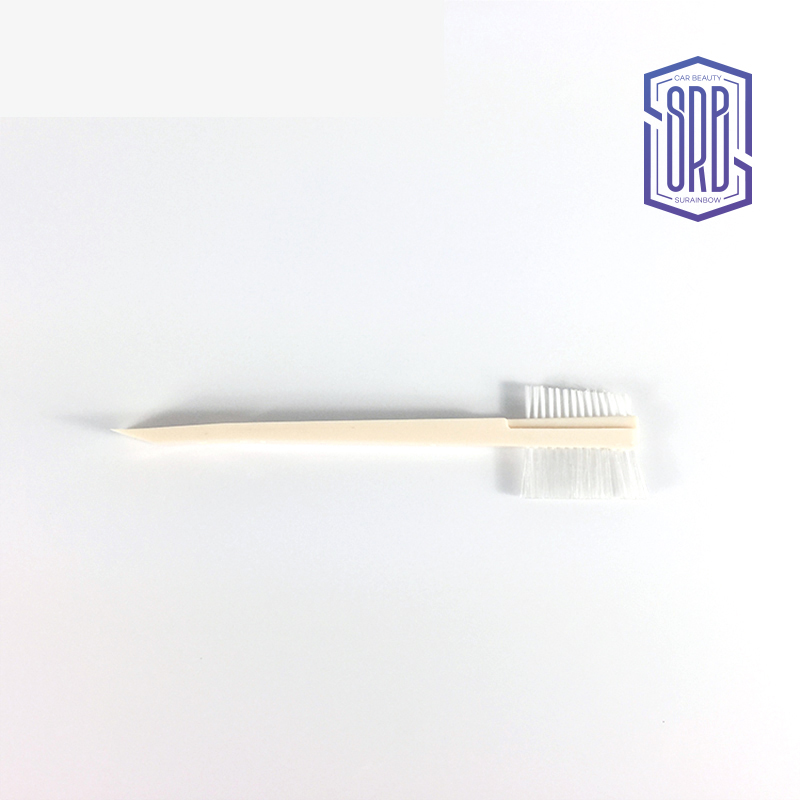
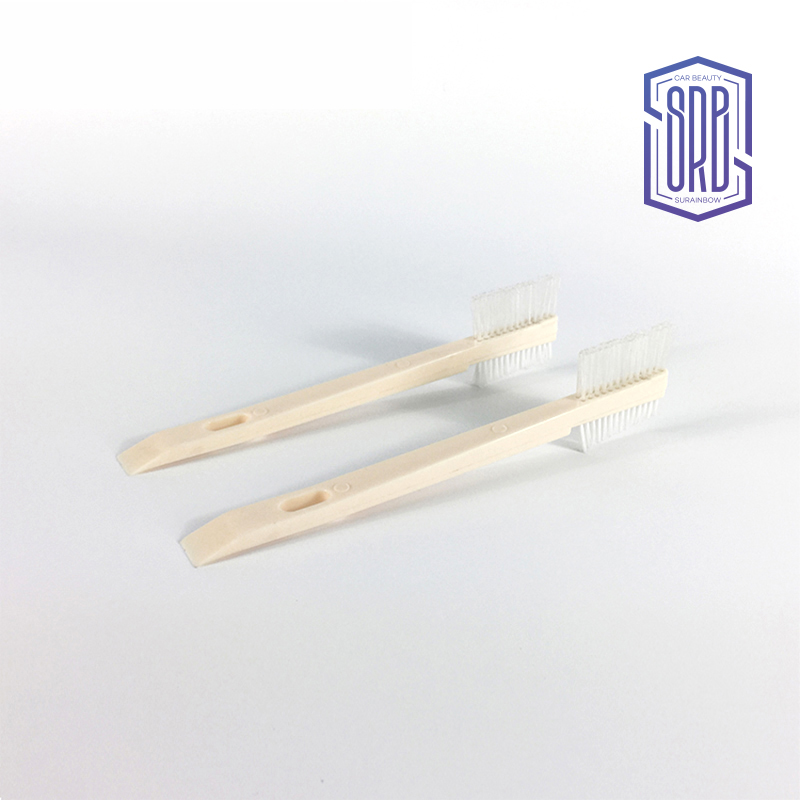
- A flat face and a narrow edge — the flat head gives a broad working face for engine covers and a thin edge for slots, badges and the gap between a lamp and a wing.
- Bristles set in rows spread the load across the face rather than putting one hot spot on the surface you are cleaning.
- Slim, tapered handle — the handle stays slim along its length and tapers at the end, so it can be angled past a hose, a bracket or a strut without fouling the part you are working around.
- One part number, no consumable head — there is nothing to unclip or replace.
Engine Bay & Tight-Area Work
Under the bonnet is where the brush earns its keep as a car wash engine cleaner. Once the block, hoses and plastic covers have been soaked, it works into the crevices that hold the last of the grease — around the filler neck, along the top of a cam cover, behind the battery tray — without dragging a greasy mitt back over the painted inner wings.
The front end is the second job. Grille slats, the recess behind a badge, the gap where a bumper meets a wing and the mesh in a lower intake all collect a line of dirt that survives a normal wash. The flat head runs along a slat, and the same head turned edge-on clears the channel around a badge.
Panel gaps, door jambs, the fuel flap and the shut lines around the boot are the places a customer sees on collection. A car detailing cleaner that fits those channels is one of the car care supplies that let you finish the detail instead of polishing around the dirt and hoping nobody looks.
Wheels get the same treatment: the recess around each lug nut, the flat behind a spoke, the caliper area and the lip where the tyre meets the rim. This is where a brush proves itself, because it is going into wheel cleaner and agitation rather than shampoo and a light rinse.
A dedicated brush also protects the rest of the wash. Grease from an engine bay or a wheel arch never reaches the mitt, so the mitt stays on paint and the brush takes the dirty end of the job. That separation is why a brush belongs with the car care products on the trolley rather than another sponge.
Use, Cleaning & Replacement
- Start with the chemical, not the brush. Pre-soak the area with your car detailing cleaner, degreaser or wheel cleaner, give it a moment to work, then agitate with the bristles — the car wash engine cleaner lifts dirt that has already been loosened.
- Keep the brush away from the wash bucket. Load it from a chemical bottle or a separate container — a degreaser in the engine bay, a car wash cleaner on wheels — so grease and road dirt never get into the shampoo you use on paint.
- Use the flat of the head on broad surfaces and the edge of the head in channels. Let the bristle tips do the work; leaning on the head splays the bristles, slows you down and puts pressure where you do not need it.
- Rinse between sections. A quick dip in clean water stops dirt from one area being carried into the next, and it keeps the bristles free of the grit that does the damage — a small habit that separates cleaning tools that last from ones that splay.
- Hang it to dry, bristles down. The slot in the handle is there for a hook or a rail; a brush left standing in a bucket goes soft at the head and stiff at the tips.
- Retire it when the bristles splay, stiffen or start shedding, or when the head cracks at the seam. A worn brush pushes dirt around instead of lifting it, and replacing it costs far less than re-doing a panel — the sort of simple replacement car cleaning products manufacturers expect a busy bay to keep on the shelf.
Specifications
| Property | Value |
|---|
| Model | T-632 |
| Product type | Detailing brush |
| Category | Car care products |
| Body material | PVC / ABS |
| Handle material | PP (polypropylene) |
| Overall length | 19 cm |
| Head | Flat rectangular head with rows of bristles |
| Construction | Side seam |
| Chemical resistance | Acid and alkali resistant |
| Application | Car detailing — engine bay, grille, badges and panel gaps |
| Brand | SURAINBOW |
| Place of origin | Guangdong, China |
Typical Buyers
- Detailing studios and coating bays — one brush on the wash trolley and one in the engine bay kit.
- It is the end of the car care products range that gets used every day and replaced without a discussion.
- Car wash chains — the brush goes out with the sponges, mitts and wheel cleaners as part of the standard bay kit, and standardising on one item means every site works the same way.
- It is the sort of car care supplies a chain reorders on a schedule rather than item by item.
- Importers and distributors — a light, low-cube item that rounds out a cleaning tools for car range without adding freight weight, and one that is easy to repeat-order once a market has taken it.
- Private-label brands — if the brush is going out under your own name, label and carton artwork can be agreed and proofed with your sales contact before production.
- Body shops and paint-prep areas — used to clear dust and polish residue out of shut lines and badge recesses before masking or coating, where a cloth leaves lint behind and a mitt leaves dirt.
- Mobile detailers — it packs flat, takes up almost no room in a van, and covers the jobs that would otherwise need two or three different tools.
Ordering & Delivery
- Quantity and minimum order — In stock and fast shipping.
- Minimum order quantities follow the carton configuration you choose and are confirmed with your quotation.
- Sampling, testing and sample approval — ask your sales contact about sample availability and any charges, then test the brush the way your bay will use it: bristle density, head shape, handle grip when wet.
- Once you approve a sample it can be sealed as the reference for bulk, so the second delivery is measured against the first.
- Packaging design, proofing and approval — carton style, label artwork, barcode and shipping marks are agreed and proofed before production.
- Approve the proof in writing; that approved version is what the finished cartons are checked against.
- Production and pre-shipment check — quantity, label and carton condition are checked against the approved proof before the carton is closed, so a short pack or a crushed box is caught at the factory rather than at your warehouse.
- Balance payment, shipment and document handover — confirm the balance and payment stage, the shipping method, consignee details and carton marks.
- Invoice, packing list and any test reports or market documents you need are prepared and handed over with the shipment; tell us at quotation which ones your market asks for so they travel with the goods.
- After-sales support and batch traceability — every carton carries a batch reference.
- If a box arrives crushed, short or wet, quote that reference with the affected quantity and photos; report packing, leakage or shortage issues within 7 days of receipt and quality concerns within 30 days, and the batch is traced back through the production records.
- Mixed orders — brushes, sponges, pads and chemicals can be consolidated into one car care supplies shipment, so freight and paperwork stay on a single set of documents.
Scale & Supply Capability
SURAINBOW is run by Guangzhou Liangdian Automotive Supplies Co., Ltd., a factory-trade operation set up in Guangzhou in 2010 and now 50 people strong. Sixteen years in car care have given us a one-stop supply position: our own SURAINBOW lines are held in stock for fast shipping, and an associate factory with modern production equipment and an established quality management system keeps replenishment moving. We take OEM and ODM work and our R&D team develops to your specification. Buyers in the Middle East, the United States, Southeast Asia, Europe, the UK, Russia, Africa and Australia already order from us.
FAQ
What is this brush designed to clean?
Under the bonnet, it works as a car wash engine cleaner around the block, the hose runs and the plastic covers, and it gets into the crevices a mitt cannot follow — the filler neck, the top of a cam cover, the space behind the battery tray. Outside, it handles grille slats, badge recesses, door jambs and the fuel flap. For large flat panels a mitt is still faster.
Will the bristles mark paint or gloss plastic trim?
Used the way it is meant to be used — wet, with cleaner on the surface and the bristle tips doing the work — it is fine on paint, plastic and rubber. Keep the surface lubricated, do not lean on the head, and try a small hidden area first on fresh paint or piano-black trim. The brush is there to lift dirt a mitt cannot reach, not to scrub a panel.
Can it be used with acidic wheel cleaners and alkaline degreasers?
Yes. The body is acid and alkali resistant, so the brush can move from an engine bay degreaser to a car wash cleaner on wheels without the plastic going soft. Rinse it in clean water between the two and again when the job is finished, and it stays serviceable.
Does it need a dedicated cleaner?
No. Use whatever the surface calls for — a degreaser under the bonnet, a car detailing cleaner on door jambs and badges, wheel cleaner on rims — and let the brush agitate it. The chemistry is your call; the brush is only the tool.
Will it get into grille slats, badges and panel gaps?
Yes. The flat head runs along a grille slat, and turned edge-on it clears the channel around a badge and the shut line between two panels. It is one of those cleaning tools for car front-end work that stays in the hand from the grille round to the fuel flap.