Product Overview
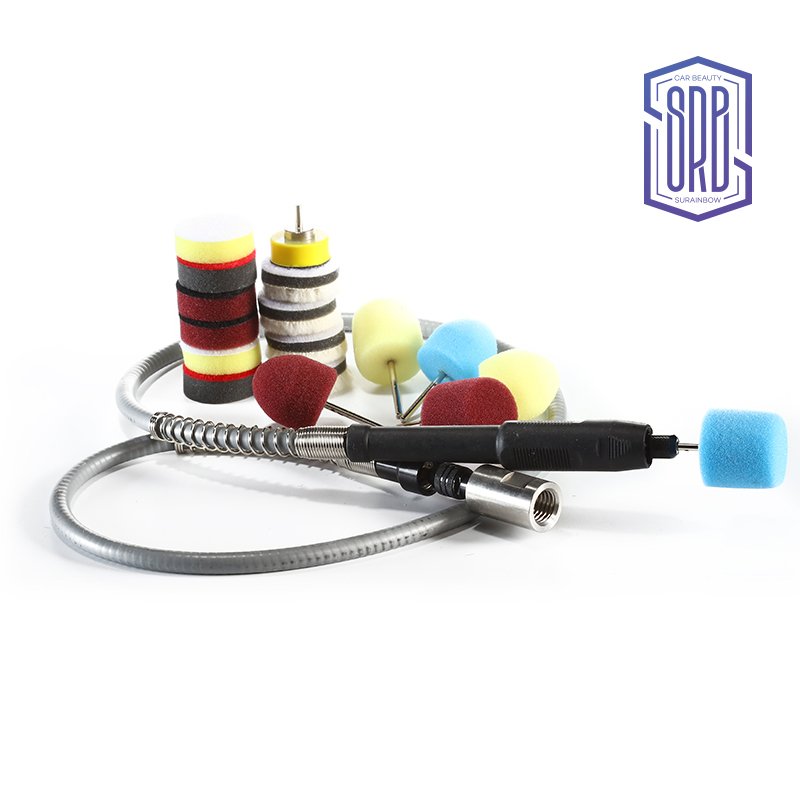
The SURAINBOW T01 is a pneumatic detail polishing tool: a rotary handpiece driven by compressed air, supplied with assorted foam pads on metal mandrels in a moulded case. It is built for the parts of a car that a full-size polisher physically cannot reach. It is a second-pass tool rather than a replacement. The large machine corrects the panels; this one follows into recesses, mesh and narrow edges where a full-size pad never lands. And it is not a car detailing cleaner — the cutting comes from the pad and the compound you load, while the tool's job is to deliver that combination exactly where a hand cannot hold a pad steady. Because each pad fixes to its own mandrel, one handpiece covers a cutting pass and a finishing pass without a tool change: swap the pad, wipe the residue, carry on. For a bay that buys car care supplies by the carton, that is the difference between a tool that gets used daily and one that stays in the cupboard. It sits in the same range as our brushes, mitts and the rest of our car care products, so a distributor choosing between car cleaning products manufacturers can build a tool line and a chemical line from one supplier instead of chasing two sets of carton data and two sets of documents. This is the part of that range that handles correction in the tight spots where a big machine stops.
Kit Contents
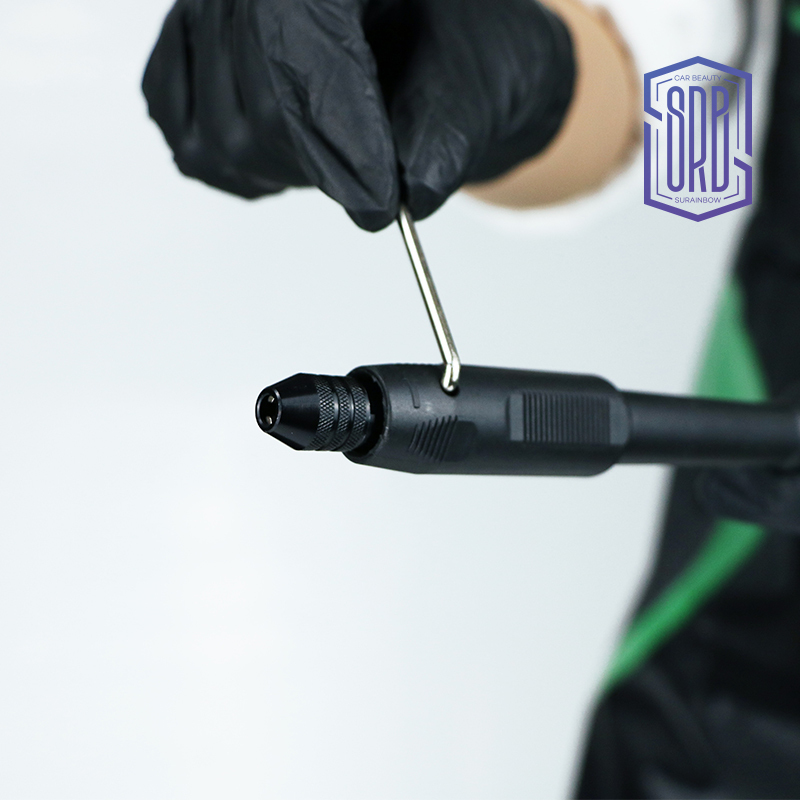
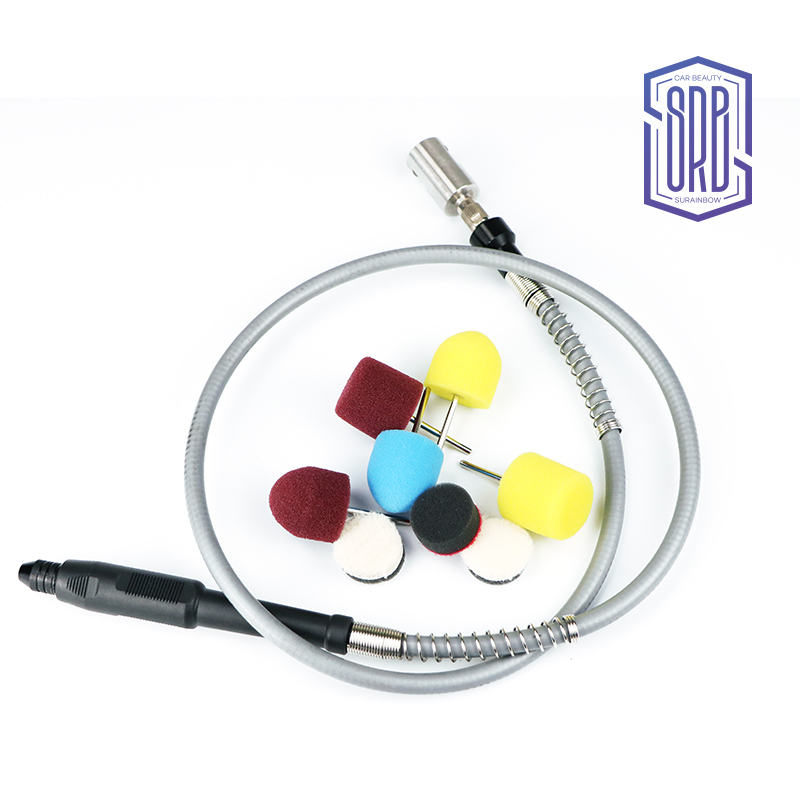
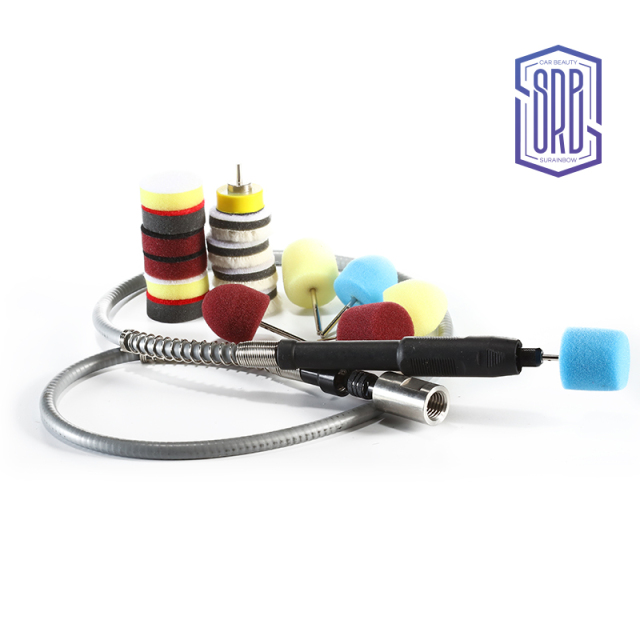
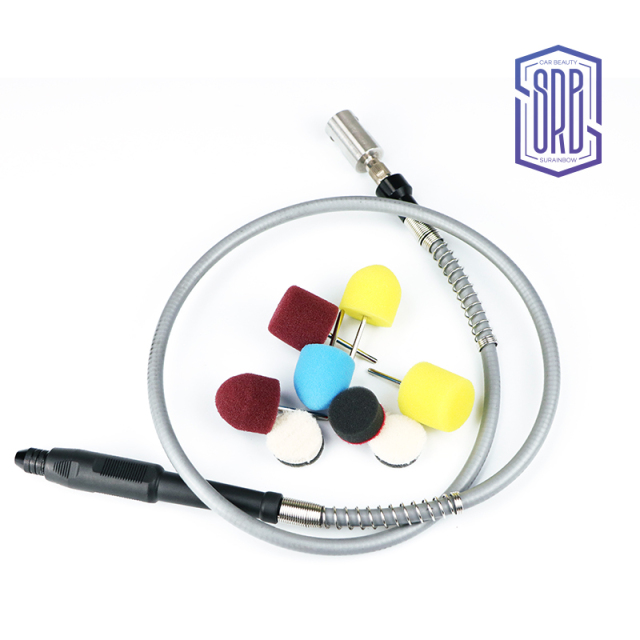
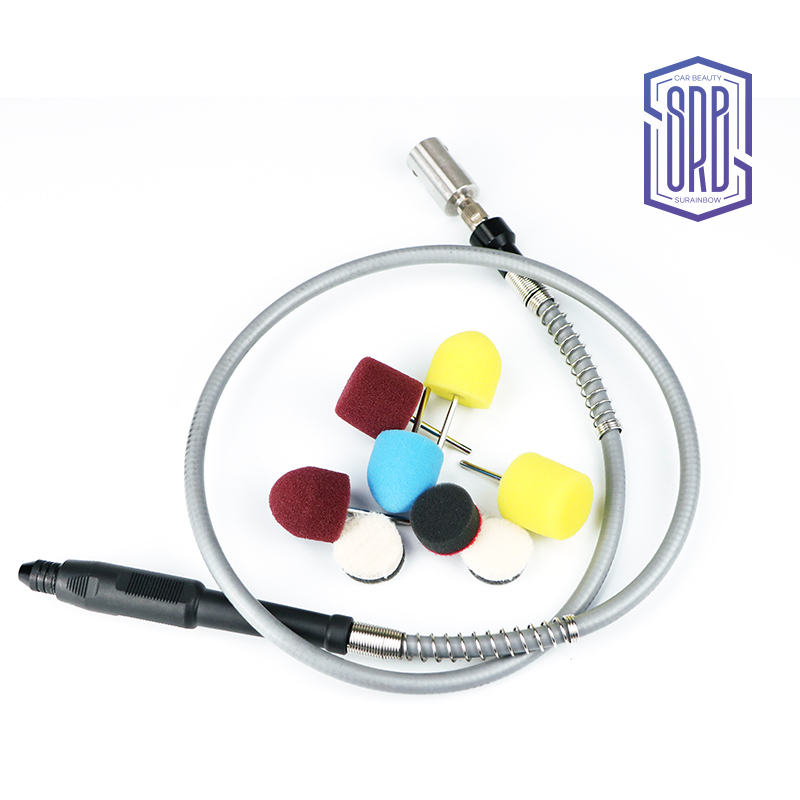
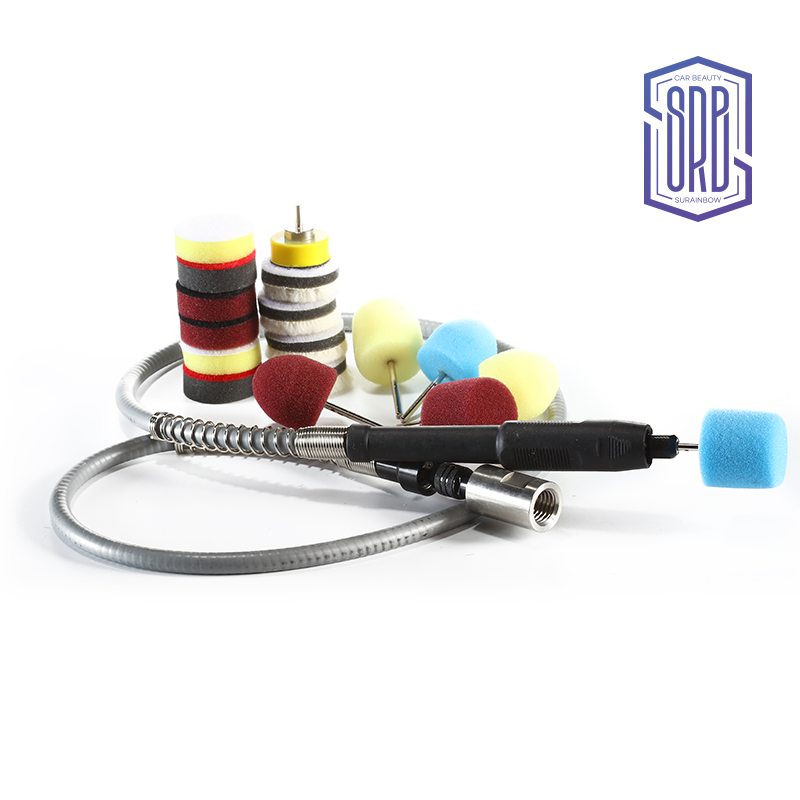
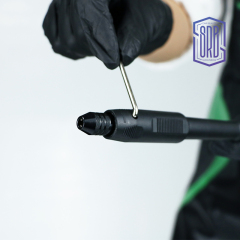
- Rotary handpiece. A matte black body with a textured grip that stays controllable when your hands are wet; the drive runs through the body, so the weight sits in your palm while the head works at the far end of the shaft.
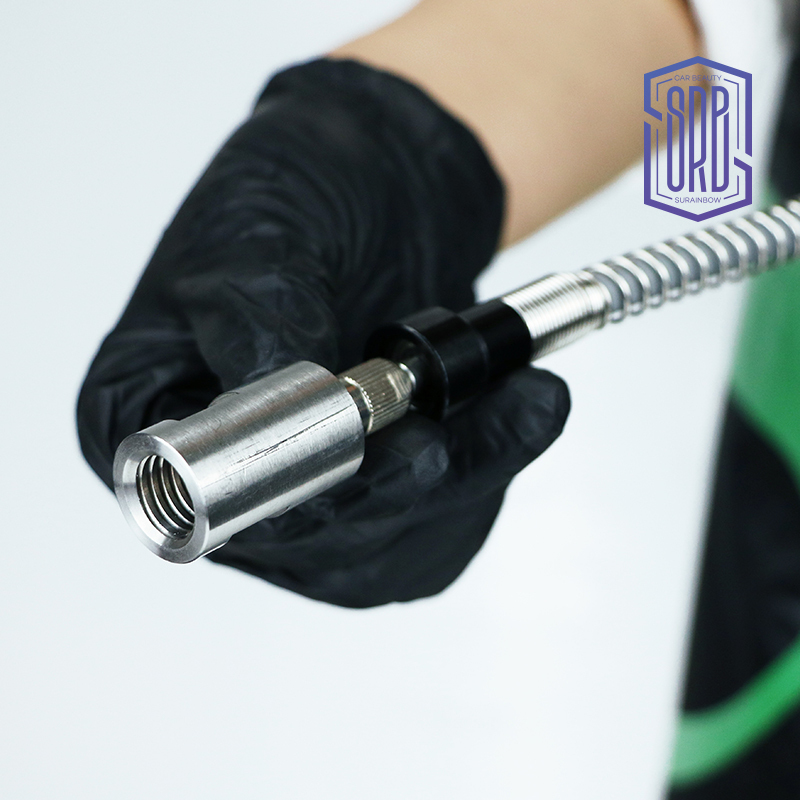
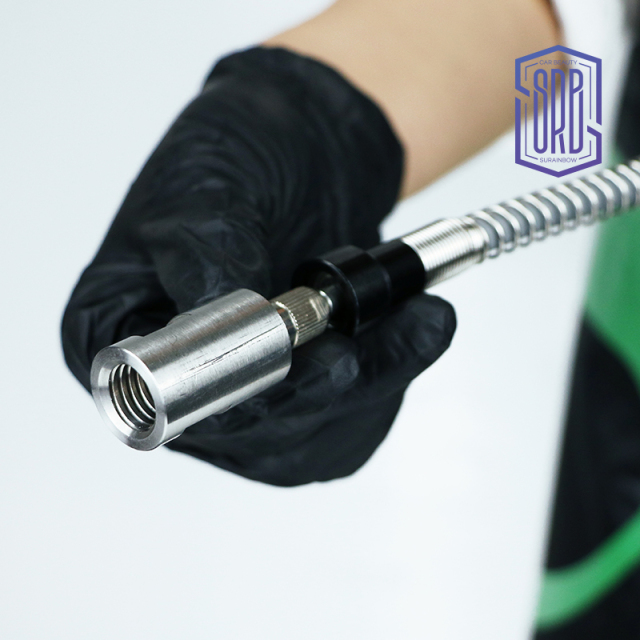
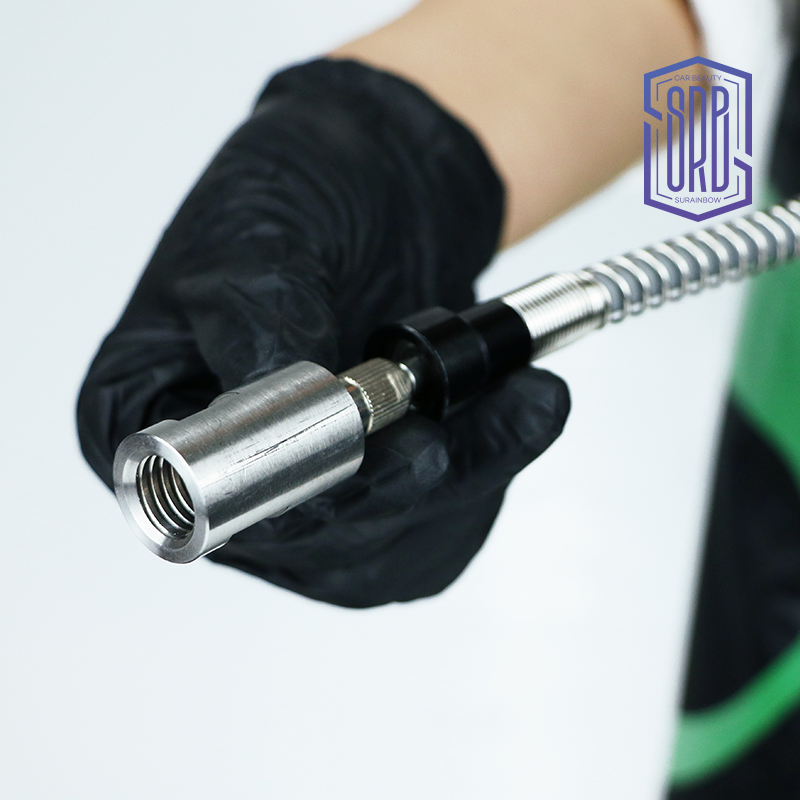
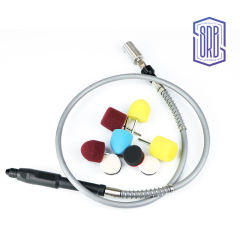
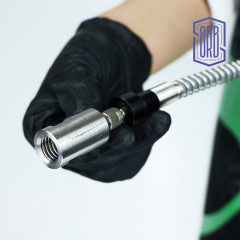
- Flexible shaft. Spring-wrapped and threaded at the handpiece end, so the tool body can hang from a hook or belt while the head follows a recess without the tool fighting your wrist.
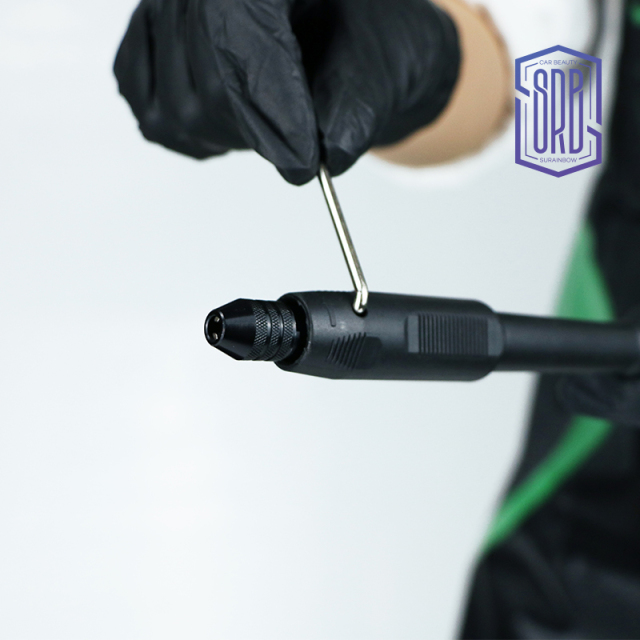
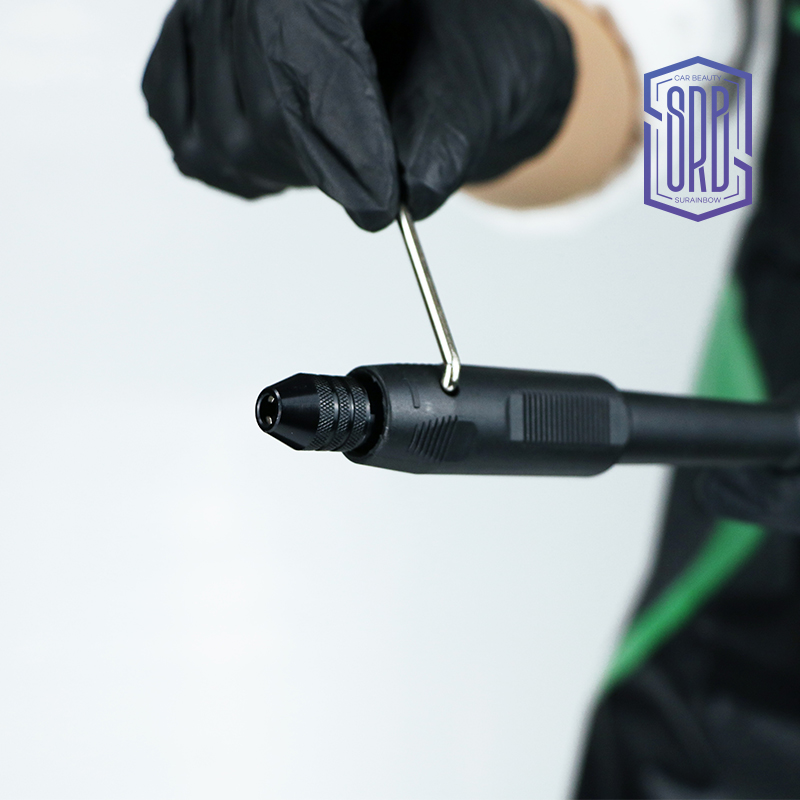
- Knurled collet and adjustment wrench. The collet grips the mandrel shank and the wrench lets you nip it firm without crushing it — a collet that has been over-tightened is harder to release next time.
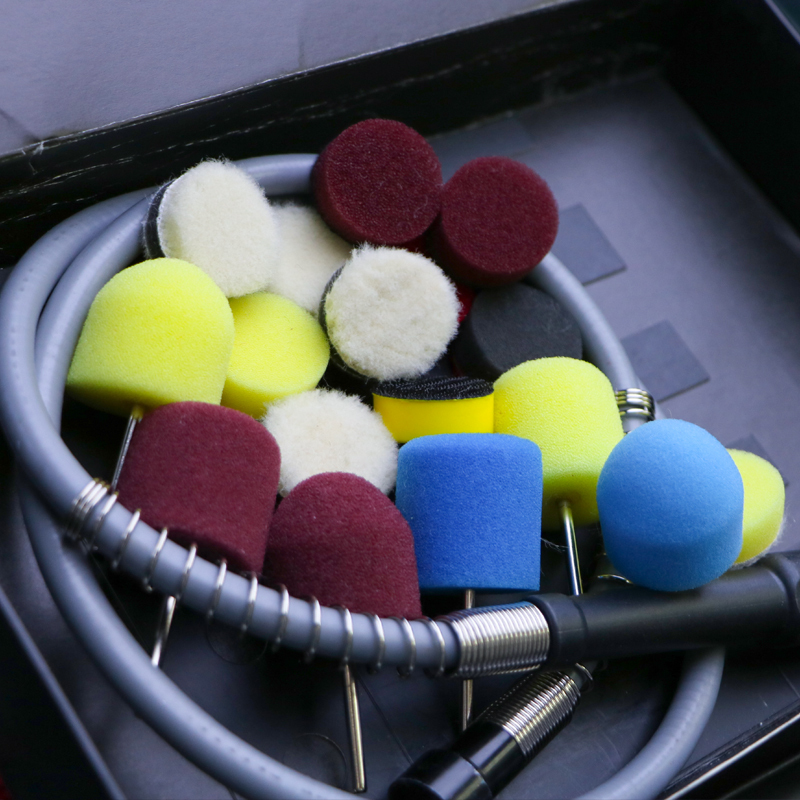
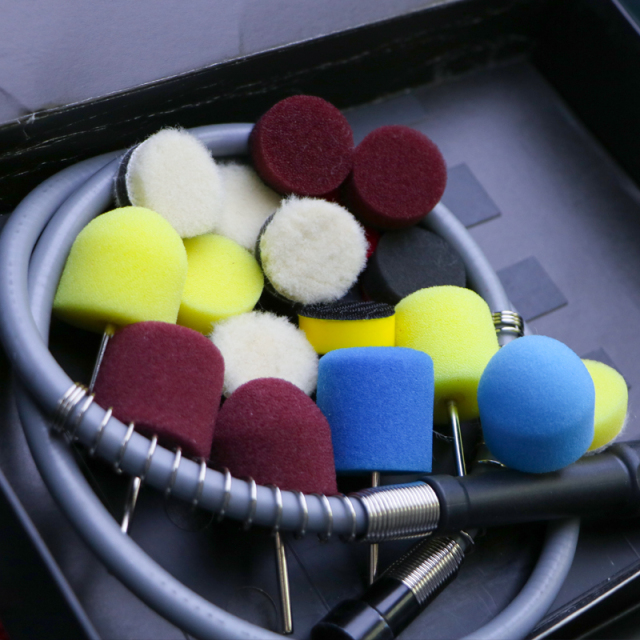
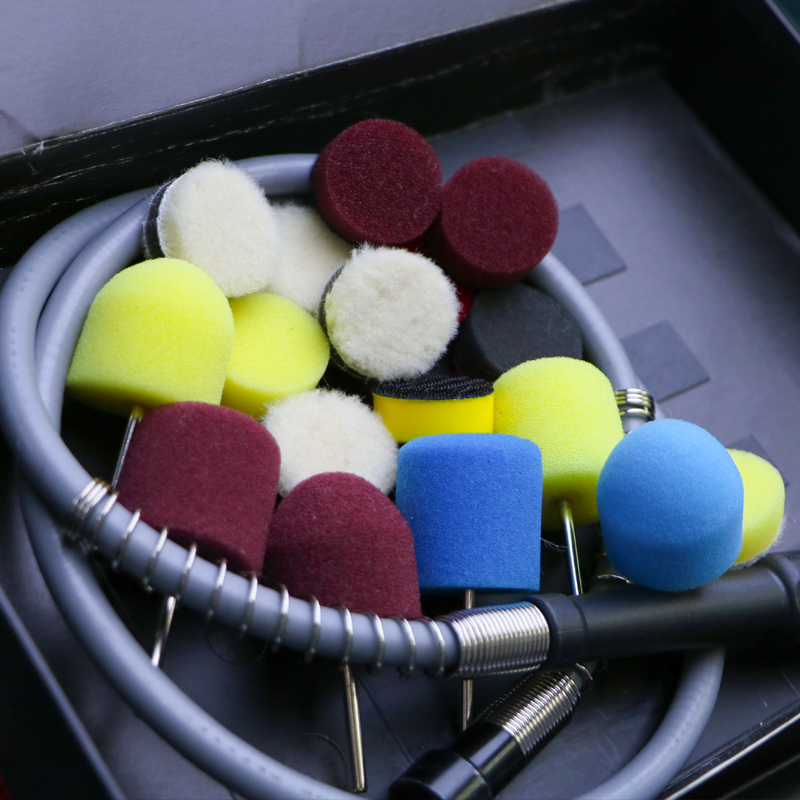
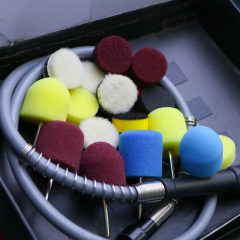
- Assorted foam pads. Round, bullet and cylindrical shapes, so a flat face and a deep recess are worked with different pads instead of one pad forced into both. Each pad is fixed to its own mandrel, which is why a pad change takes seconds and why the collet is only touched once at the start of a session.
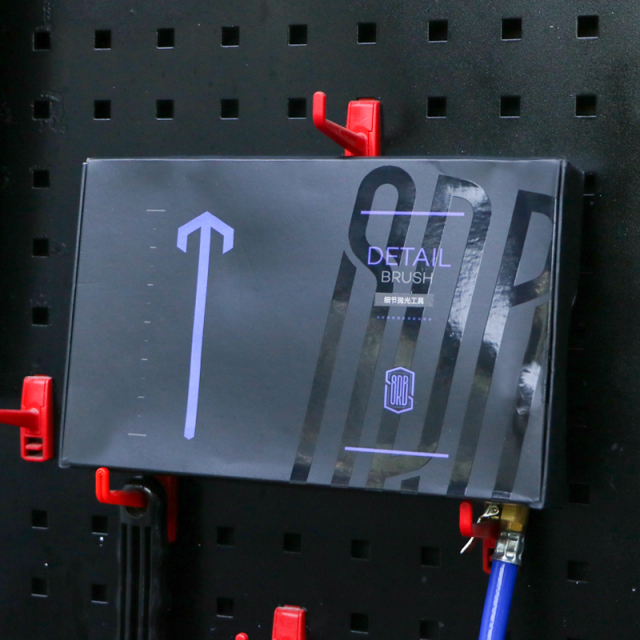
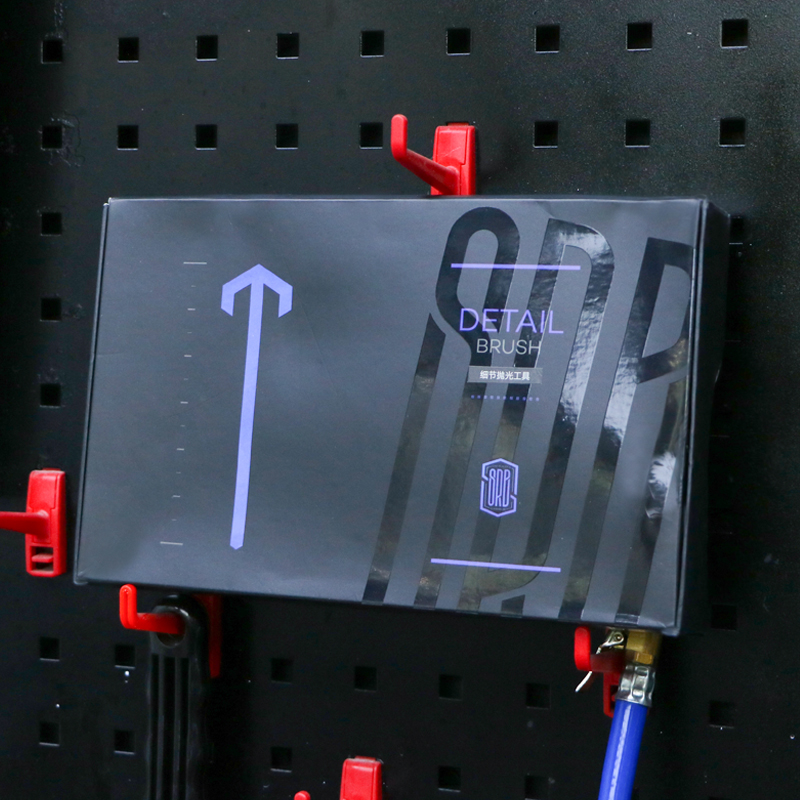
- Moulded storage case and tray. Pads and mandrels drop into their own places, which matters when the kit travels between bays. Cleaning tools for car work get knocked about in a van, and a case keeps the pad faces off the floor.
- One working set. It is sold as one of our car care kits rather than as loose parts, so a buyer evaluating car cleaning products manufacturers gets a handpiece, a shaft, pads and a case in one carton instead of assembling a set from three separate lines.
Pads, Compounds & Care
- Choose the pad by contour rather than habit — round pads for a flat-ish face, bullet pads for a deep recess, cylindrical pads for mesh and slots. Forcing one shape into all three is how edges get burnt.
- Keep cutting and finishing pads apart.
- A pad that has run a car polish ing compound keeps that abrasive in the foam, so a second pad for the finishing pass is not optional.
- Excess paste loads the pad, slows the cut and slings off the edge of the tool.
- Clean the foam after every job with warm water and a drop of pad cleaner, press the water out and dry face-up away from heat.
- A damp pad left in a closed case goes sour and drags on the next car polish pass.
- Replace a pad when the face glazes or the edge crumbles.
- Worn foam heats up, stops cutting evenly and is the usual cause of a haze that will not wipe off.
- Look after the air side as well. Water in the line is the usual reason an air tool loses power, so drain the compressor and run a moisture trap. Treat pads as part of your car care supplies rather than as permanent tooling — they are replaced on a cycle, and the finish depends on keeping to it.
Applications
Front-end detail: grille mesh, badge lettering, headlight and fog-light surrounds, bumper inserts. Interrupted surfaces like these are where a big pad stalls and skips, and they are the first places a shop reaches for cleaning tools for car care that can follow a curve.
Wheels: spoke faces, the recess around the lug holes, the rim lip. A car polish pass on a wheel is normally done by hand; the tool does it faster and keeps the finish even from spoke to spoke.
Body edges: door shuts and jambs, mirror caps, panel gaps, fuel flaps, spoiler edges. Small areas with high visibility — a customer runs a finger along a door shut at handover — and awkward for a full-size pad, which is where a detail tool earns its place in a car care products line.
Small panels and trim: motorcycle fairings, lamp lenses, interior console edges, textured plastics. Soft pad, low speed and a test on a hidden area first, and keep car polishing compound off unpainted trim until you know how it behaves on that surface.
Polishing Sequence
- Set up the air line. Connect the shaft to a clean, dry, regulated air supply and hang the handpiece so it runs without a sharp bend.
- Clean the surface first. Wash, rinse and dry the area, then wipe it down — a car detailing cleaner and a rinse come before any pad touches paint, because polishing over road film drives grit into the finish.
- Fit the pad and seat the mandrel. Fix the pad to its mandrel, slide the shank into the collet and nip the collet with the wrench: firm, not forced.
- Prime the pad. Work two or three small dots of car polish into the foam, then touch the pad onto the area in short dabs before you start the tool.
- Work in small overlapping passes at low speed, keeping the tool moving and the pad flat to the surface. Let the foam cut; leaning on the tool slows it down and heats the pad.
- Wipe and refine. Lift the residue with a microfibre, look at the area under a light, then change to the finer pad and repeat only if the finish needs it.
Specifications
| Specification | Detail |
|---|
| Model number | T01 |
| Brand | SURAINBOW |
| Place of origin | Guangdong, China |
| Weight | 3 kg |
| Primary use | Car cleaning and car polishing |
| Drive | Compressed air through the shaft coupling |
| Handpiece | Matte black body with textured grip |
| Collet | Knurled collet with adjustment wrench |
| Pad set | Assorted foam polishing pads in varied shapes |
| Pad mounting | Metal mandrels |
| Supplied in | Moulded storage case with tray |
| Shelf life | 3 years |
Ordering & Delivery
- Send the brief: product, quantity, destination market and sales channel. That is enough for us to come back with the right packing and document set instead of a generic reply.
- Confirm quantity and packing: minimum order quantity, price and carton count are quoted per line and per market. If you are shortlisting car cleaning products manufacturers, ask for the carton count and the document set at the same time — those two decide whether the line is workable.
- Test before you commit: request a sample kit and run it on the surfaces you actually work on. Sample scope and any courier cost are confirmed before dispatch, so both sides know exactly what is being evaluated.
- Approve the packaging: label language, artwork and carton marks are proofed and signed off before bulk. Worth doing carefully if the tool ships as one of your own car care kits rather than in ours.
- Agree the documents: commercial invoice, packing list and a material statement for the tool. Tell us what your customs broker needs; if a shipment mixes liquids with car care products, the paperwork is prepared item by item.
- Stock and shipping: In stock and fast shipping — this tool is held with the rest of our car care supplies, and the shipping method and Incoterm are confirmed in your quotation.
- Settle the balance and take handover: once the balance is settled on the terms in your quotation, the goods are released with the shipping documents, and the carton marks are checked against the packing list before they leave.
- After-sales and traceability: the batch reference stays with your order. Report a shortage, damage or quality concern with the order reference, batch number and photos so it can be checked against the approved sample. Cleaning tools for car work take knocks in transit, so photograph the carton before you unpack if anything looks wrong.
Scale & Supply Capability
SURAINBOW is run by Guangzhou Liangdian Automotive Supplies Co., Ltd., a factory-trade operation set up in Guangzhou in 2010 and now 50 people strong. Sixteen years in car care have given us a one-stop supply position: our own SURAINBOW lines are held in stock for fast shipping, and an associate factory with modern production equipment and an established quality management system keeps replenishment moving. We take OEM and ODM work and our R&D team develops to your specification. Buyers in the Middle East, the United States, Southeast Asia, Europe, the UK, Russia, Africa and Australia already order from us.
FAQ
Can I use my own pads and compounds with this tool?
Yes, as long as the pad's shank fits the collet — send us the shank diameter and we will confirm before you order. Beyond that the tool is indifferent to brand: it spins whatever car polishing compound you load, so your existing process carries over and only the reach changes.
What does the tool need in order to run?
Compressed air rather than mains power — a compressor and a hose instead of a socket, which is why it suits a fixed bay line or a van with air on board. Tell us the compressor you plan to run it from and we will confirm the inlet fitting and the working pressure before dispatch.
Is the kit ready to use straight out of the case?
Almost. Each pad is already fixed to its mandrel, so you seat a mandrel in the collet, nip it with the wrench, prime the foam and start. There is nothing to assemble beyond that and no electrical connection to make.
Can it be used on interior trim, leather and textured plastics?
With a soft pad at low speed and a mild car detailing cleaner rather than a compound, yes — but test a hidden area first, because trim plastics vary from car to car. Leather takes less again: keep the speed down, the contact light and the section small.
Do the pads wear out before the tool does?
Yes. Foam is the consumable and the handpiece is not: pads glaze, crumble at the edge and stop cutting evenly long before the air drive gives trouble. Plan a pad cycle, and ask what replacement pads and shaft assemblies are available for these car care kits when you order.