Paint Protection Characteristics
- Paint color and brightness are central to the intended finish. The treatment enhances the appearance of the paint and helps retain its gloss, making the underlying finish an important part of the final result.
- Water repellency helps water move off the treated surface. This water-displacement effect supports the glossy, crystal-coating-style finish without making the vehicle immune to water spots or the need for drying.
- Anti-fouling protection helps limit contamination adhering to the paint. Dirt still needs appropriate removal as part of ceramic coating care; the protective treatment supports ongoing cleaning rather than replacing it.
- UV resistance forms part of the intended paint protection. Avoid treating that benefit as a quantified UV rating or a promise that weathering cannot occur.
- Protection from this nano ceramic coating is designed to last at least one year and may extend beyond one year. Actual durability depends on preparation, application, exposure and maintenance, so the service life should be assessed under the vehicle's real operating conditions.
Preparation & Initial Application
- Clean the vehicle's paintwork and remove dirt and the oxidized surface layer before applying the automotive ceramic coating. Check areas where contamination remains rather than carrying it into the treatment stage.
- Inspect the scratch condition and use an appropriate abrasive or polishing agent where correction is needed. For paint correction and ceramic coating work, complete the correction before moving to protection, and use a finishing or gloss-refinement product to restore a clear, mirror-like appearance.
- Degrease the refined paintwork to remove preparation residues, then allow it to become dry. Keep the coating stage separate from abrasives, polishing compounds and finishing products so those materials are not left beneath the treatment.
- Prepare the application tools for the ceramic coating kit and check that the applicator and wiping cloth are clean. Keep tools used for preparation separate from those touching the freshly treated finish.
- Spread the coating evenly with a coating sponge, alternating horizontal and vertical passes. Work in manageable sections so spreading and excess removal remain controlled; do not assume an unverified application quantity or coverage rate.
- Immediately after spreading, gently remove the excess layer with a microfiber towel using circular movements. Use light pressure and a clean cloth surface, watching for uneven residue as you work.
- Inspect the paintwork before vehicle handover. Look across the panels under suitable lighting for streaks, excess product and uneven areas, and resolve any concerns before releasing the finished vehicle.
Maintenance & Washing
The first wash belongs after 7 days. Include that instruction in the vehicle handover notes so the owner and any wash operator understand the initial ceramic coating care requirement.
Maintenance treatment follows 3-6 months after the original application. Plan that visit around the vehicle's use and exposure, and record the treatment date so subsequent care follows an identifiable schedule.
For this later maintenance application, the instructions allow a wait of 3-5 minutes before rubbing off the product. Keep that waiting period attached to the maintenance treatment; the initial application has its own excess-removal procedure.
Routine ceramic coating after care should use clean wash tools and gentle handling. Avoid aggressive polishing unless correction is actually required, because abrasive work can disturb the treated surface.
Before combining the treatment with another cleaner, topper or maintenance chemical, check the relevant product instructions provided by ceramic coating suppliers for compatibility. Keep a simple service record of washing issues, visible changes and maintenance work to help distinguish contamination from a change in the protective finish.
Testing & Safety Review
- A trial of the nano ceramic coating should use representative automotive paintwork and a documented preparation method. Record the paint condition, application conditions and observations so the approved result can be reproduced.
- Gloss, appearance and water behavior are useful trial observations for an automotive ceramic coating. Agree the assessment method and acceptance criteria with ceramic coating suppliers before approval rather than relying on photographs taken under different lighting or on differently prepared panels.
- Paint-marking and graffiti testing form part of the treatment's performance testing. Request the applicable methods, conditions and results from the ceramic coating manufacturer, together with any available third-party reports, before using specific resistance claims in customer literature.
- Durability testing needs a defined exposure and maintenance routine. For paint correction and ceramic coating trials, record the complete treatment process and the conditions for subsequent ceramic coating after care so later comparisons reflect the same procedure.
- Written sample approval can identify the accepted product, appearance, application method and agreed tolerances. Where agreed for the order, an identified retained sample and the approved specification can provide a consistent reference for later batches.
- The product-specific safety data sheet and any required ingredient declaration need review before handling or market release. Use the applicable safety instructions for ventilation, protective equipment and incident response; document availability and destination-market requirements remain subject to confirmation.
Ordering & Delivery
- Orders for this paint treatment can be discussed under our general stock service: In stock and fast shipping. Availability for the exact configuration and the dispatch arrangement depend on the order and require confirmation before purchase.
- A ceramic coating manufacturer can review branded supply and a proposed private-label brief against the product and packaging requirements. Any development or customization scope must be agreed for this treatment rather than assumed from the wider range.
- Distributors comparing ceramic coating suppliers can request an offer based on the required quantity, destination and agreed configuration. The applicable minimum order quantity, price and commercial terms belong in that offer; ask for current sample terms if a trial is required.
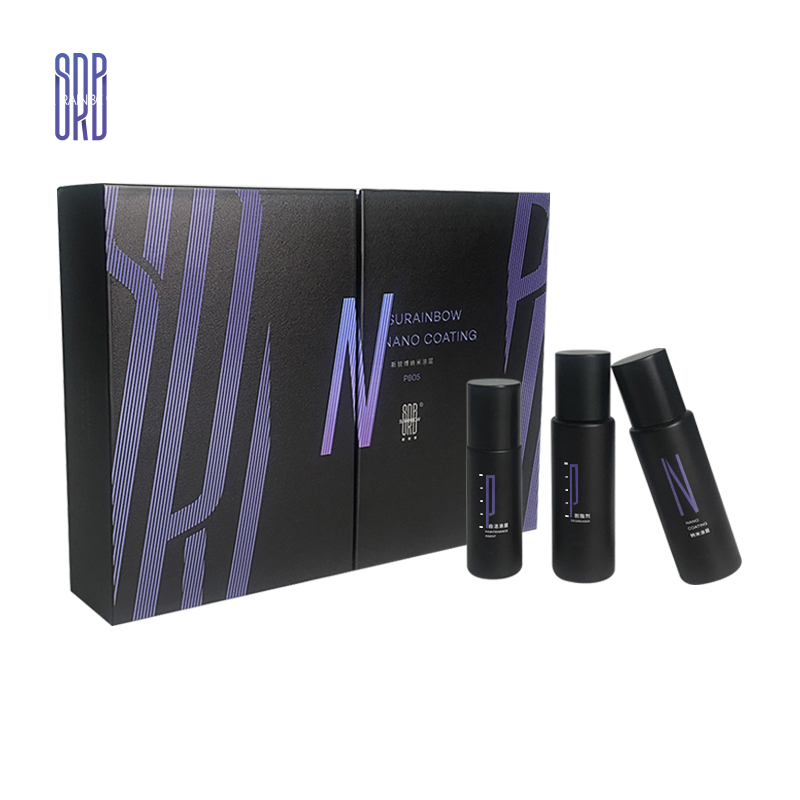
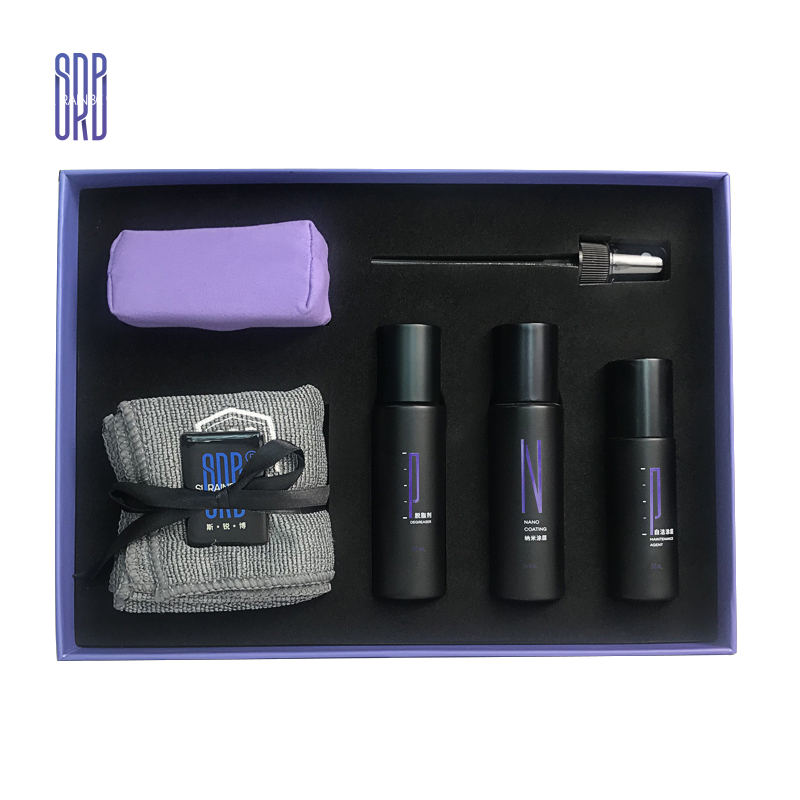
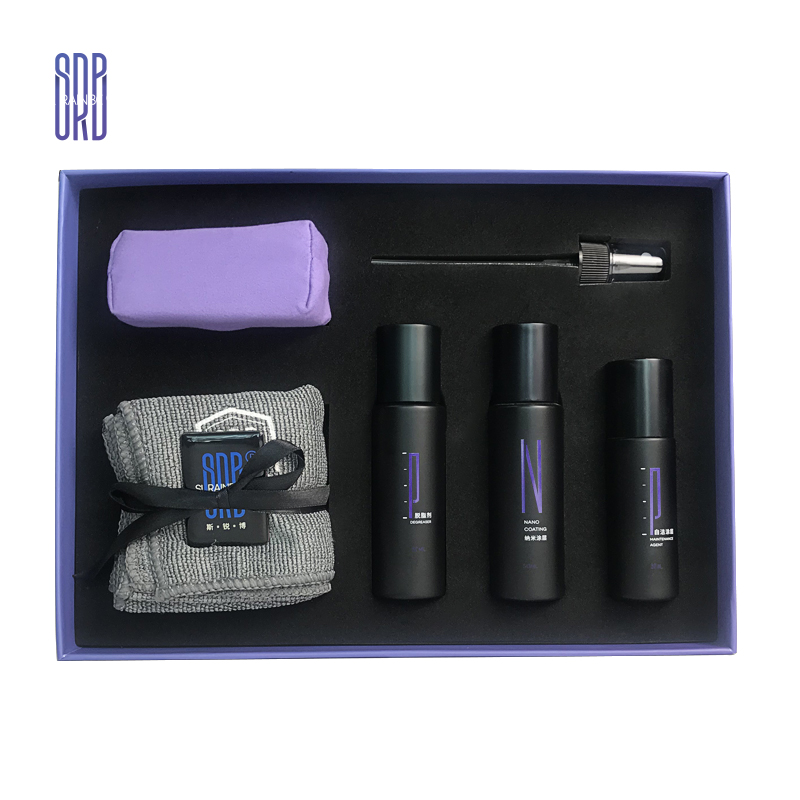
- The ceramic coating kit configuration needs an agreed contents list, container size, closure specification and carton arrangement. Set contents and quantities should match the order confirmation rather than being inferred from the illustrated presentation.
- Packaging design and proofing can be reviewed where the order includes that work. Agree the artwork, label language, barcode, carton marks and physical packaging proof before approving the final version; product compatibility and order scope determine which changes are available.
- Destination-market transport and compliance requirements need to be included in the shipment review. Agree the required chemical transport documents, hazard-label information and any additional market documents before dispatch, without assuming that a general company document covers this treatment.
- Final payment and dispatch follow the accepted commercial terms. Before shipment, check the balance status, inspection arrangement, consignee details and document handover list, including the commercial invoice, packing list and any other agreed export documents.
- After-sales review relies on traceable order and batch details. Retain the approved references and any supplied batch identification; for leakage, shortage or a product concern, provide the affected quantity, photographs and a clear account of handling and use so the issue can be reviewed against the agreed order.
Paint Treatment Overview
Prepared automotive paintwork provides the foundation for SURAINBOW's nano ceramic coating. Designed for dedicated paint-protection work, this treatment fits professional detailing centers, vehicle-preparation workshops and automotive-care ranges that need clear application and ceramic coating care instructions for the people applying it.
A paint correction and ceramic coating service brings separate tasks together: restoring the finish where needed, then treating the prepared surface. Keep the preparation materials, application tools and ceramic coating after care instructions organized as distinct parts of the job so technicians can follow a consistent routine from vehicle assessment through handover.
Scale & Supply Capability
SURAINBOW supports purchasing across our full range through an integrated manufacturing and trading business with 50 employees. Established in 2010 and based in Guangzhou, we primarily supply our own SURAINBOW brand, with OEM/ODM customization also available. Stock availability and fast shipping help support your replenishment needs. Share your purchasing plans and development requirements with us to discuss available products and customization options for your business.
P-805 scratch protection
Model P-805 nano ceramic coating helps protect car paint against scratches.
FAQ
Will the treatment remove scratches already in the paint?
Existing scratches will not be removed by the treatment. Do not rely on it to fill grooves or conceal defects: a protective finish does not rebuild missing paint. Fine swirl marks and isolated scratches can remain visible, especially under direct lighting or when viewed from different angles, so their disappearance should not be part of the expected result. A scratch that catches a fingernail warrants closer assessment by a paint specialist; that check alone cannot establish how much damage can safely be corrected. Where a mark exposes the underlying colour layer, primer or metal, ask a refinishing professional to assess the repair rather than assuming further abrasion will resolve it. On previously repaired panels or paint with an uncertain history, have the remaining finish assessed before agreeing to any additional corrective work. If you choose to retain some marks, agree with your detailer which ones will remain visible so the finished appearance matches your expectations.
Can a wash shampoo replace this coating treatment?
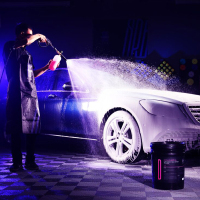
A separately applied paint treatment serves a different purpose from a wash shampoo. Washing removes contamination during cleaning; adding a protective treatment requires its own application stage, even when a shampoo contains wax or uses crystal-plating terminology.
What does the illustrated treatment set contain?
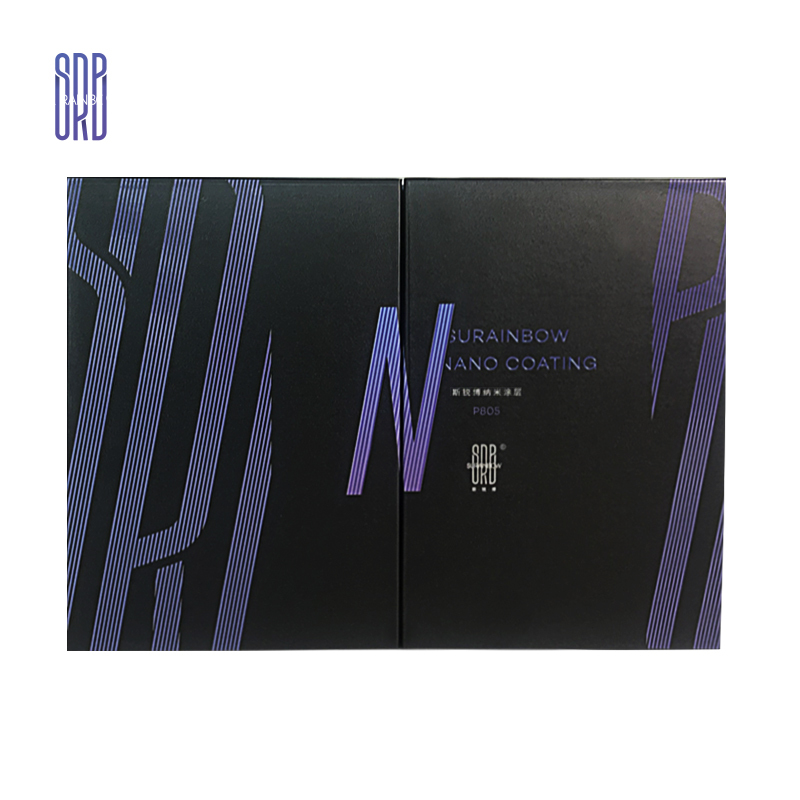
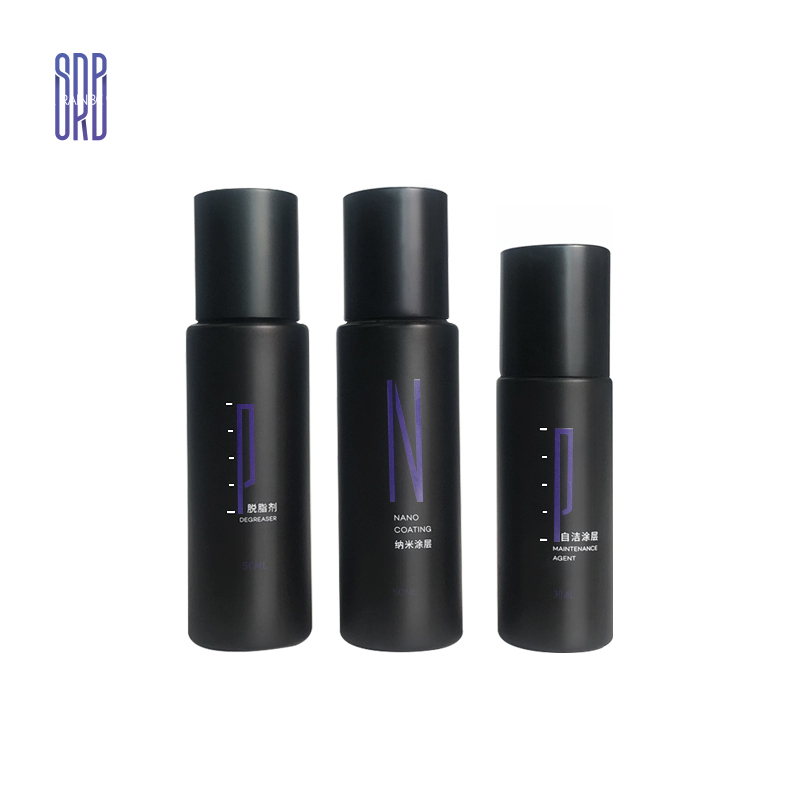
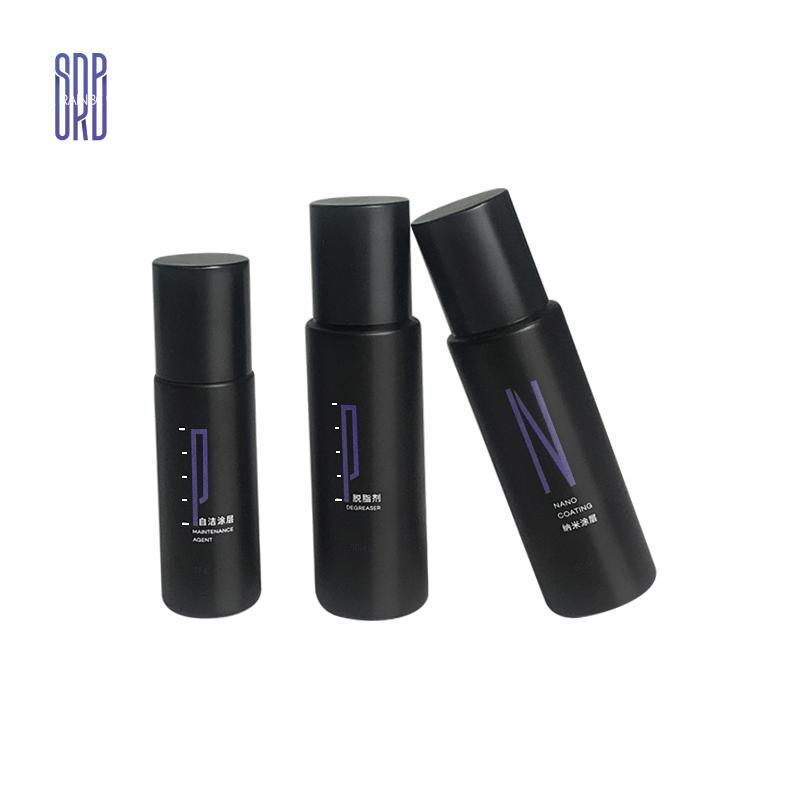
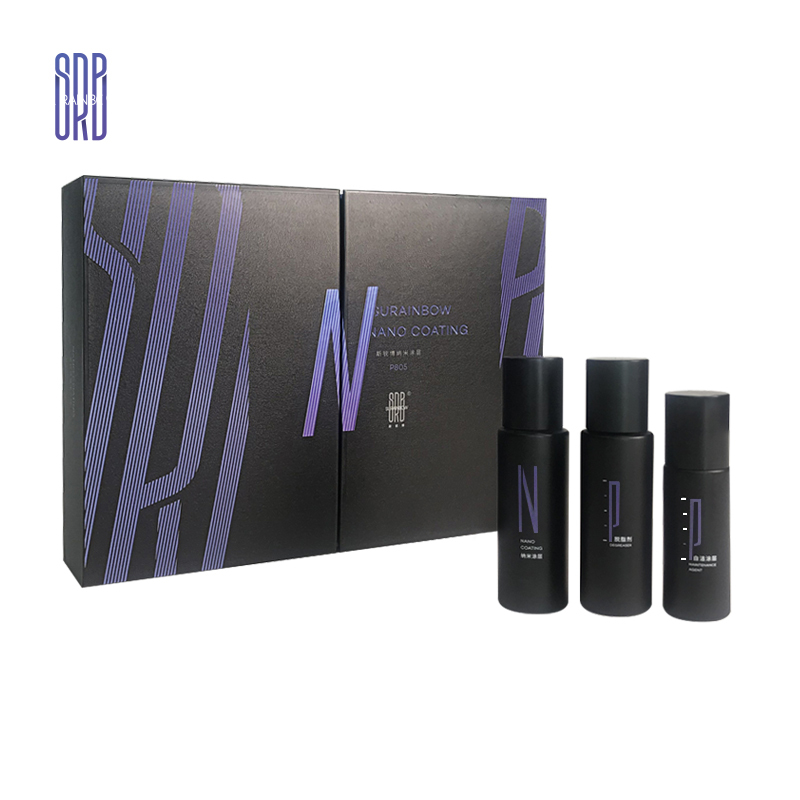
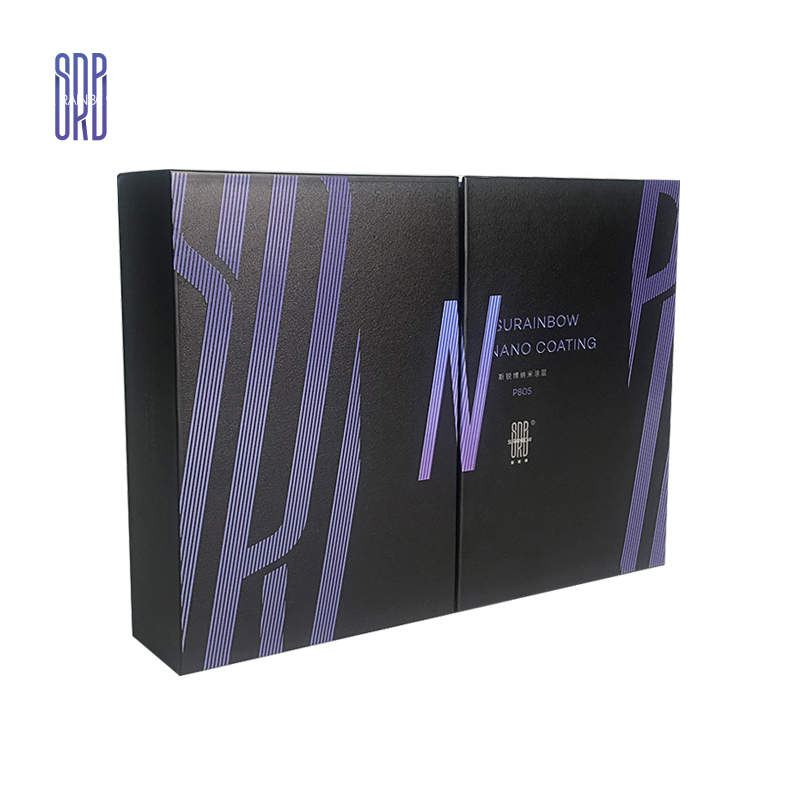
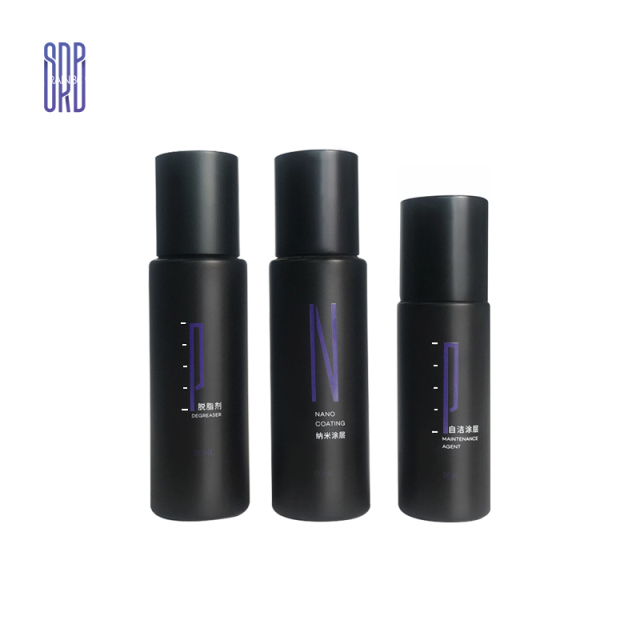
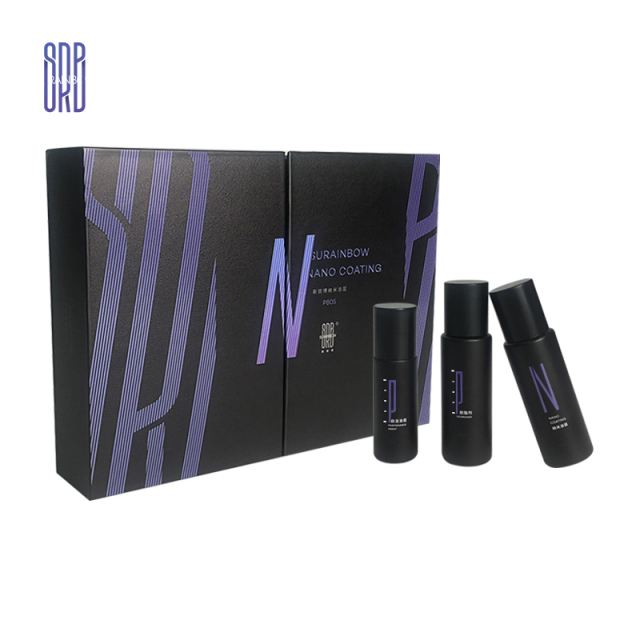
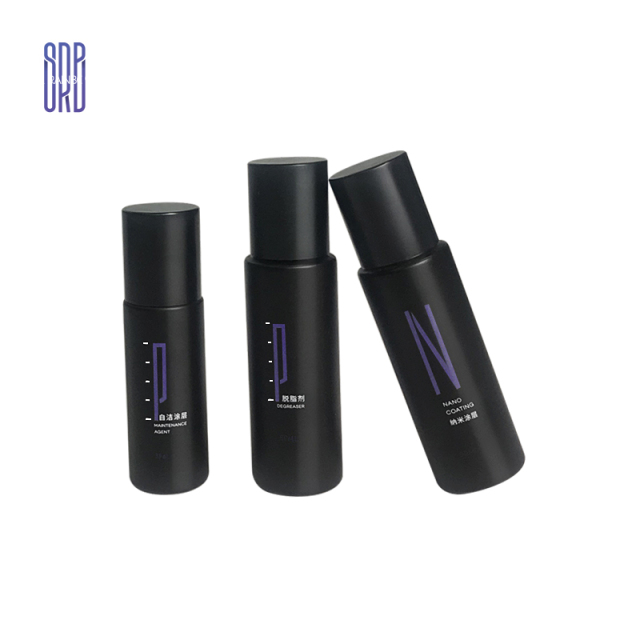
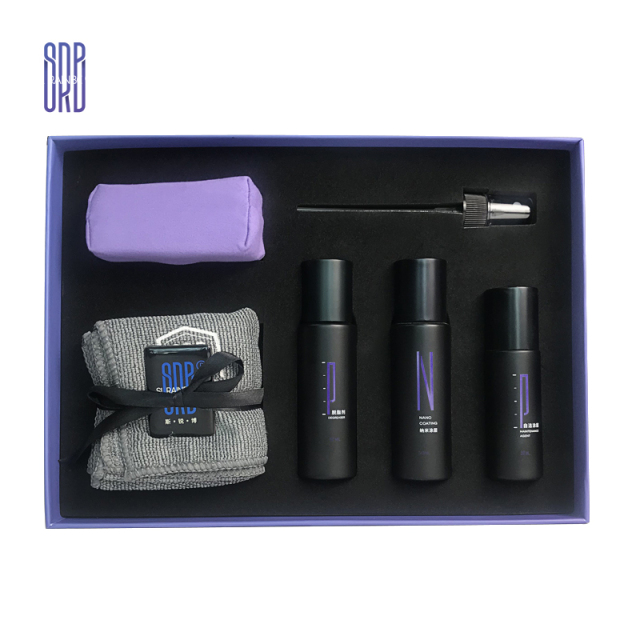
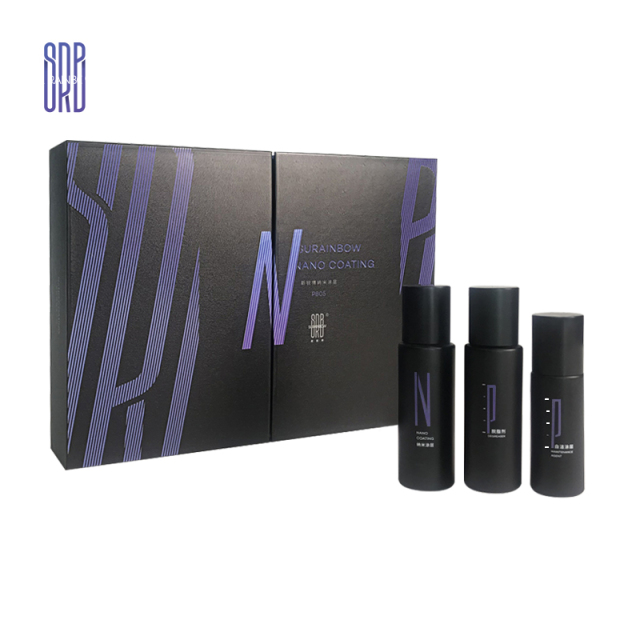
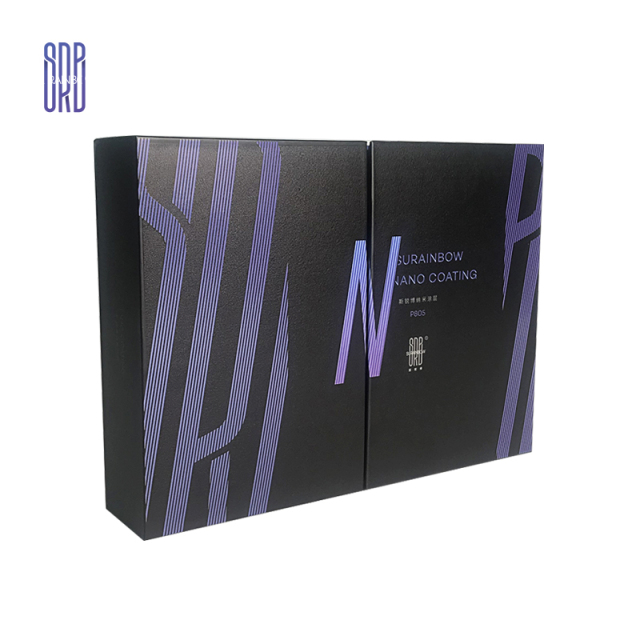
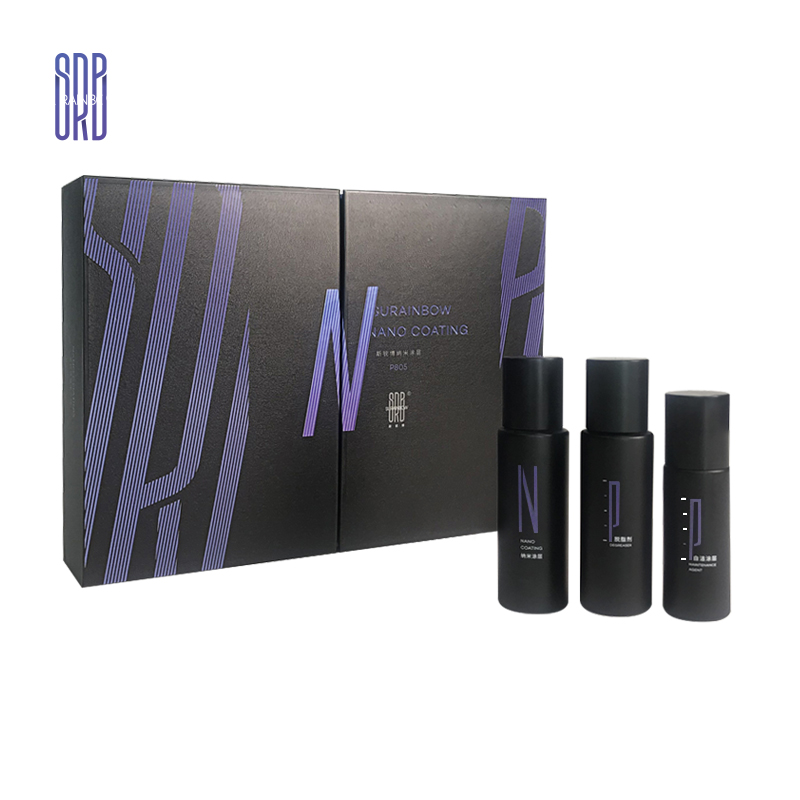
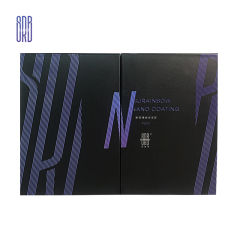
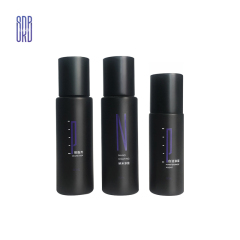
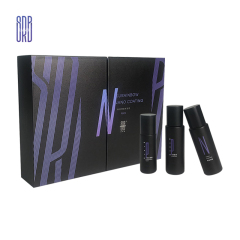
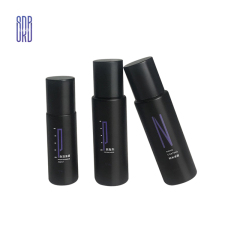
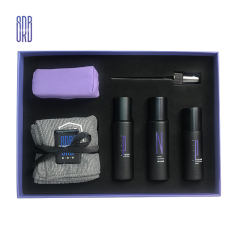
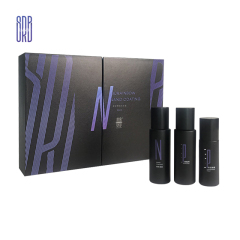
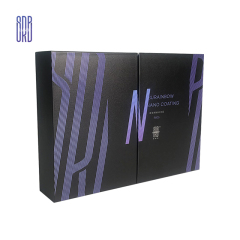
The illustrated ceramic coating kit brings together coating, degreaser and maintenance-agent products, with a dropper, a purple applicator block and a gray textured cloth. Black bottles with purple lettering appear in a coordinated boxed presentation; the supplied configuration follows the agreed contents list.
Can I apply it to matte paint, wraps or paint-protection film?
Matte paint, wraps and paint-protection film each need product-specific compatibility confirmation before application. For matte or satin paint, preserving the original sheen is essential; use a treatment expressly approved for that finish, because an unwanted change in appearance can be difficult to reverse. For vinyl wraps, identify the film manufacturer and exact range, since approval for one film does not establish suitability for another. Textured wraps also need separate consideration: surface texture can affect how evenly a liquid treatment spreads and how easily residue can be removed. For paint-protection film, check whether the film already has a surface treatment and whether its manufacturer permits an additional coating, particularly for films with self-healing properties. A glossy appearance alone does not establish compatibility, so include gloss wraps and gloss film in these checks too. Once compatibility is confirmed, follow the surface manufacturer's testing guidance and assess an inconspicuous area for changes in colour, sheen or texture before treating a larger area. Ask the installer whether applying an additional treatment affects the surface manufacturer's care instructions or warranty terms.