Product Overview
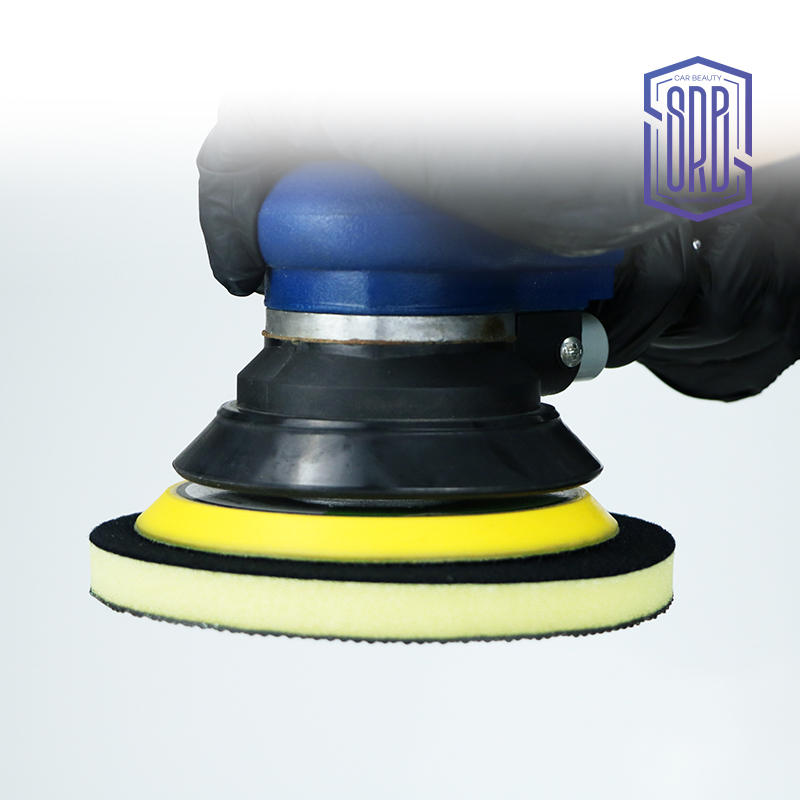
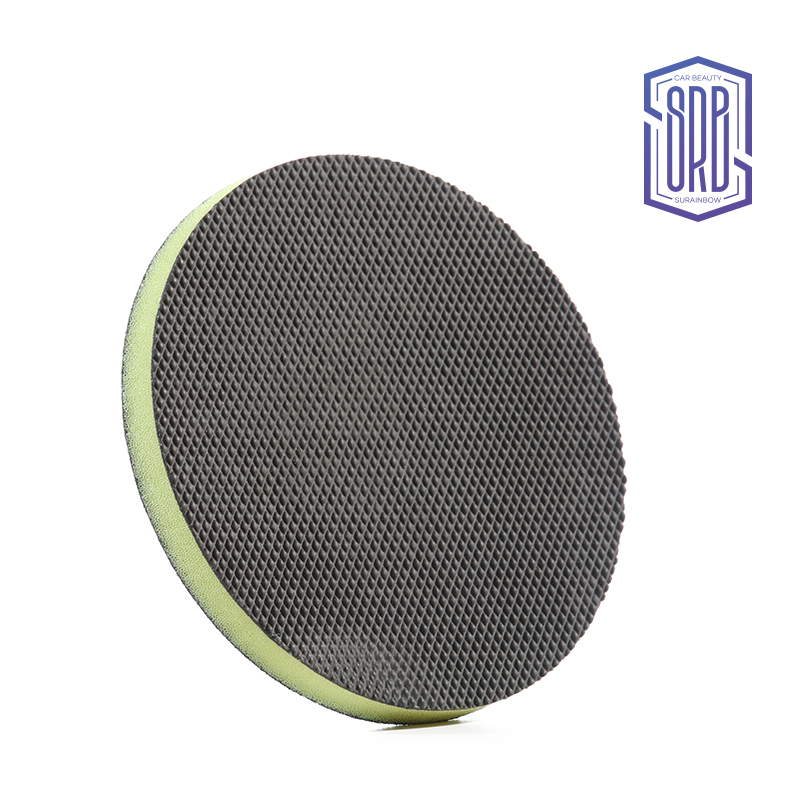
A foam-bodied disc with a black clay working face, the 6 inch T-655 car detailing clay pad is built for the step that lifts bonded contamination off painted panels before polishing begins. The clay does the work; the foam behind it gives the face thickness and a little give, and the whole disc stays light on the tool from the first panel to the last.
Stocking it is simple. There is no liquid to leak, no hazard label to translate and nothing to settle in the drum, so a distributor can put the pad on the same shelf as shampoo, mitts and towels without extra handling rules. We supply it as a clay pad supplier to detailing studios, distribution buyers and private-label owners, and it behaves the same whether it is worked by hand in a small bay or mounted on a tool in a high-volume shop.
Private-label owners can take the same disc under their own name and order it as an oem clay pad, with the branding carried on the label and the box rather than on the pad itself.
Importers and regional distributors: a dry consumable that stores flat, ships in compact boxes, and reorders alongside shampoo, mitts and towels without liquid or hazard handling. Detailing studios and reconditioning bays: the pad standardises the decontamination step before compounding, so prep runs the same way in every bay and does not depend on how one technician handles a bar. Private-label and brand owners: take the same black disc as an oem clay pad with your own label wording and carton artwork, keeping your part number in front of your customers while the pad itself stays unchanged. Wholesale and e-commerce sellers: fixed figures to build your own catalog entry around, from the pad's weight and diameter to the carton it arrives in. Fleet, rental and auction operations: a fast, repeatable pass across a lot of vehicles, where a technician swaps a loaded face and keeps moving instead of slowing down to work around it.
Specifications
| Product name | 6 inch clay pad |
| Type | Sponge and clay pad |
| Size | 6 inch |
| Body | Foam core |
| Working face | Clay |
| Construction | Clay face bonded to a foam core with a backing layer |
| Colour | Black |
| Weight | 0.08 kg |
| Brand | SURAINBOW |
| Place of origin | Guangdong, China |
| Intended use | Car detailing polishing |
| Form | Flat circular disc |
Material & Build
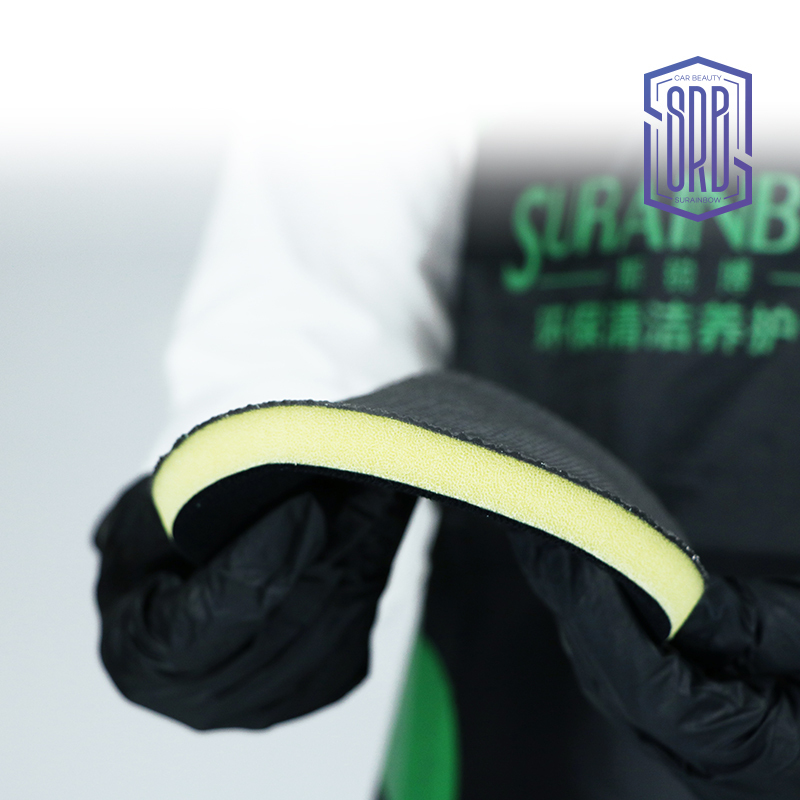
- Foam core: the pale yellow foam body gives the pad its thickness, so the face can press into a curve and spring back instead of riding flat over a mirror housing or a door-handle recess.
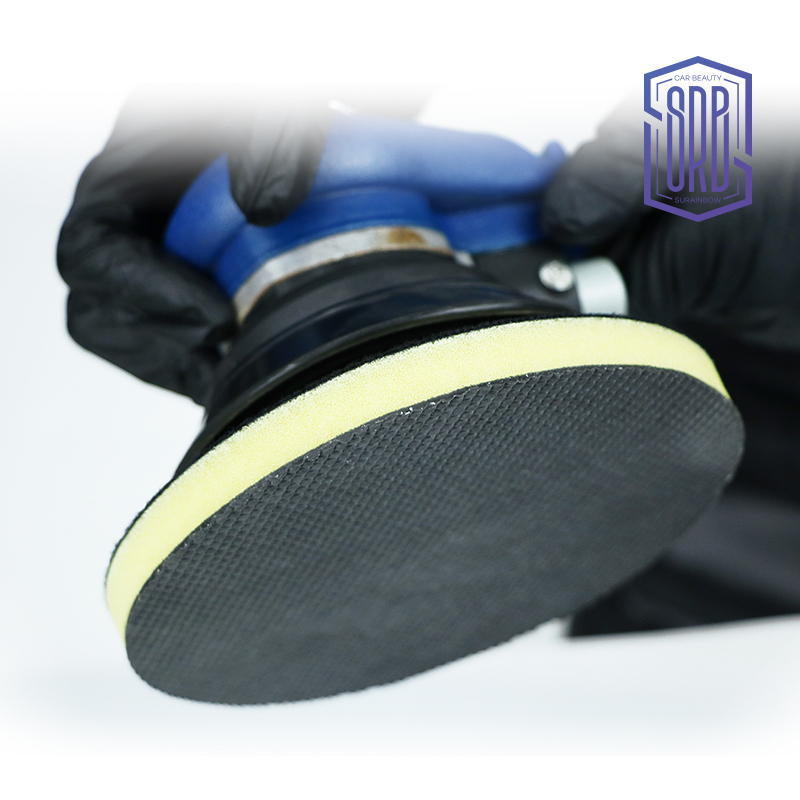
- Clay working face: the dark clay layer does the lifting, and its raised diamond pattern gives lubricant somewhere to sit between clay and paint instead of pushing it straight off the edge.
- Bonded layers: the clay face, the foam core and the backing are bonded into one disc, so there is no loose cover to slide or bunch up halfway across a panel.
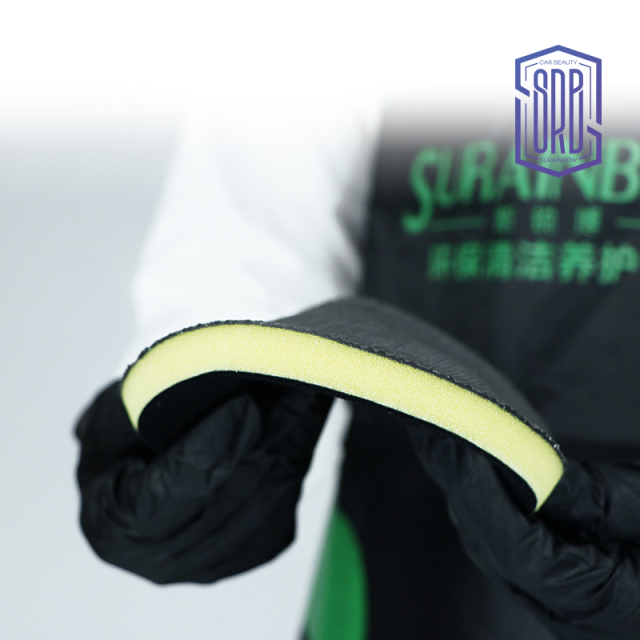
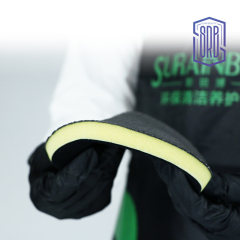
- Hand-flexible: the pad bends between the fingers as the product photos show, which is how it follows bumper corners, wheel arches and spoilers that are not flat sheet metal.
- Black face: a black working face makes the grey film easy to read as it builds, so a technician can see the clay loading up and wipe it down before it starts smearing.
Detailing Stage & Surfaces
Clay does a job no shampoo can: it pulls off the bonded film of industrial fallout, overspray mist and rail dust that stays stuck to paint after the wash stage, the film you feel as roughness under a fingertip.
That film is abrasive in its own right. Left on the panel, those particles are picked up by whatever touches the paint next, whether that is a mitt, a towel or a polishing pad, and worked across the surface. That is why the clay pass sits between washing and any polishing.
Painted bodywork is where this pad earns its place. Doors, wings, bonnets, boots, roof rails and painted bumpers all carry the same film and all take the same flat, overlapping pass.
Shops use the 6 inch clay pad for car detailing at several points in the week: as prep on a correction job before compounding, in new-car preparation, in used-car reconditioning, and as the last clean before a coating goes on.
It prepares a surface rather than changing it. The clay pass leaves paint clean and ready for the polishing stage, and the finish work that follows starts from a clean panel.
Fleet, rental and auction work is the other common setting, where a fast, repeatable decontamination pass across a lot of vehicles matters more than a show finish.
Machine Fit & Mounting
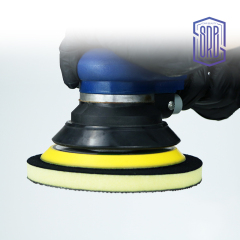
- Match the pad to the plate: start with a backing plate of the same diameter and check that the plate face is clean, flat and free of grit before anything is mounted.
- Centre and seat it: press the pad on from the middle outwards so no rim is left lifted, then spin the tool briefly to confirm the disc runs true.
- Work small areas: half a door or a quarter panel at a time, with the machine on a light setting and the pad sitting flat against the paint.
- Keep it moving: overlapping passes, never held still in one spot, because a stationary pad heats the face and loads it unevenly.
- Check the face between panels: lift the pad, look at the clay, wipe off the grey film and carry on with the next section.
- Wipe the panel while it is still wet: a clean microfiber takes the residue off before it dries into a haze.
Cleaning, Storage & Handling
- Wipe the face as you go: a clean microfiber takes the grey film off while it is still soft, and a face wiped between panels keeps working for the rest of the vehicle.
- Rinse if the film has set: hold the face under clean water, let it dry face-up out of the sun, and put it back into service only when the clay is dry to the touch.
- Keep grit off it: a pad that lands on the floor picks up grit that will be dragged across the next panel, so retire a face that has been dropped rather than picking it clean.
- Store flat and covered: keep the pad in its bag or box, flat and away from dust, so the foam does not take a set and the clay does not collect workshop debris.
- Watch the heat: clay softens as it warms, so leave pads out of direct sun, off dashboards and away from bay heaters between jobs.
- Give each bay a spare: a loaded pad tempts a technician to press harder, while swapping to a fresh face keeps the pressure light and the pass even.
- Remove it by the edge: peel the pad off the backing plate from the rim rather than pulling on the clay face, which can separate it from the core.
Ordering, Packing & After-Sales
- Order in 50s: the pad is sold in multiples of 50, with 50 pads packed to a box, so the pack unit and the minimum order line up without a part case to break.
- Plan the freight: each box of 50 measures 30 × 20 × 25 cm and weighs 10.600 kg gross, an easy size to shelve and a one-person lift.
- Test before you commit: ask for current sample terms, then run the pad on the paints, lubricants and machine settings your shop actually uses.
- Proof the branding: OEM service is a standard part of the offer, so a buyer can order an oem clay pad with their own logo, label wording and carton artwork, all reviewed at proof stage before production.
- Approve a physical reference: keep the signed-off pad and the packaging proof as the bulk comparison, so the next run is checked against something you have handled.
- Choose the route: the standard black pad is in stock and fast shipping applies, so a top-up order does not wait for a production slot, while branded runs follow the proof schedule.
- Agree the release and documents: balance settlement, the release for shipment and the document set, covering the commercial invoice, packing list and any product documents your market asks for, are confirmed on the order confirmation.
- Trace any issue by batch: as a clay pad supplier we pack every box against a batch and keep the approved reference on file, so send the order reference, batch number, quantity affected and photos of the face and box if a delivery does not match what you signed off.
Lubricant & Slip Control
The working face only glides when there is a film of lubricant sitting between clay and paint. Feed that film ahead of the pad rather than behind it: wet the section first, then bring the face down onto a surface that is already slick.
Mix and top-up. A dedicated clay lubricant works, and so does a shampoo-based slip mix at the ratio your shop already uses for decontamination. A face that squeaks, skips or starts to drag is running dry, and a dry clay face can mark the paint it was meant to clean. Top the panel up before it looks dry, not after.
Working conditions. Keep the panel cool and out of direct sun, because a warm panel dries the film within seconds and softens the clay at the same time. Work one section at a time from the top down, and wipe the residue away with a clean microfiber while it is still wet — dried lubricant hazes and needs another wash to shift.
Reading the result. Run a fingertip, or a hand inside a plastic bag, over the panel before you start and again after the pass. The grit you feel at the start should be gone at the end, and that check tells you more about whether a section is done than counting passes does. When you move from a clay bar to this clay pad, test your current mix on one panel first, since a flat face holds lubricant differently from a folded bar.
Scale & Supply Capability
We are Guangzhou Liangdian Automotive Supplies Co., Ltd., an integrated manufacturing and trading company founded in Guangzhou in 2010. With 50 employees, we supply a broad range of car care products to distributors, wholesalers and brand owners. Our range lets you source across categories through one supplier, with in-stock options and fast shipping. Alongside our SURAINBOW brand, we offer OEM/ODM customization, supported by a professional R&D team that can design and develop products around your requirements.
FAQ
How is the clay pad T-655 different from a traditional clay bar?
A clay bar is a lump of clay that has to be kneaded, warmed and re-folded every time it picks up dirt, and it is dropped more often than anyone admits. This pad puts the clay on a flat foam disc instead: the face stays flat against the panel, there is nothing to knead, and the tool does the moving for you. When the face loads up you wipe it down rather than folding contamination back into the material.
Does this 6 inch clay pad remove scratches the way a polishing compound does?
No. The clay lifts bonded contamination off the surface; it does not level paint or cut away a scratch. Scratches, sanding marks and oxidation belong to the compound and polish stage, and the pad's contribution is to hand that stage a clean panel. If defects are still visible after the clay pass, the next step is a polish, not more time with the pad.
What lubricant should I run with the clay face?
The face needs slip between clay and paint, so use the lubricant your process already specifies, whether that is a dedicated clay lubricant or a shampoo-based slip mix at your own shop ratio. Keep the panel wet ahead of the pad and top up as you go, because a dry face grabs instead of gliding. If you are moving from a bar to a pad, test your current mix on one panel first, since a flat face holds lubricant differently.
How do I know when the working face is finished?
The face tells you. It stops gliding and starts to drag, it stays grey after a wipe, or it begins leaving a smear that will not come off with a clean towel. Any of those three means the pad has done its work and should be swapped out rather than pressed harder.
Can you supply an oem clay pad with our own branding and packaging?
Yes. OEM service is a standard part of the range, so send the logo, label wording and carton artwork you want to use and we will work through the proof with you before production, so the printed version matches what you approved. The pad itself stays the same black foam-and-clay disc; the branding sits on the label and the box.
Can this car detailing clay pad be used on glass, chrome or wheels?
It is built for painted bodywork. Glass, chrome and wheels carry different contamination and need their own lubricant plan, so keep a separate pad for those surfaces rather than moving a paint pad onto a wheel and back onto paint again.