Product Overview
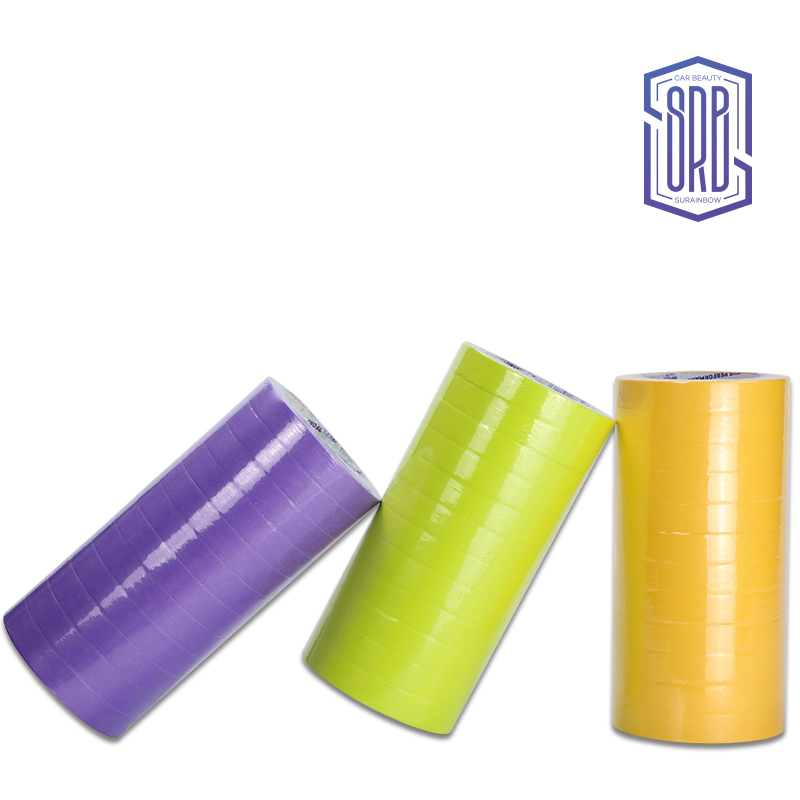
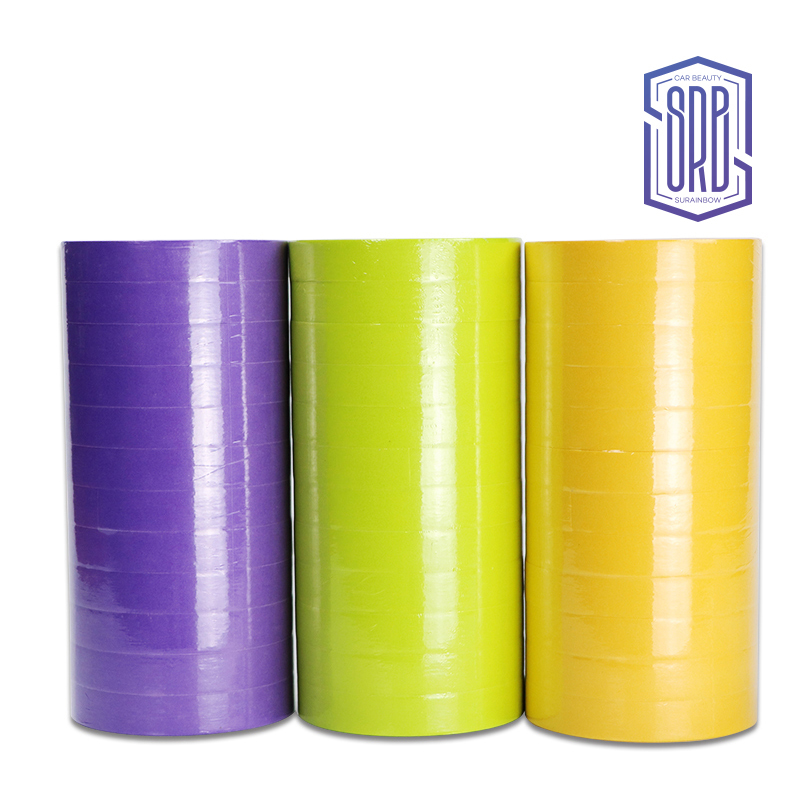
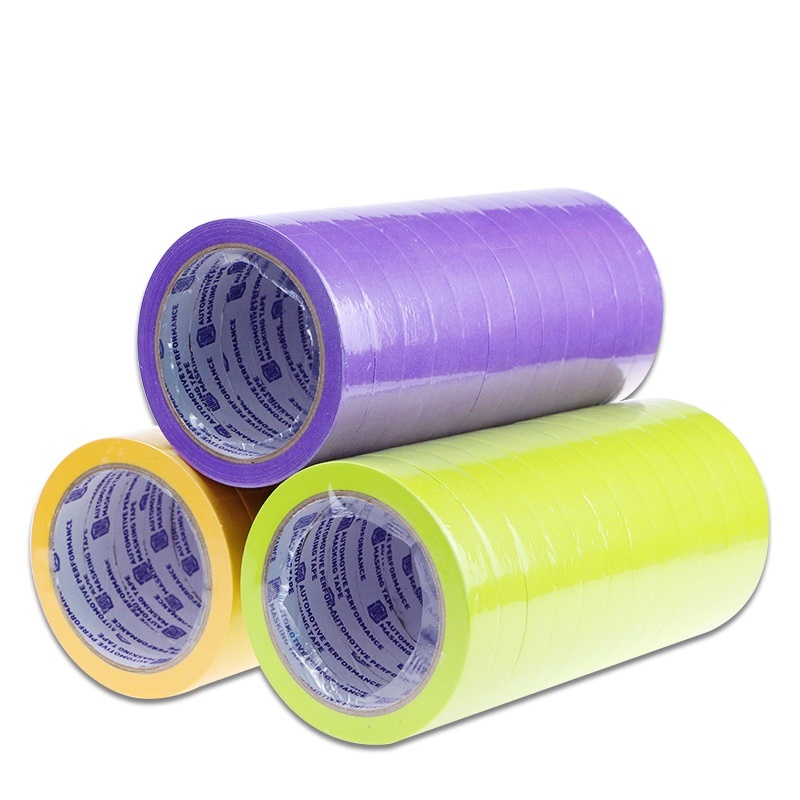
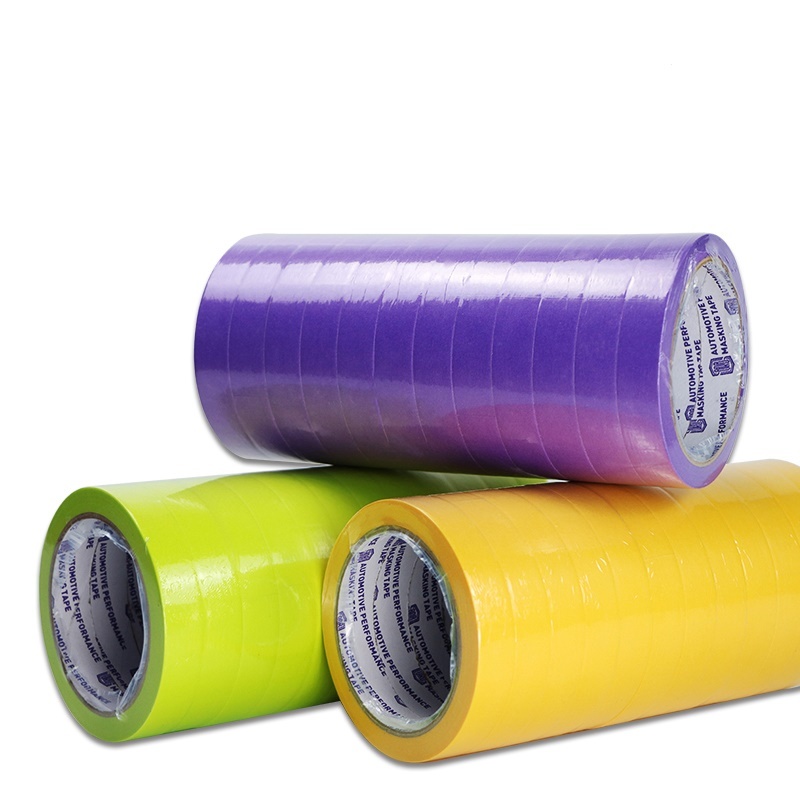
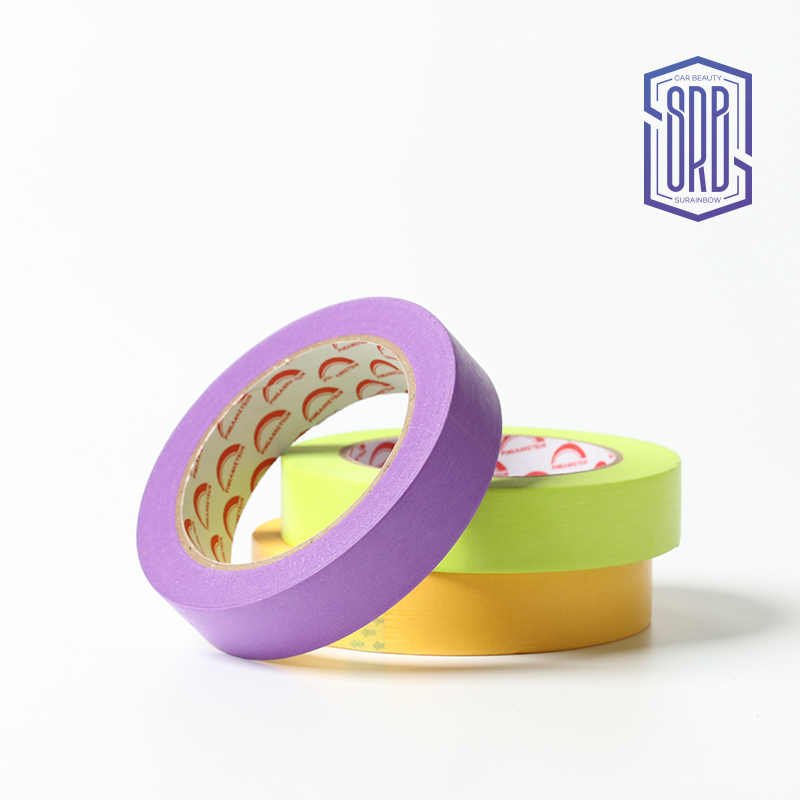
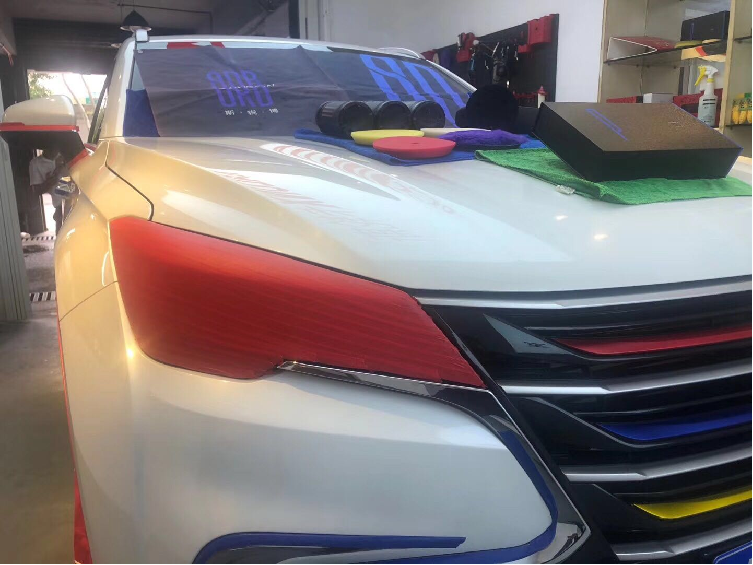
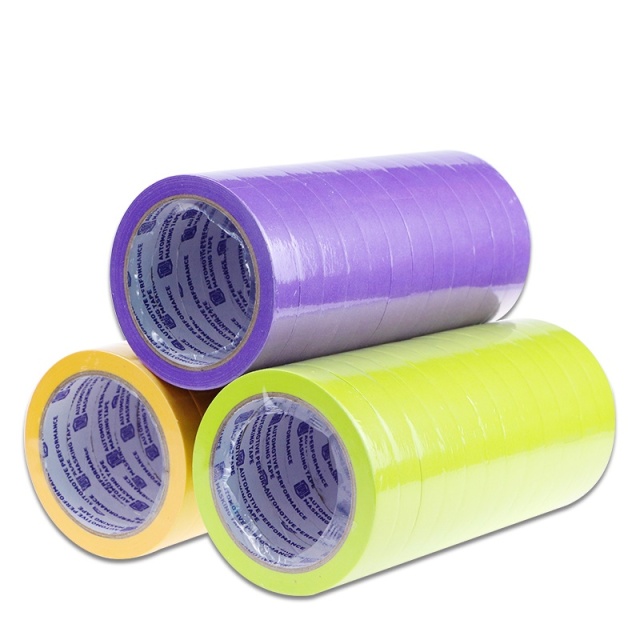
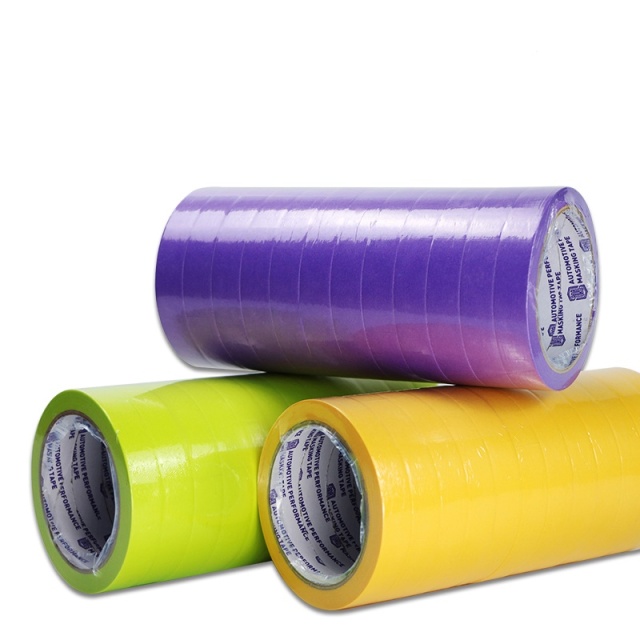
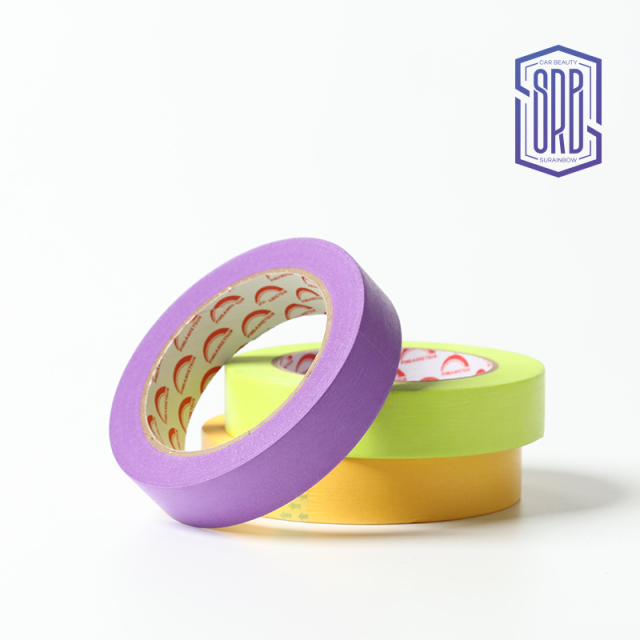
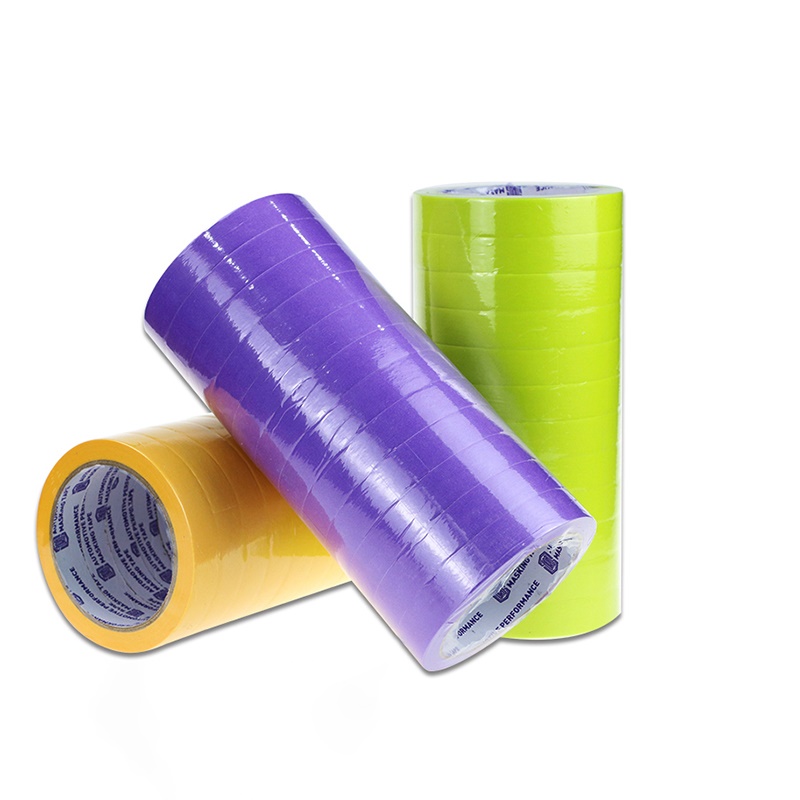
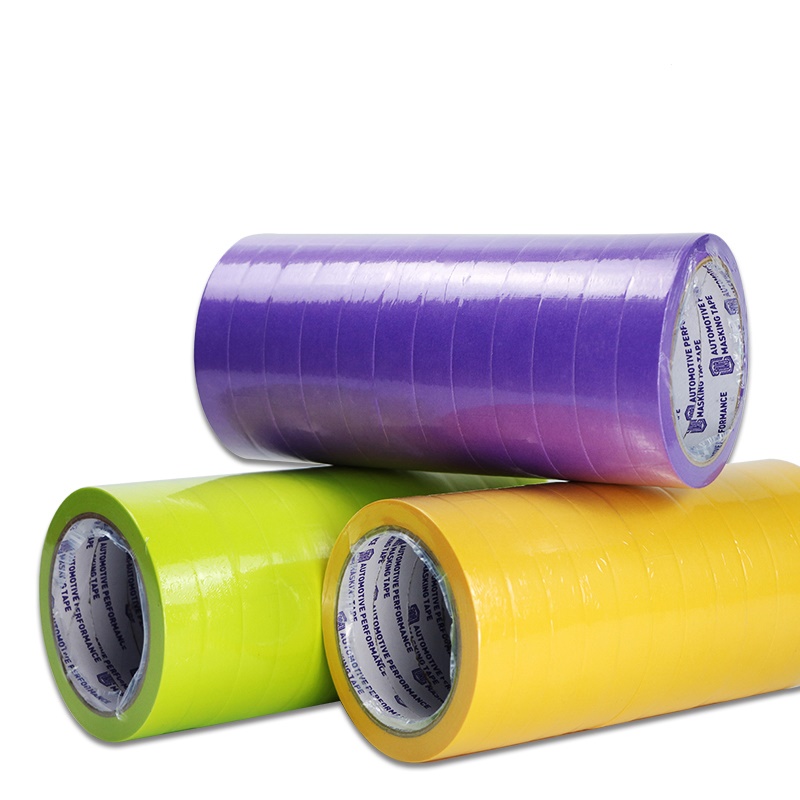
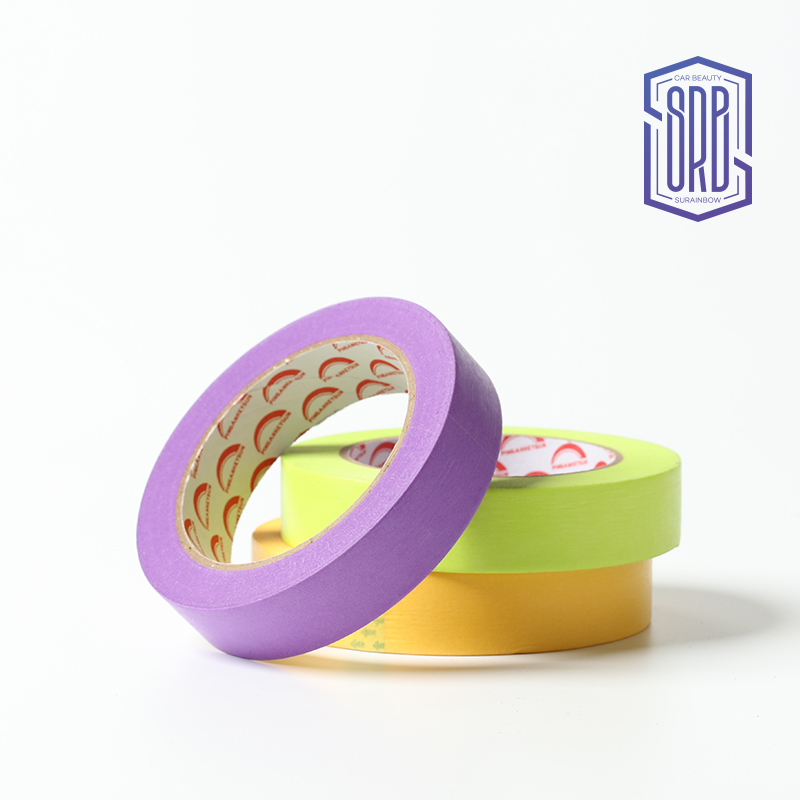
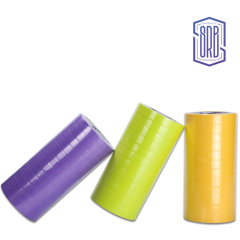
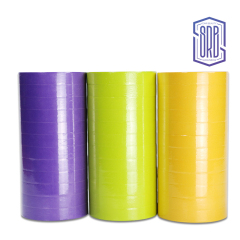
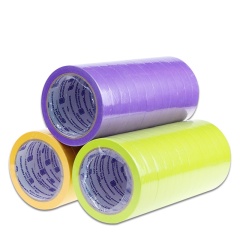
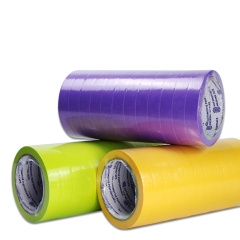
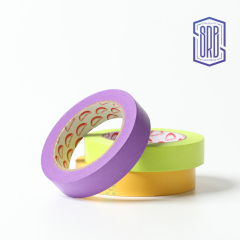
For automotive workshops planning paint repairs, SURAINBOW Masking Tape T-650 provides a crepe-paper strip with rubber adhesive to define the masking edge within an approved repair process. Each roll measures 1.8 cm wide by 30 m long, with purple, green and orange options and an opaque, matte backing that helps technicians follow the boundary against the surrounding work area. The tape can be used for panel-edge preparation and masking around mouldings, lamps or trim after a successful compatibility trial, while suitable masking paper or film covers wider areas. Surface condition and painting requirements determine suitability, so inspect, prepare and dry the contact area before applying the tape progressively without unnecessary tension.
Tape Construction
Crepe-paper backing carries a rubber adhesive for automotive masking work. The paper forms the masking strip, while the adhesive holds it against the prepared surface during the approved application process.
The backing has an opaque, matte appearance. Its solid colour makes the applied strip visible against the surrounding work area, helping technicians follow the masking boundary as they work.
Paper construction distinguishes this tape from the plastic sheeting used to cover larger areas. The tape forms the edge of the mask; the covering material protects the wider area outside that edge.
Rubber adhesive describes the adhesive type, rather than a universal compatibility rating. The condition of the finish and the demands of the painting process still determine whether the tape suits the job.
For professional car care, the useful combination is a clearly visible masking strip and a construction that can be assessed against the workshop's own process. Colour alone does not establish a different adhesive grade or performance rating.
Roll Specifications
| Property | Detail |
|---|
| Brand | SURAINBOW |
| Model | T-650 |
| Product type | Automotive masking tape |
| Place of origin | Guangdong, China |
| Roll width | 1.8 cm |
| Roll length | 30 m |
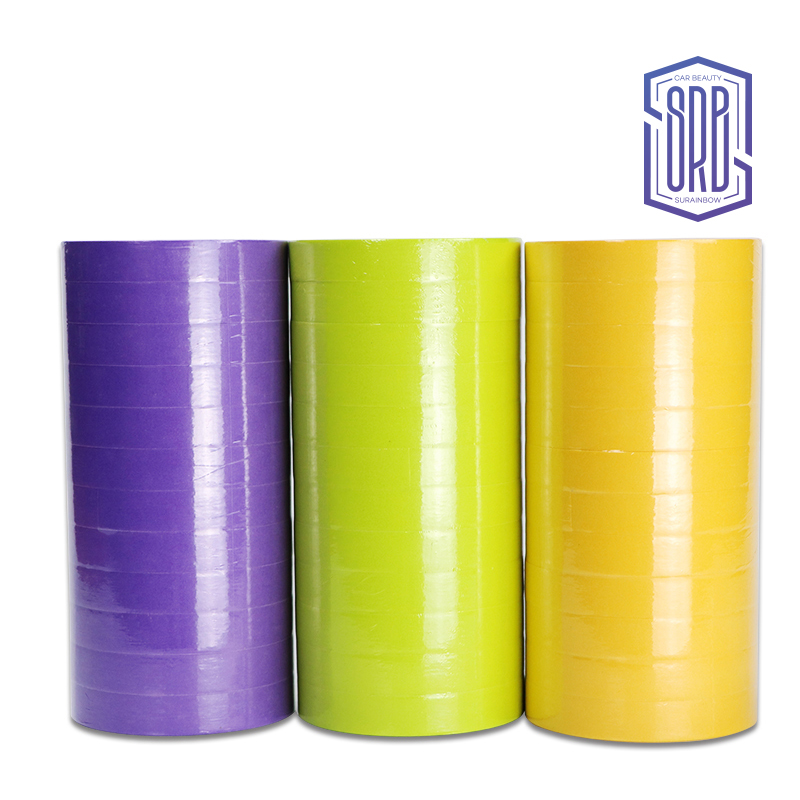
| Available colours | Purple, green, orange |
| Selling unit | Single item |
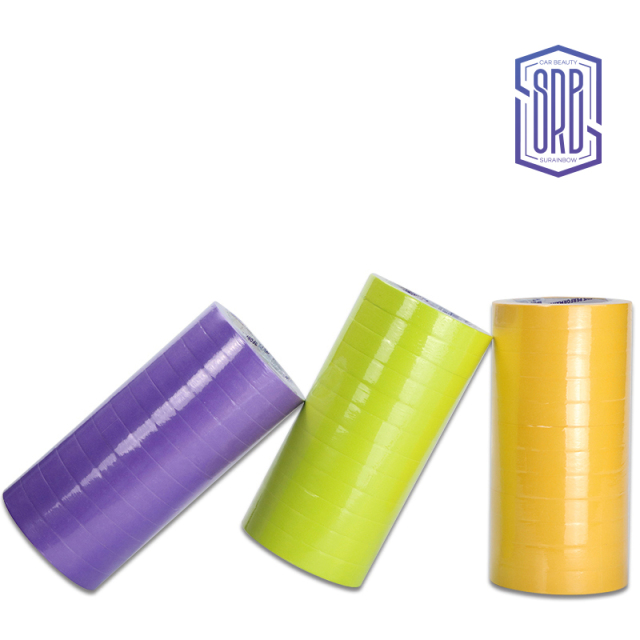
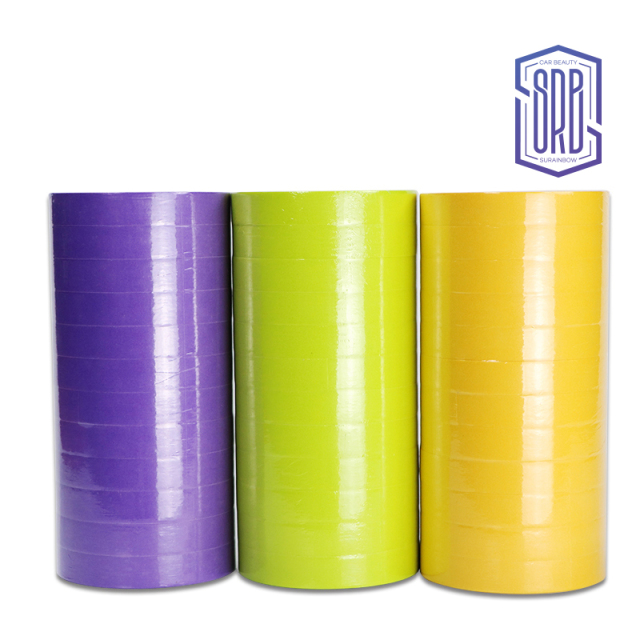
| Box packing | 36 pieces per box |
| Single package dimensions | 10 × 10 × 2.5 cm |
| Listed weight | 0.3 kg; measurement basis to be confirmed |
| Listed single gross weight | 0.040 kg; packing basis to be confirmed |
Automotive Applications
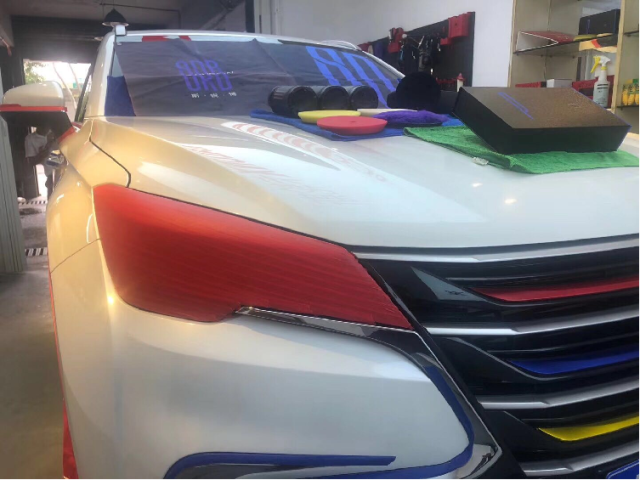
- Localized paint repairs need a planned boundary between the working area and the surrounding vehicle finish. Use the tape within a masking arrangement approved for the repair process.
- Panel-edge preparation involves following the intended paint boundary accurately. Map the edge before application so the masking line matches the repair area rather than an approximate panel outline.
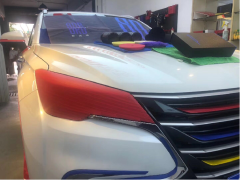
- Adjacent-component masking can involve areas around mouldings, lamps or trim. Direct contact with each material requires a successful compatibility trial before the tape is used on the vehicle.
- Broad-area spray covering combines an edge mask with suitable masking paper or film. Choose the covering material for the intended spray process rather than expecting a narrow strip to cover an entire panel.
- Professional car care workshops can keep masking consumables alongside their automotive care products for painting-related work. Keep the masking task distinct from cleaning, polishing or repairing the underlying finish.
- Workshop car care kits can include tape for a defined preparation task. Any additional covering materials or tools needed for that task should be specified separately.
Masking Procedure
- Inspect the intended masking route for loose paint, damaged clear coat, contamination or fragile edges. Resolve surface defects before attaching tape, since an unstable finish can lift during removal.
- Prepare the contact area using a method appropriate to that surface, then allow it to dry. Wax, oil, dust and remaining cleaner can interfere with adhesive contact.
- Mark out the intended boundary and apply the strip progressively. Guide it into place without pulling it under unnecessary tension, particularly around corners where a stretched strip can pull back.
- Press along the working edge so it lies evenly against the surface. At joins, maintain continuous coverage and inspect for gaps, wrinkles or lifted sections before work begins.
- Keep the applied tape clear of moving tools and check the mask if it is disturbed during work. Replace a damaged section rather than continuing with an exposed gap.
- Remove the strip slowly, keeping the pull close to the surface and following the removal method established during the trial. Stop if the backing tears, adhesive transfers or the finish begins to lift; avoid scraping at the painted surface.
Testing & Sample Approval
Painted metal, repainted panels, plastic trim, rubber and glass can respond differently to an adhesive. A trial on a representative spare panel or inconspicuous area should reproduce the actual surface condition before the tape is used across a visible working area.
Freshly refinished surfaces need particular care. Follow the coating manufacturer's guidance on when the finish can accept masking, and include any existing coating, film or treatment in the trial rather than testing only an untreated surface.
Temperature exposure, solvent contact and the intended time on the surface belong in the same trial plan. Obtain the applicable operating limits before using the tape in a heated refinishing cycle or a process involving aggressive solvents; automotive painting use alone does not establish those limits.
Removal is part of the test, not just application. Check the boundary after the intended exposure for adhesive transfer, edge lifting, tearing, staining or changes to the finish, and record the conditions under which the result was obtained.
Trials involving other professional car care products should use the actual materials and sequence planned for the job. A successful result with a different cleaner or coating may not reproduce the same adhesive contact or removal behaviour.
An approved sample can become the acceptance reference when both sides agree on the written specification, test conditions and acceptable results. Keep the identified reference together with the approval record, and compare later batches under the same conditions rather than relying on appearance alone.
For repeat orders of car care products, retain the order reference, any batch identification supplied and the inspection results. Agree in advance which batch records or retained samples are available, since the record set depends on the product and order requirements.
Orders, Packaging & Delivery
- Box quantities: The selling unit is a single item, with 36 pcs in a box. The stated order minimum is 1 box of 36 pcs; the agreed order should identify the required colour assortment.
- Single-item package details: Refer to Roll Specifications for package dimensions and the listed gross weight. Verify the actual net and packed weights before calculating freight or preparing shipment documents.
- Stock and shipping: In stock and fast shipping. Availability for this tape and the dispatch schedule require confirmation for the specific order; no fixed dispatch deadline is included here.
- Trial samples: Ask for current sample terms before arranging a workshop trial. The request should identify the intended surface, painting process and test requirements so the trial concerns the actual application.
- Packaging design and approval: Any accessory-specific branding, label or carton changes require a feasibility review. Where agreed, approve the artwork, label language, barcode, carton marks and physical packing proof before the changed packaging is released; match the selected tape colour against a physical roll during approval.
- Mixed product orders: We supply chemicals as car cleaning products manufacturers alongside detailing accessories. A combined order of automotive care products can be discussed, with tape specifications, quantities and packing agreed separately from the liquid products.
- Balance, dispatch and documents: Agree the accepted payment method and schedule in the commercial offer. Before shipment, review the balance status, inspection arrangement, consignee details, transport method and required invoice, packing list and customs documents. For the destination market, establish whether an SDS, material declaration or other product-specific document applies and is available; liquid-product documentation should not be assumed to cover adhesive tape.
- After-sales review: Report packaging or shortage issues within 7 days of receipt and product-quality concerns within 30 days. Include the order reference, batch identification where available, affected quantity, clear photos or video, and a description of the application conditions. Contact Amy at amy@surainbow.com or +86 13922243235 by phone, WeChat or WhatsApp.
Tape Preparation & Consumption
- Ready for application: Masking Tape T-650 requires no dilution or mixing. Do not add water, thinner or solvent to prepare the tape; dilution instructions for any accompanying liquid car care supplies apply to those liquids separately.
- Linear measurement: Estimate consumption in metres of tape along the planned masking route. Vehicle count or panel surface area alone cannot establish how much tape a job will need.
- Route calculation: Measure each boundary to be masked and add the lengths together. Count every separate run, including repeated runs along the same boundary, wherever your masking plan requires them.
- Working allowance: Add extra length for joins, corners, trimmed ends and sections that may need replacement. Base this allowance on the job layout and your workshop's recorded use rather than assuming a fixed waste percentage.
- Roll calculation: Divide the total planned length, including your working allowance, by the roll length listed in Roll Specifications, then round up to a whole roll. When using partly used rolls, calculate from their remaining length rather than counting each as a full roll.
- Planning example: A job requiring 42 m after allowances calls for two full rolls. This is a length calculation for that example, rather than a fixed number of vehicles or panels that two rolls will mask.
- Repeat-job records: Record the length used for a defined repair area and masking layout. Use that record to plan similar professional car care work, adjusting for changes in boundary length, the number of tape runs and any additional masking stages.
Scale & Supply Capability
We are Guangzhou Liangdian Automotive Supplies Co., Ltd., an integrated manufacturing and trading company founded in Guangzhou in 2010. With 50 employees, we supply a broad range of car care products to distributors, wholesalers and brand owners. Our range lets you source across categories through one supplier, with in-stock options and fast shipping. Alongside our SURAINBOW brand, we offer OEM/ODM customization, supported by a professional R&D team that can design and develop products around your requirements.
FAQ
Does the tape need dilution before use?
No dilution is needed: the tape is supplied ready for direct application. Water, thinner and other solvents are not ingredients to mix with it, and there is no dilution ratio to calculate. Measuring cups, mixing containers and liquid dispensers are unnecessary for preparing the tape.
When using it alongside liquid car care supplies, follow the mixing instructions for each liquid separately. A cleaner’s dilution directions apply to that cleaner alone. Keep open bottles and mixing containers apart from the roll to avoid accidental splashes, and do not use the tape to stir or transfer liquids.
What are the tape's backing and adhesive materials?
SURAINBOW T-650 uses a crepe-paper backing with rubber adhesive. The paper forms the masking strip, and the adhesive holds it against the prepared surface during the approved application process. Rubber adhesive identifies the adhesive type; suitability still depends on the condition of the finish and the painting requirements. Assess the tape against your workshop's process before use.
What roll size and colour options are available?
Each T-650 roll measures 1.8 cm wide by 30 m long, with purple, green and orange options available. The backing has an opaque, matte appearance that helps technicians follow the masking boundary against the surrounding work area. Colour alone does not establish a different adhesive grade or performance rating, so assess suitability according to the surface and painting process.
Can this tape be applied around vehicle mouldings, lamps and trim?
T-650 can be used for masking around mouldings, lamps or trim after a successful compatibility trial. Direct contact with each material requires that trial before application on the vehicle. Inspect the intended masking route for loose paint, damaged clear coat, contamination or fragile edges, then prepare and dry the contact area using a method appropriate to the surface.
Is this tape suitable for covering an entire panel during spraying?
T-650 forms the masking edge, while suitable masking paper or film covers wider areas. For broad-area spray covering, combine the tape with a covering material selected for the intended spray process. Map the intended paint boundary before applying the tape so the masking line matches the repair area. Specify any additional covering materials and tools separately for the task.
How much tape will a masking job use?
Tape consumption depends on the total masking-route length, the shape of the boundary and the allowance needed for joins or rework. Estimate from the route you will mask rather than from the panel's surface area.