Product Overview
For automotive paint repair, waxing and scratch-removal work, SURAINBOW Quick-Acting Paint Repair Agent comes in a 0.4 kg format and forms part of the SURAINBOW DA Paint Renewal System. Intended for paintwork, its suitability depends on the existing finish; deep gouges, exposed primer or missing paint may require touch-up or refinishing. Before wider application, obtain product-specific instructions for quantity, pad suitability and machine settings, then assess an inconspicuous test area using consistent equipment, lighting and inspection methods. Originating in Guangdong, China, the agent has a three-year shelf life, is packed in cartons of 12 pieces and has a material safety data sheet available for quick-acting repair agent D3.
Product Details
| Property | Detail |
|---|
| Place of origin | Guangdong, China |
| Shelf life | 3 years |
| Carton packing | 12 pieces per carton |
| Package dimensions per batch | 32.5 × 24 × 28 cm |
| Gross weight per batch | 11.800 kg, including packaging |
| Safety documentation | Material safety data sheet (MSDS) for quick-acting repair agent D3 |
Paint Repair & Compatibility
quick-acting repair agent D3 targets automotive paint repair, waxing and scratch-removal work. Use it for repair-focused detailing where the condition of the existing finish determines the work that can reasonably be carried out.
Before applying car scratch removal wax, distinguish marks in the finish from damage that has broken through it. Deep gouges, exposed primer or missing paint may require touch-up or refinishing rather than further polishing. Stop treating an area if continued work risks damaging the remaining finish.
Paintwork is the intended surface. Glass, chrome, bare metal, textured plastic, paint-protection film and vinyl wraps need their own compatibility guidance. Matte or satin finishes and previously coated panels also require particular care because polishing can alter their appearance or existing treatment.
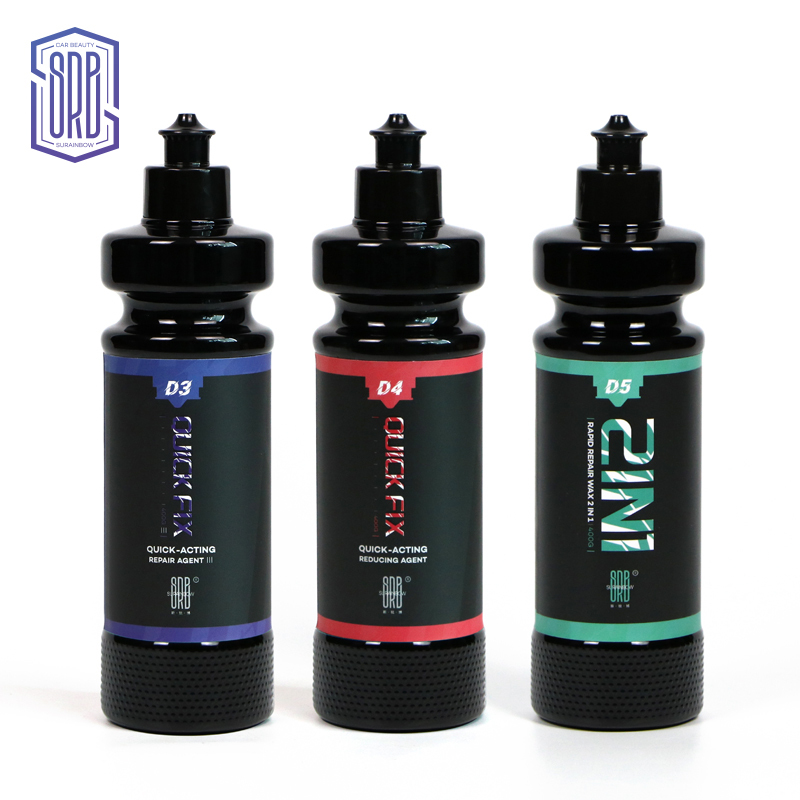
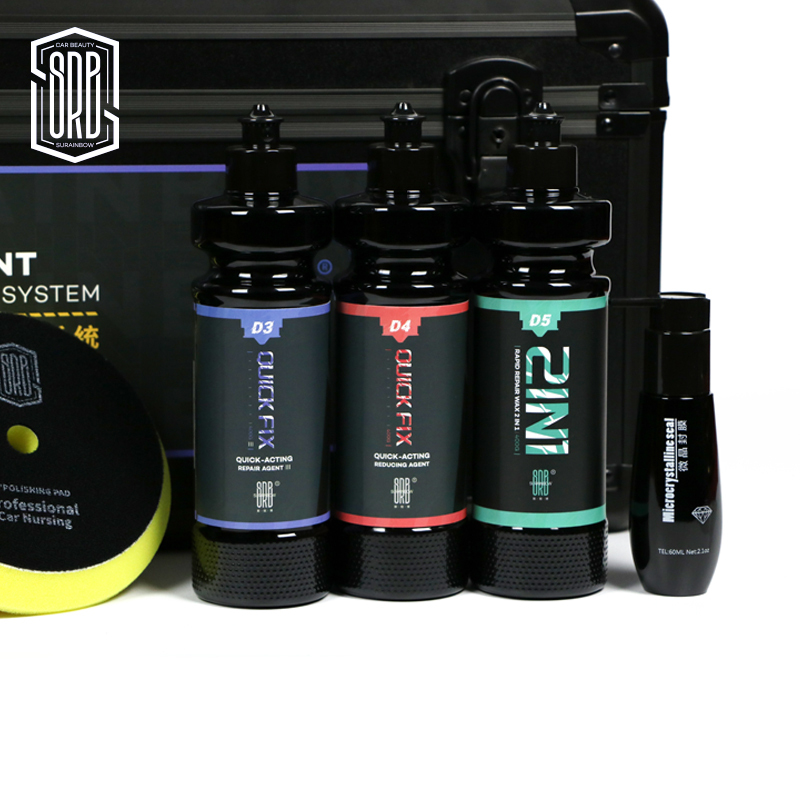
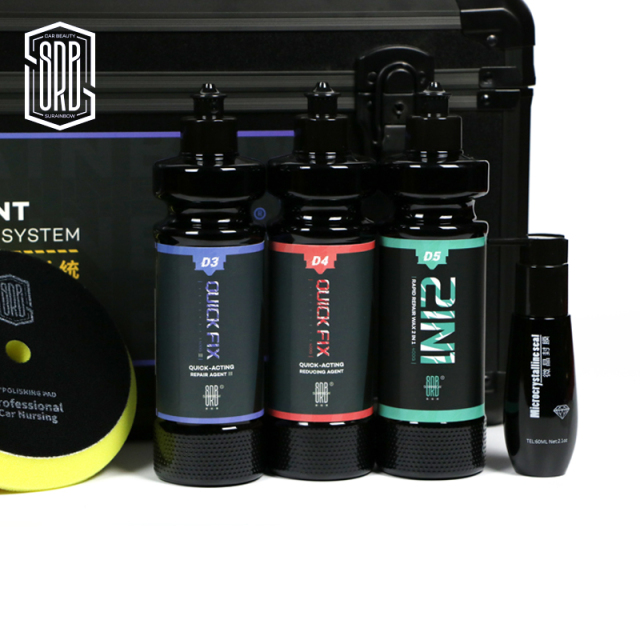
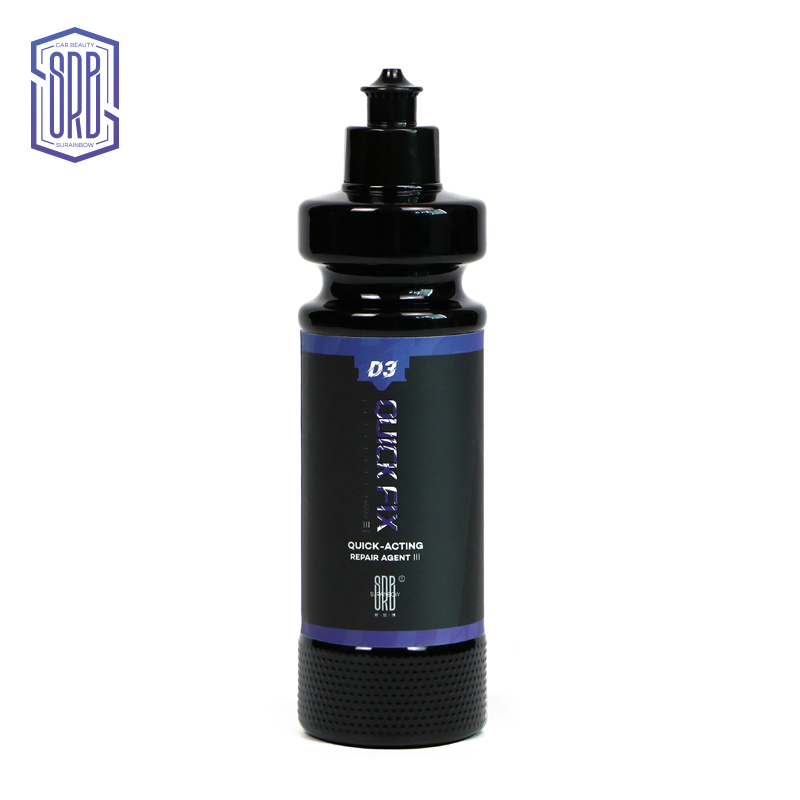
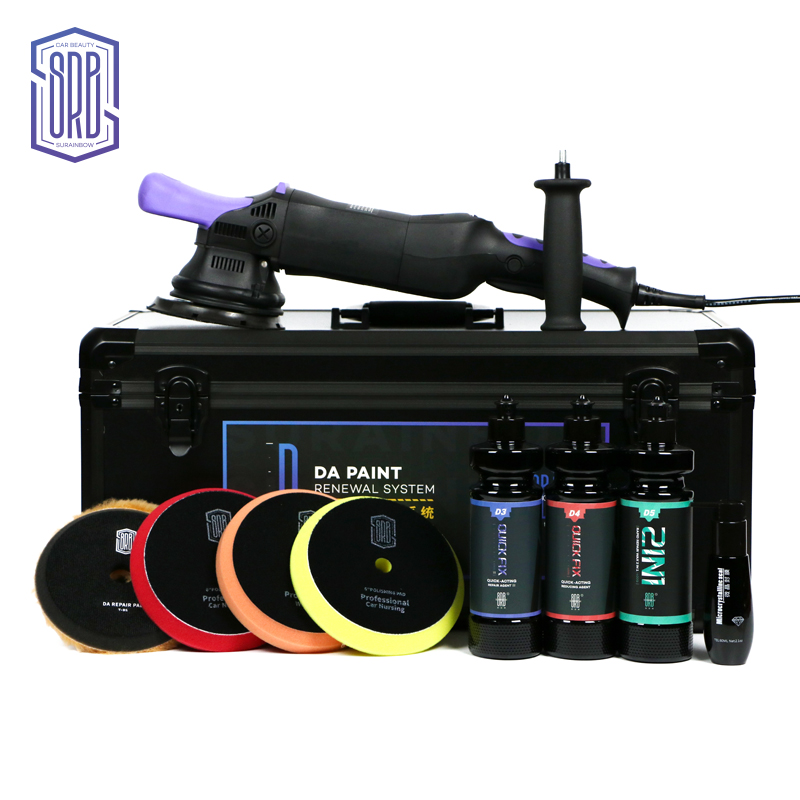
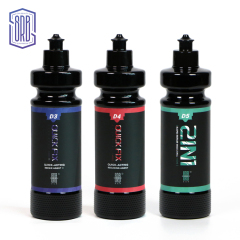
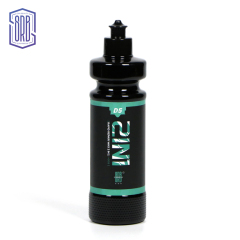
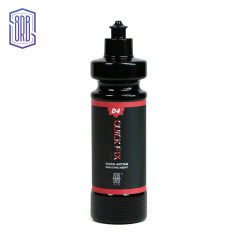
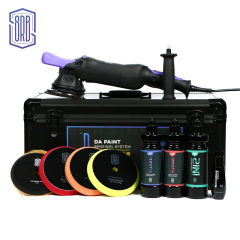
The Quick Fix labeling places the agent within the SURAINBOW DA Paint Renewal System. The black bottle has purple accents, a narrow dispensing nozzle and a textured lower grip for handling during detailing work. System imagery also shows a corded polisher, a detachable auxiliary handle and pads labeled DA Repair Pad and Polishing Pad; these do not establish a particular machine setting or cutting grade.
For oem car repair wax projects, define the intended paint finish and the repair result you want to achieve. Keep customer-facing claims tied to the surfaces and conditions actually tested rather than extending one successful result to every vehicle finish.
Testing & Sample Approval
- A workshop trial of car repair wax 0.4 kg should begin with product-specific instructions covering ready-to-use or diluted application, the recommended quantity, pad suitability and machine settings. Obtain these details before applying the wax; do not improvise a dilution ratio or speed.
- A clean, dry test panel makes the starting condition easier to inspect. Remove loose contamination before the trial so dirt is not worked across the finish, and use clean application and wipe-off materials.
- An inconspicuous test area allows the agreed method to be checked before a larger panel is treated. Keep the equipment, pad and application method consistent while assessing the initial result.
- Consistent lighting helps reveal remaining marks, haze and changes in appearance after residue is removed. Inspect car scratch removal wax results from different viewing angles rather than judging only the wet appearance during application.
- A written trial record helps your car repair wax supplier understand the result. Record the paint condition, equipment, pad, working method and observations, with photographs taken under comparable conditions.
- An oem car repair wax trial can also assess appearance, odor, texture and dispensing behavior against the agreed brief. Any change to the application method or formula should be assessed on its own merits rather than assumed to match the earlier trial.
- An approved sample can become the acceptance reference when both sides agree on the specification, test criteria and permitted tolerances. Identify the approved version clearly and record the acceptance details in writing before production approval.
Safety & Formulation
- quick-acting repair agent D3 has MSDS safety documentation; obtain the current product-specific SDS and ingredient statement before handling. A safety data sheet explains chemical precautions and is not a performance certificate.
- Formulation details, including abrasive type and grade, require product-specific confirmation. Do not assume that a repair wax is silicone-free, body-shop compatible or suitable for a particular refinishing process without supporting information.
- Workshop protection should follow the SDS, including its ventilation, eye-protection and skin-protection instructions. Keep the document accessible to the people dispensing and applying the wax.
- Mixing with other cleaners, solvents or polishing compounds can change how a chemical behaves. Use the agent separately unless the product instructions expressly permit a combination.
- Accidental contact, spills and disposal should be handled according to the SDS and local requirements. Hazard classification and market-specific labeling must be checked for the actual formulation rather than inferred from the product name.
Packaging & Delivery
12 PCS in a carton, with selling units in multiples of 12. MOQ: 60PCS. Package size per batch: 32.5X24X28 cm. Gross weight per batch: 11.800 kg.
For stocked items across our range: In stock and fast shipping. Availability and dispatch timing for this product are confirmed for each order before purchase.
Packaging Design & Approval
For oem car repair wax, packaging scope can include the container, closure, label, carton and shipping marks, depending on product compatibility and the agreed order. Review the artwork, label language, barcode and required warnings together. Physical proofing and written approval should identify the exact packaging version to be used.
The label for car repair wax 0.4 kg should distinguish declared product content from shipment gross weight. The final order should also identify whether it covers the repair agent alone or any additional equipment or treatments shown in the photographs; pictured accessories should not be assumed to be included.
Balance, Dispatch & Documents
Before shipment, agree on the inspection arrangement, balance or payment status, shipping method, consignee details and carton marks. Applicable payment methods and the payment schedule depend on the order and must be agreed with the commercial offer.
Your car repair wax supplier needs the destination market and intended shipping route to review transport classification and the required documents. Commercial invoices, packing lists and customs documents can be discussed as applicable to the shipment. Any additional transport or market-compliance documentation must be agreed for the actual product and destination; document preparation does not replace the importer's local obligations.
After-Sales & Batch Records
- For car repair wax 0.4 kg, batch details help your supplier identify the product involved in a concern. Keep the order reference and a clear photograph of any batch identification on the received container or carton.
- A useful issue report states the affected quantity and describes what happened, supported by clear photographs or video. Distinguish a container problem from a change in the wax itself so the concern can be reviewed accurately.
- Changes in texture, separation or dispensing behavior are easier to investigate when the report includes when the change appeared and how the product was handled. Keep an affected container available for further review rather than discarding it immediately.
- Unexpected results with car scratch removal wax should be reported with the paint condition, pad, equipment and working method used. Include whether the concern affects only one panel or appears across different applications.
- Batch records, inspection records and retained samples may be available depending on the product and agreed requirements. Any specific traceability record needed for your business should be included in the agreed documentation scope.
Quick Fix Treatments
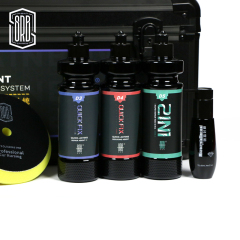
- D3 is the repair-focused choice within this comparison: its stated uses cover automotive paint repair, waxing and scratch removal. Choose it by the repair task you need to carry out, rather than treating its model number as a polishing-stage designation.
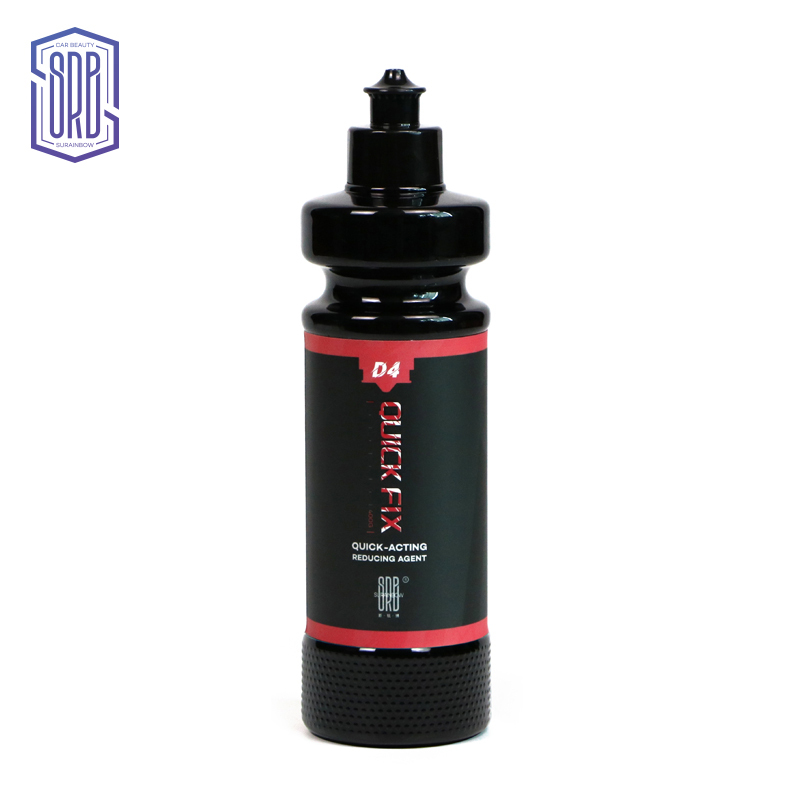
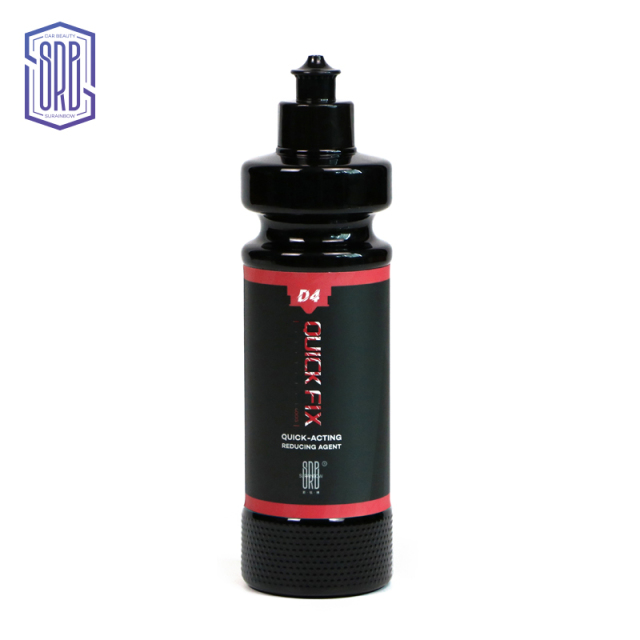
- D4 lists paint polishing, waxing and scratch removal. For a polishing task, compare its product-specific application guidance with D3 before choosing; the D4 name alone does not establish a finer abrasive grade or a required finishing step after D3.
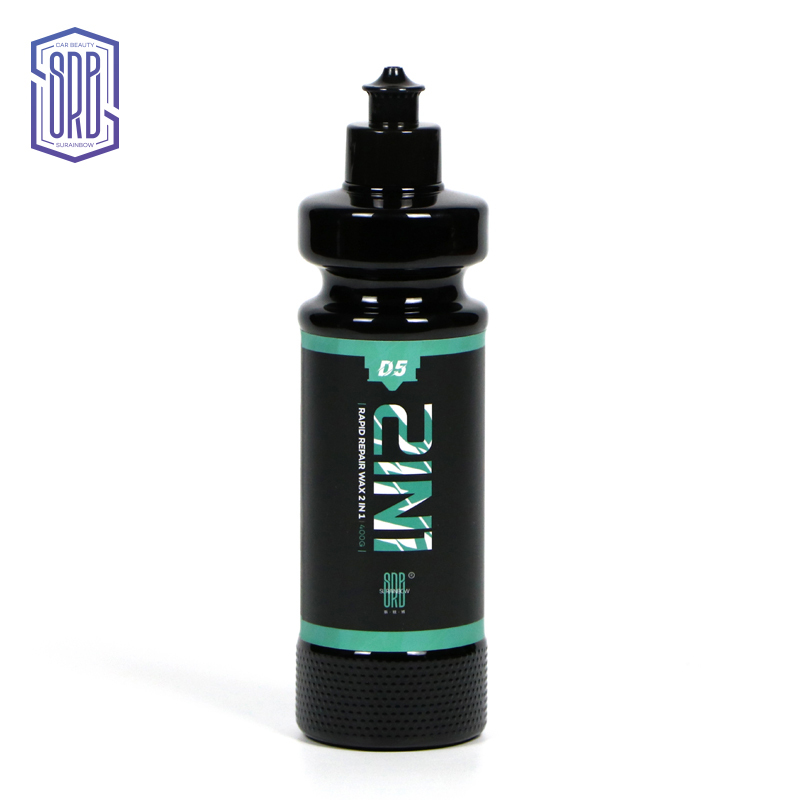
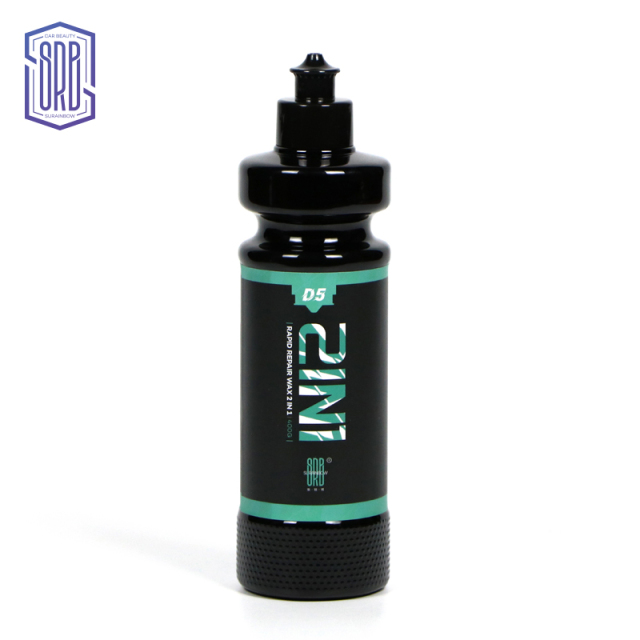
- D5 is named a two-in-one renewal repair wax and lists paint repair, waxing and scratch removal. Its combined repair-and-wax description does not establish that it replaces D3 plus D4 or delivers the same result as a separate correction and finishing procedure.
- Waxing and scratch-removal uses overlap across all three treatments. Those shared uses do not establish identical formulas, equal correction strength or the same finish, so select by the individual product instructions and the result required.
- Model numbers do not provide a cutting-strength scale. When comparing treatments, ask for product-specific abrasive information and recommended working methods; do not assign heavy-cut, medium-cut or finishing grades from D3, D4 and D5 alone.
- A change from one treatment to another needs its own application instructions. Before substituting a product in an established workshop procedure, check the recommended pad, equipment settings, residue-removal method and compatibility with any subsequent protection treatment rather than carrying the previous settings across automatically.
Scale & Supply Capability
We are Guangzhou Liangdian Automotive Supplies Co., Ltd., an integrated manufacturing and trading company founded in Guangzhou in 2010. With 50 employees, we supply a broad range of car care products to distributors, wholesalers and brand owners. Our range lets you source across categories through one supplier, with in-stock options and fast shipping. Alongside our SURAINBOW brand, we offer OEM/ODM customization, supported by a professional R&D team that can design and develop products around your requirements.
FAQ
Do all Quick Fix treatments have to be used in sequence?
Follow the instructions for each Quick Fix treatment rather than assuming that every bottle must be used in sequence. The repair agent, reducing agent and two-in-one renewal wax should not be treated as interchangeable solely because they appear together. Any follow-on finishing or protection treatment needs to suit the paint and the work already carried out.
What types of paint damage is this repair agent intended to address?
SURAINBOW Quick-Acting Paint Repair Agent is intended for automotive paint repair, waxing and scratch-removal work. Its suitability depends on the condition of the existing finish. Distinguish marks within the finish from damage that has broken through it: deep gouges, exposed primer or missing paint may require touch-up or refinishing. Stop treating an area if continued work risks damaging the remaining finish.
Can this product be used on wraps, paint-protection film or matte finishes?
Paintwork is the intended surface; paint-protection film, vinyl wraps, glass, chrome, bare metal and textured plastic require their own compatibility guidance. Matte or satin finishes and previously coated panels need particular care because polishing can alter their appearance or existing treatment. Before wider application, assess an inconspicuous test area using consistent equipment, lighting and inspection methods.
What application instructions should our workshop obtain before testing?
A workshop trial requires product-specific instructions covering ready-to-use or diluted application, recommended quantity, pad suitability and machine settings. Obtain these details before applying the product, and do not improvise a dilution ratio or speed. Begin with a clean, dry test panel and clean application and wipe-off materials. Inspect the result after residue removal under consistent lighting and from different viewing angles.
What product format, shelf life and safety documentation are specified?
SURAINBOW Quick-Acting Paint Repair Agent comes in a 0.4 kg format, has a three-year shelf life and has a material safety data sheet available for quick-acting repair agent D3. It forms part of the SURAINBOW DA Paint Renewal System and originates in Guangdong, China. The black bottle features purple accents, a narrow dispensing nozzle and a textured lower grip.