Product Overview
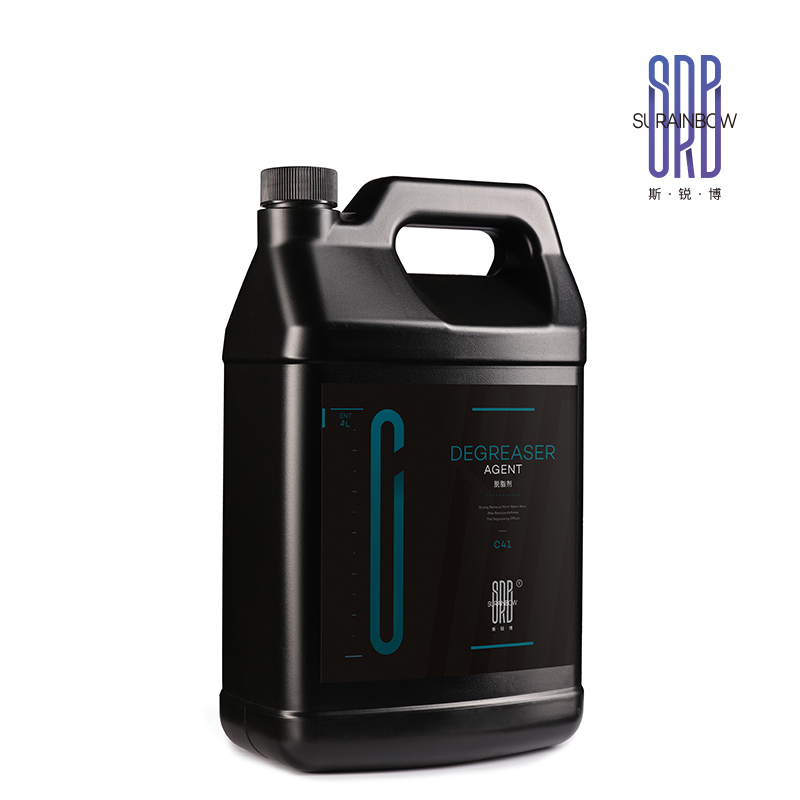
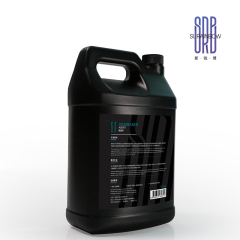
SRB Degreaser Agent is a neutral, concentrated car paint degreaser for the step between washing and protecting. Shampoo lifts dirt; it does not lift the wax, resin and traffic grease sitting in the top layer of the paint, and that layer is exactly what stops a new wax or coating from bonding. This liquid takes it off, so the next product meets clean paint instead of someone else's old coat. Shops buying a wholesale car degreaser usually want two things from one jug: enough strength to break a cured wax film, and a panel that is still safe to polish the same afternoon. This formula is built on multiple surfactants carried in a nano-scale dispersion, so the cleaning load sits on the surfactant system rather than on an aggressive solvent, and the panel comes out of the wipe ready for the next layer instead of needing another wash. Distribution buyers, detailing studios, used-car reconditioning bays and dealership prep lines all run it the same way: mix, spray, wipe, then move straight into correction or protection.
Wax, Resin & Grease Removal
- Cured wax and layered sealant. A coat applied months ago and topped up with spray wax at every wash builds a film that shampoo cannot shift; stripping it back lets polishing pads cut properly and lets a coating reach the paint itself.
- Wax that has gone patchy. Where wax was applied too thick or has started to smear, this wax remover spray lifts the surplus rather than letting it sit under the next coat.
- Hard paste wax and carnauba. Heavy, layered paste wax is the hardest film to shift by hand; this is the car wax remover that breaks it in one wet pass instead of three dry ones.
- Resin and sticky road film. Tree resin and the fine sticky layer that collects on lower panels and behind the wheels come away with the same wipe.
- Polishing oils and compound residue. Compounds carry oils that stay on the panel and hide the true finish; a degrease wipe shows defects before you seal them in.
- Neutral on paint and skin. The formulation is neutral, so it does not attack the paint surface or the skin, and there is no solvent haze to polish out afterwards.
Preparation Workflow
- Read the panel before you mix anything. A car wearing a coating, a fresh repaint or a vinyl wrap is a different job from a waxed daily driver; if you are not sure what is on the surface, send a photo to your car degreaser supplier and ask before you strip a whole vehicle.
- Plan top-down and finish low. Roof and bonnet first, then sides, then sills and lower doors where road film is heaviest, so a loaded towel never goes back onto the cleanest panel.
- Strip one section at a time. Work out of direct sun on a cool panel, keep the solution moving, and take the gloss down evenly instead of chasing a single stubborn patch.
- Check the panel before you move on. Wipe dry, then sight along the paint under a light at a low angle: streaks, patchy gloss or a smear that returns after a second wipe mean the old layer is still there.
- Go straight into correction or protection. A paint prep degreaser leaves the surface bare, which is the point — wax, palm wax or coating now bonds to the panel itself rather than to old wax. Dust and fingerprints settle quickly, so polish or seal in the same session.
- Keep a note of what each car needed. Recording the mix and the number of passes used on a heavy wax strip stops the next technician re-testing the same kind of vehicle from scratch.
Dilution & Spray Method
Mixed with water between 1:2 and 1:8, the concentrate becomes a wax remover spray. Start near the strong end of that range on a neglected car with layered wax, and work leaner towards 1:8 for routine panel wipes and maintenance strips where the film is thin. Mix only what you will use in the session, use clean water, and write the ratio on the bottle so the next technician knows what is in it.
It is supplied as an automotive degreaser 4 liter jug, so working strength is decided at the bucket rather than at the factory, and one pack covers both heavy strips and light wipes from the same liquid. Pour into a trigger sprayer or a pump sprayer; a fine, even mist uses far less product than a flooding spray and keeps the panel workable.
Spray onto a cool panel in the shade and keep it wet. A car wax remover that dries on the paint is working against you, so take one panel at a time: give the film a moment to soften, then wipe with a dedicated car cleaning towel, turning to a dry face to lift the residue rather than pushing it around. On a full vehicle, follow with a clean water rinse and dry before the next step.
Applications
- Coating bay panel wipe. Before a ceramic or graphene coating goes on, every panel gets one pass — this is the paint prep degreaser step that decides whether the coating bonds to paint or sits on old wax.
- Full wax strip before machine correction. A car arriving with months of spray wax needs the film off before a pad touches it, otherwise the pad loads up and the cut goes uneven across the panel.
- Used-car reconditioning. Trade-ins arrive with dull, layered wax and road film; one strip brings the paint back to an even finish that photographs honestly and takes a fresh seal.
- Body shop and SMART repair prep. Before blending or polishing a repaired panel, the surrounding paint is degreased so polish, tape and blend lines behave predictably; a car degreaser supplier who also serves bodyshops will tell you which fresh paints to test first.
- Fleet, rental and dealership turnaround. High-volume yards standardise on one concentrate so vans, hire cars and forecourt stock all get the same strip; buying from a car degreaser manufacturer that also supplies the wax and the coating keeps the whole sequence on one shelf.
- Wax applicator and sponge clean-up.
Specifications
| Property | Detail |
|---|
| Product type | Neutral car paint degreaser concentrate |
| Product code | C41 |
| Pack size | 4 L |
| Form | Liquid concentrate |
| Dilution with water | 1:2 to 1:8 |
| Application | Spray on painted panels, wipe off with a car cleaning towel |
| Base | Neutral, multiple-surfactant system |
| Surfaces | Painted panels; wax applicator sponges |
| Effect on the next layer | Improves adhesion of wax, palm wax and coating |
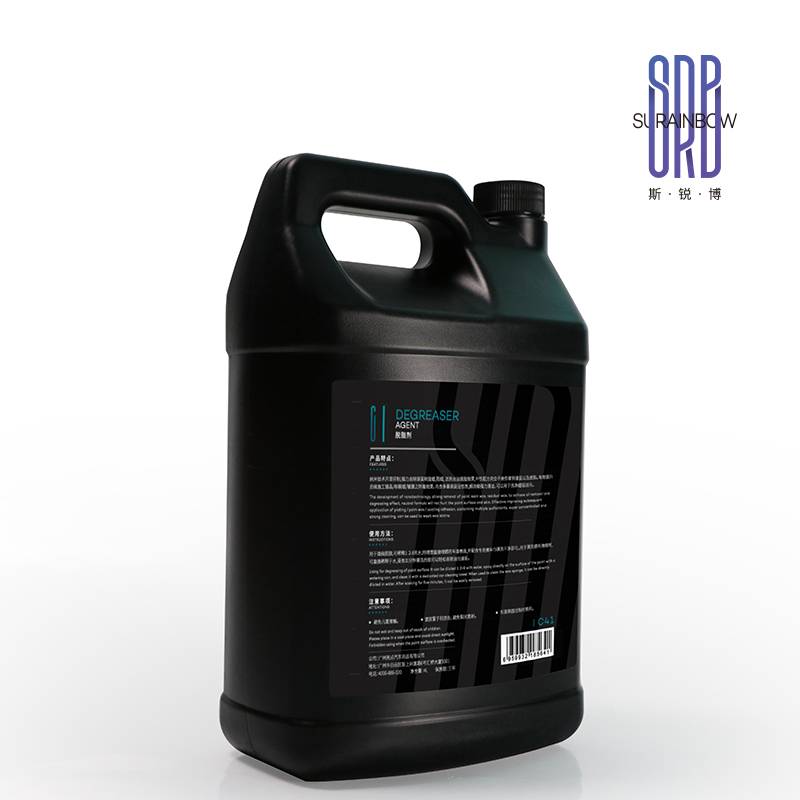
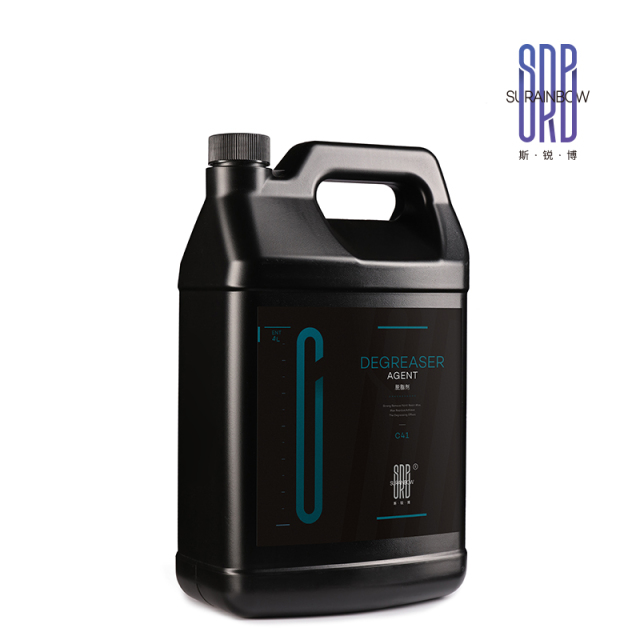
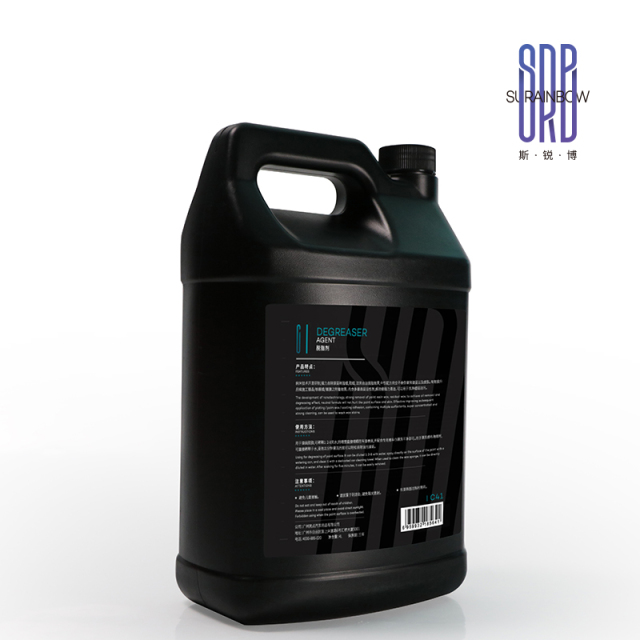
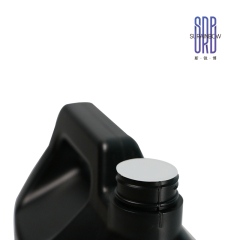
| Container | Black plastic jug with integrated handle |
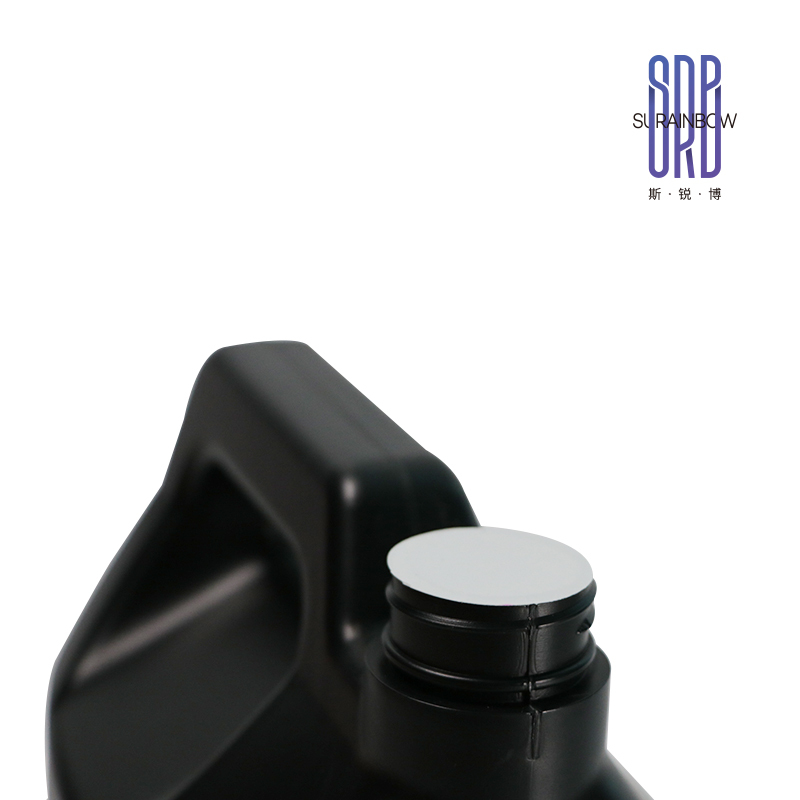
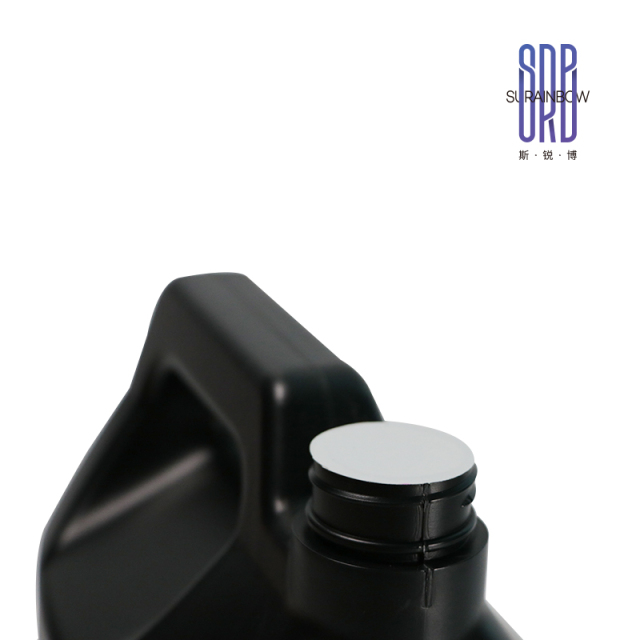
| Closure | White screw cap |
| Labels | Printed front label, rear instruction label, barcode |
| Sponge soak time | About five minutes |
Ordering & Delivery
- Stock and pack. In stock and fast shipping is the position on the standard automotive degreaser 4 liter pack; confirm the quantity you need against current stock before you lock a launch date.
- Commercial terms. A wholesale car degreaser order is quoted on destination, pack format and quantity, so minimum order quantity, unit price and lead time come back on that single scope — send the whole brief in one message.
- Sample, test and approve. Ask your sales contact about sample availability, then test the mix on the paints and the wax types you actually work with; the sample you approve becomes the reference the bulk order is judged against.
- Packaging proof. Carton, label artwork, barcode and label language are proofed and signed off before production, so the market-ready pack arrives ready for your market rather than needing rework in your warehouse.
- Production and quality. As the car degreaser manufacturer, we check the bulk batch against the approved sample and the approved packaging proof, and batch records are kept so a delivered jug can be traced back to its production run.
- Balance and shipment. Balance payment, shipping method, consignee and carton marks are confirmed before dispatch; nothing moves until the dispatch details match what you approved.
- Documents. Commercial invoice, packing list and customs paperwork travel with the shipment, and the safety data sheet, ingredient declaration and market-specific labelling requirements are raised at quotation. Tell us which documents your importer needs, and ask for the test reports behind any performance claim you plan to publish.
- After-sales. Keep the code printed on the jug; report a leak, a shortage or a quality concern against that code, with photos, so the batch and its production record can be checked.
Scale & Supply Capability
SURAINBOW is run by Guangzhou Liangdian Automotive Supplies Co., Ltd., a factory-trade operation set up in Guangzhou in 2010 and now 50 people strong. Sixteen years in car care have given us a one-stop supply position: our own SURAINBOW lines are held in stock for fast shipping, and an associate factory with modern production equipment and an established quality management system keeps replenishment moving. We take OEM and ODM work and our R&D team develops to your specification. Buyers in the Middle East, the United States, Southeast Asia, Europe, the UK, Russia, Africa and Australia already order from us.
FAQ
Can this car paint degreaser be used on a freshly repainted panel?
It is made for painted automotive panels, clear-coated and metallic finishes included. On a fresh repaint, wait until the finish is fully cured and test one hidden area first, because a degrease wipe is the wrong first wash for paint that is still releasing solvent.
Does the formula change from batch to batch?
The surfactant system and the dilution behaviour are held to the approved sample. As the car degreaser manufacturer we keep the record for each run, so if a jug behaves differently from the last one, the code on the label is where the check starts.
How long should a wax remover spray stay on the panel before wiping?
Long enough to soften the film and no longer. Keep the panel wet and wipe while it is still wet; if the spray dries before you reach it, mist the area again and wipe, rather than scrubbing at a dry patch.
Why is it sold as an automotive degreaser 4 liter concentrate instead of ready to use?
Because the right strength depends on the job. A 4 L concentrate lets a shop mix heavy for a wax strip and lean for maintenance wipes, and it stores as a compact pack rather than a shelf of water-heavy bottles.
How does it compare with a solvent panel wipe?
A solvent wipe flashes off in seconds and is chosen for speed. This is a water-dilutable concentrate that stays wet long enough to lift wax and road film and is wiped off rather than evaporated, which makes it the gentler option on paint and on skin. Workshops that buy from a car degreaser supplier usually keep both and pick per job.
Does every coating job need a paint prep degreaser pass?
Not every job, but any car that has been polished does. Compounds leave oils on the panel that a coating will not bond through, so the strip belongs between the last polish pass and the coating. A car that was only washed and waxed needs a full strip instead.
Will it strip a coating that is already on the paint?
It is built to remove wax, resin and grease, and a cured coating is a much harder film than any of those. Test one panel before you run a wholesale car degreaser through a coating bay; if a coating has to come off, that is a separate removal job rather than a maintenance wipe.
Can I use this car wax remover on glass, chrome or plastic trim?
It is formulated for painted panels. Glass, bare metal, rubber and unpainted plastics are not its job, and some of them will mark if a strong surfactant mix sits on them, so mask them off or keep the wipe inside the painted area. Test an inconspicuous spot if a panel is a material you are unsure about.