Product Overview
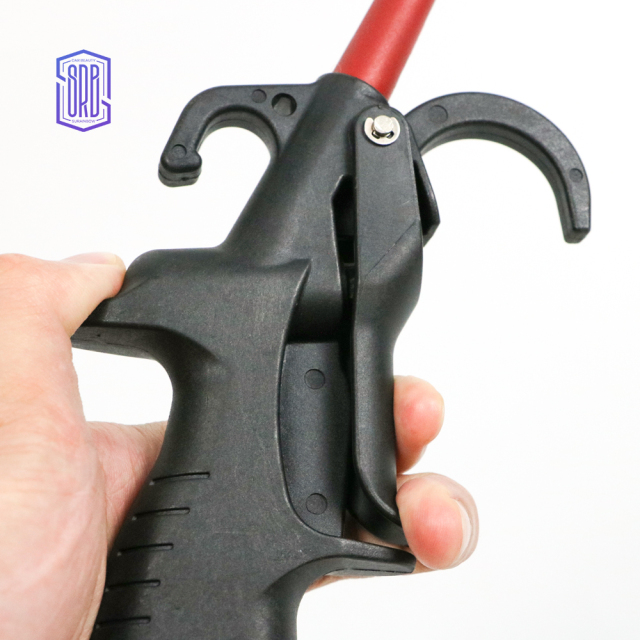
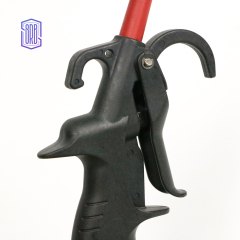
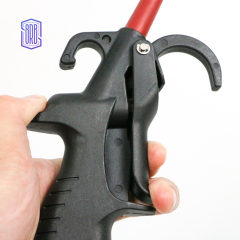
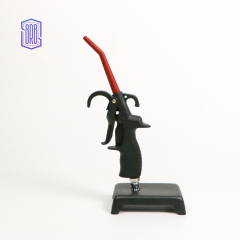
This is a trigger-operated air blow nozzle built for the inside of a car. Air from a workshop line leaves the nozzle as a narrow, controllable stream that lifts dust out of a vent, a seat runner or the lettering on a badge instead of smearing it across the panel. A short pull gives a burst; hold the trigger and the flow stays steady while you sweep along a seam. What makes it easy to live with through a full interior is the weight and the way it sits in the hand. The body is deliberately small and light, with the mass over the palm rather than out at the nozzle, so it can be held at an angle inside a footwell or up under a dashboard without the wrist aching by the third car of the morning. It is the dry half of an interior clean. A job usually starts with an interior car cleaning spray gun and a brush working a panel loose, and finishes with air clearing the loosened dust out of the seams before a towel goes over it, which is why the nozzle is normally bought as part of a set rather than on its own. Both need the same thing from the tool — it has to handle the same dusty vents, week in and week out, without becoming the item that gets replaced every few months.
Material & Build
- ABS for the shell.
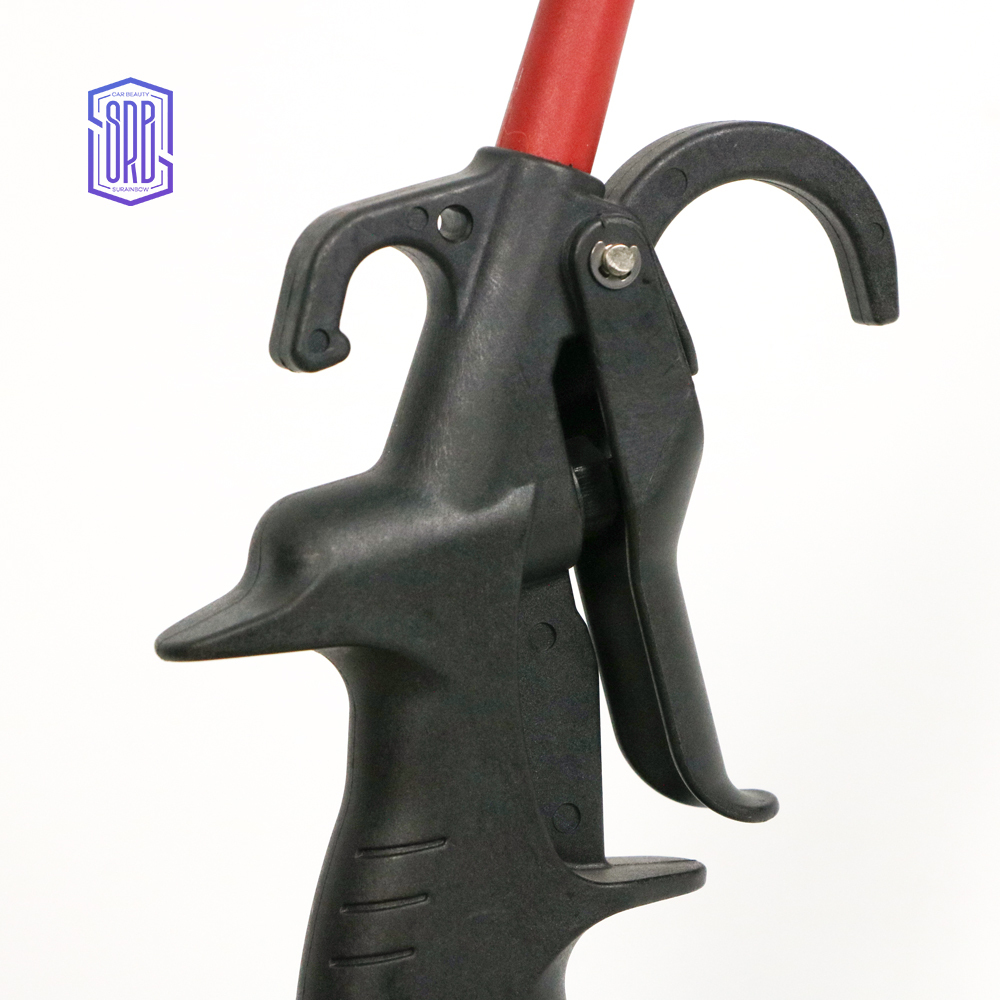
- The body is moulded ABS: it takes the knocks that come with living in a toolbox or on a trolley shelf, holds the moulded grip shape, and keeps the handpiece light enough to work with for hours.
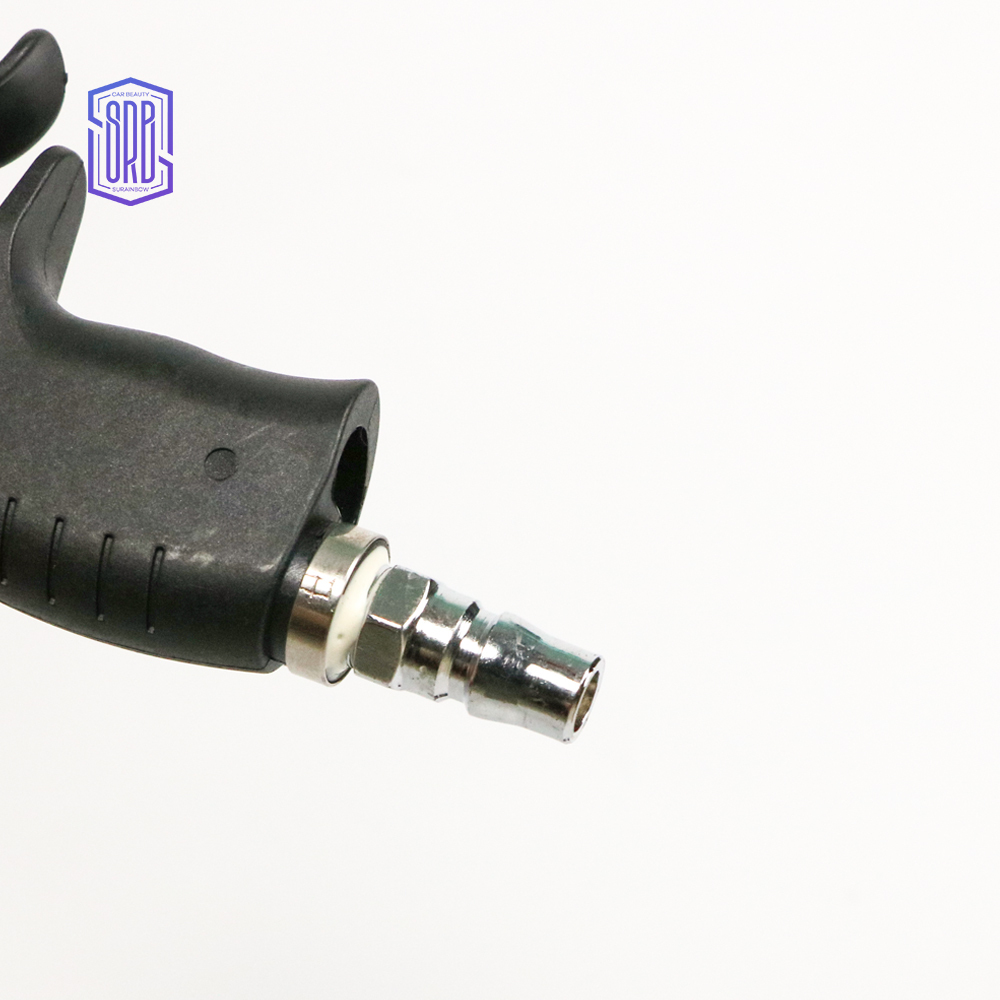
- Aluminum alloy where the load sits.
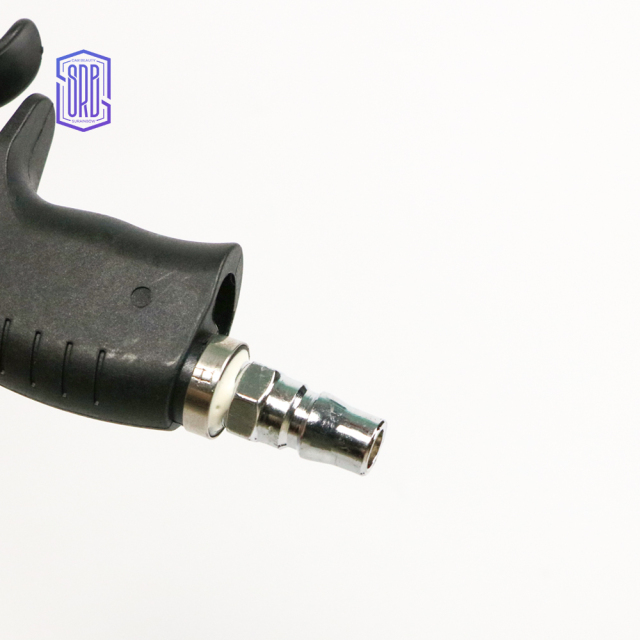
- The inlet and the nozzle end are the two points that see pressure and handling every time the trigger is pulled.
- That is where the build moves from plastic to metal, so the parts doing the hardest work are the parts made for it.
- Both materials named on the specification.
- This is an ABS aluminum air blow nozzle because both materials are structural — a car cleaning tool OEM buyer can see exactly what the body is made of instead of decoding a trade name.
- A trigger with nothing to adjust.
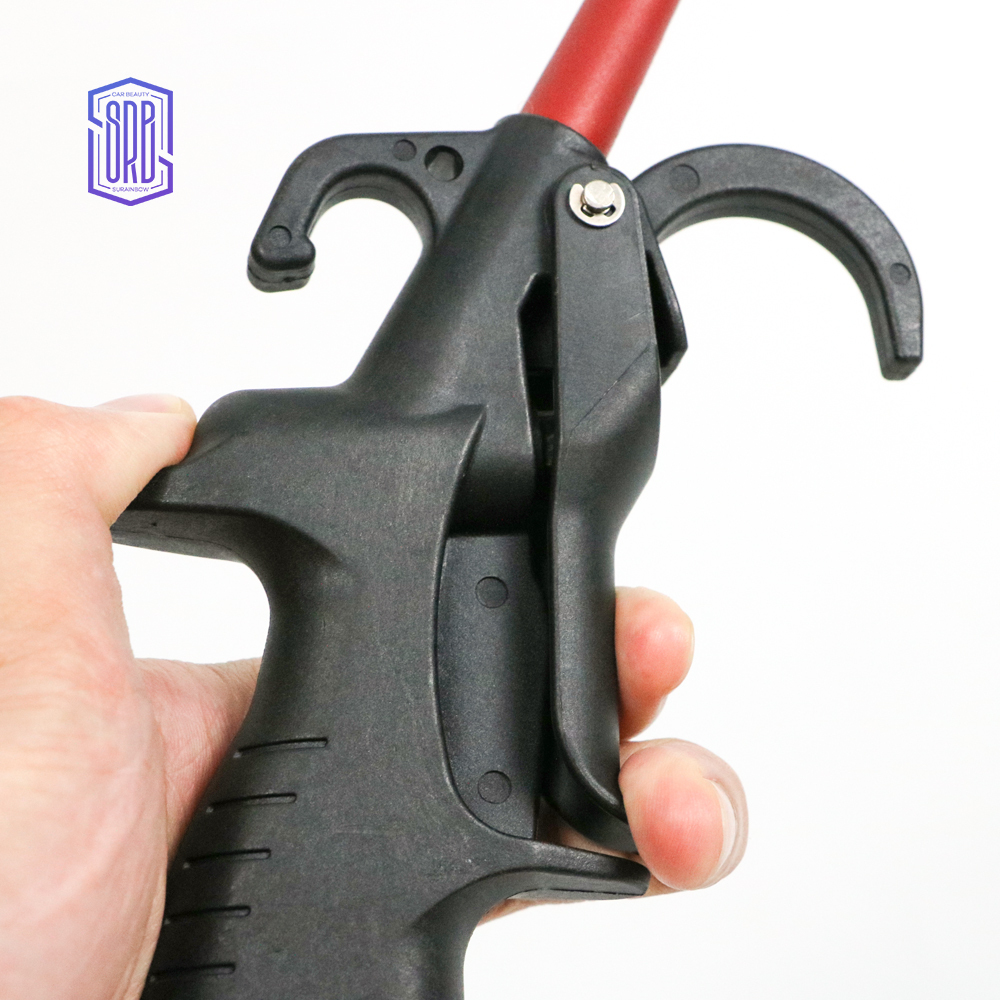
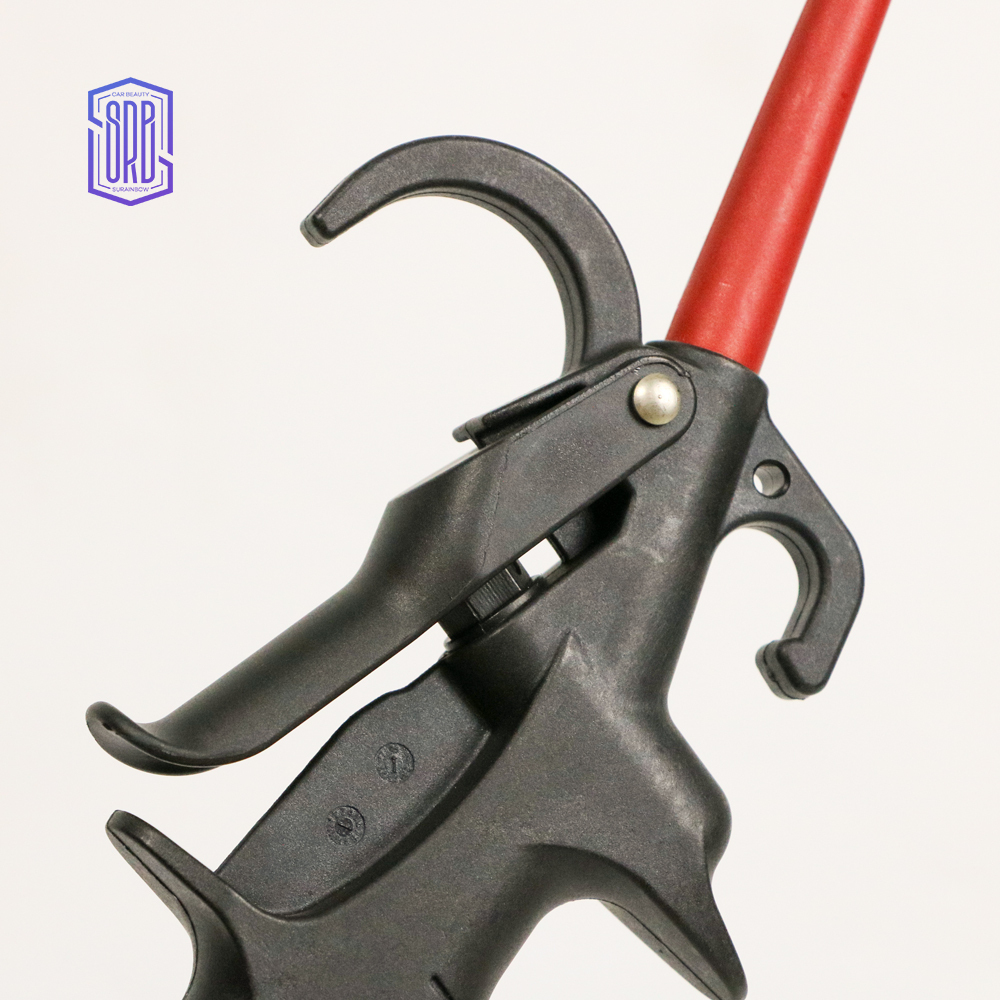
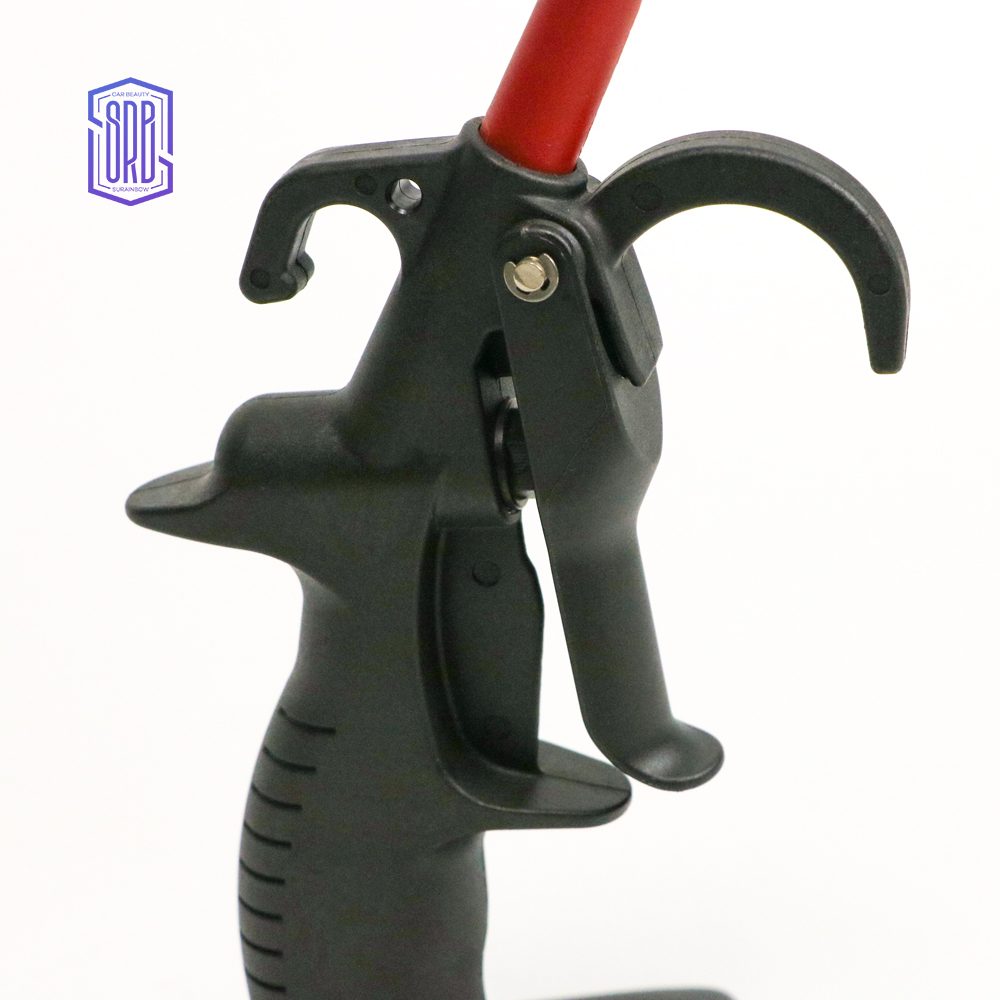
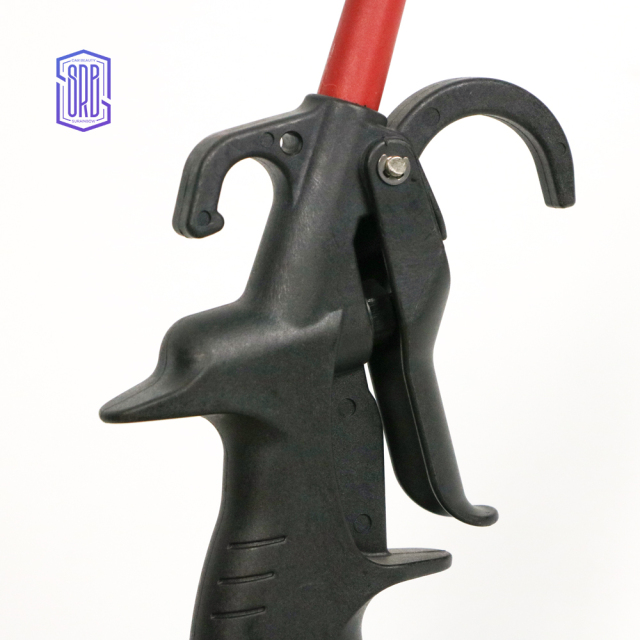
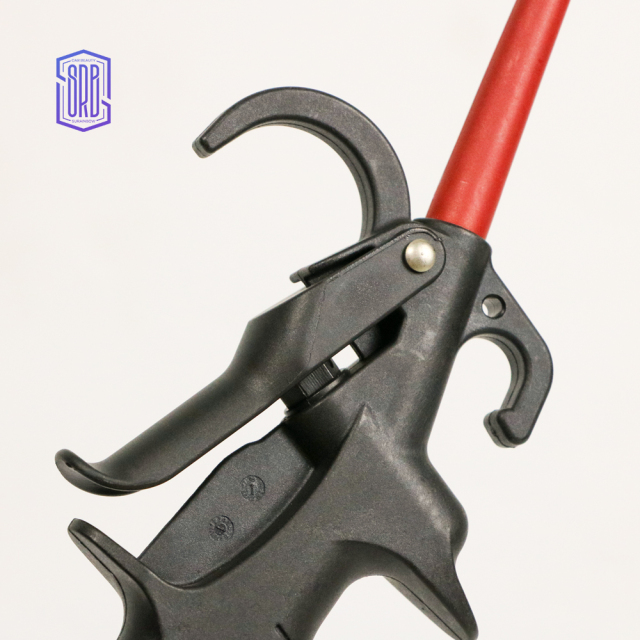
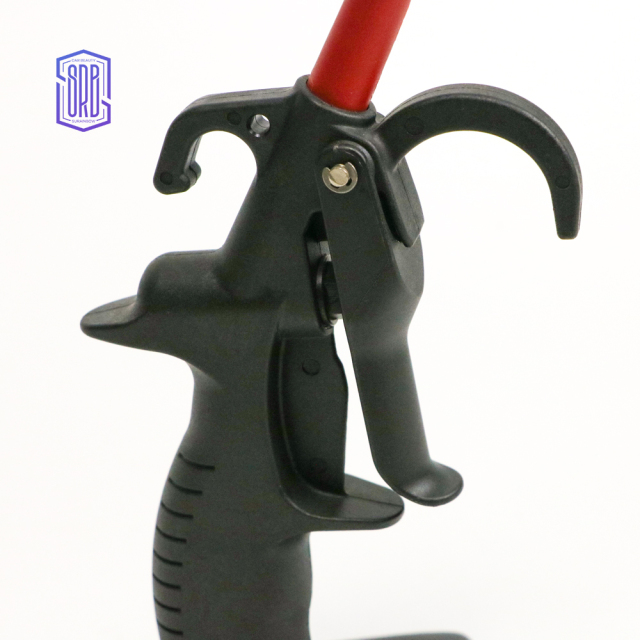
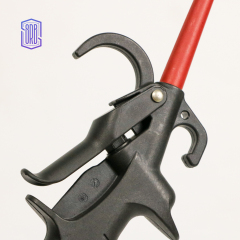
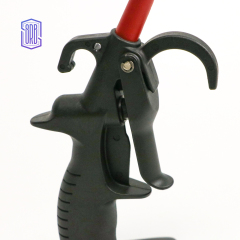
- The lever runs on a simple pivot under the index finger.
- There is no setting to drift and no part that needs a schedule, so a new technician is productive on the first car and the tool stays consistent on the hundredth.
- A finish chosen for a working bay.
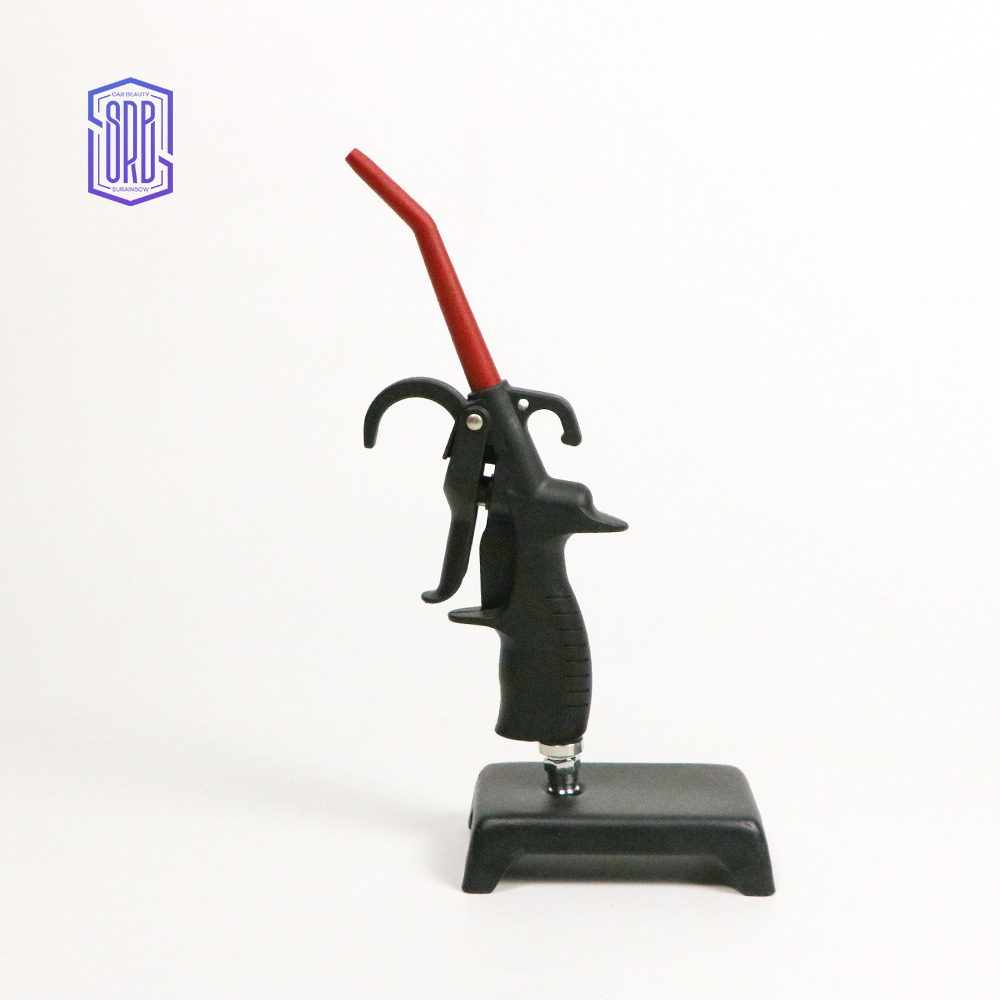
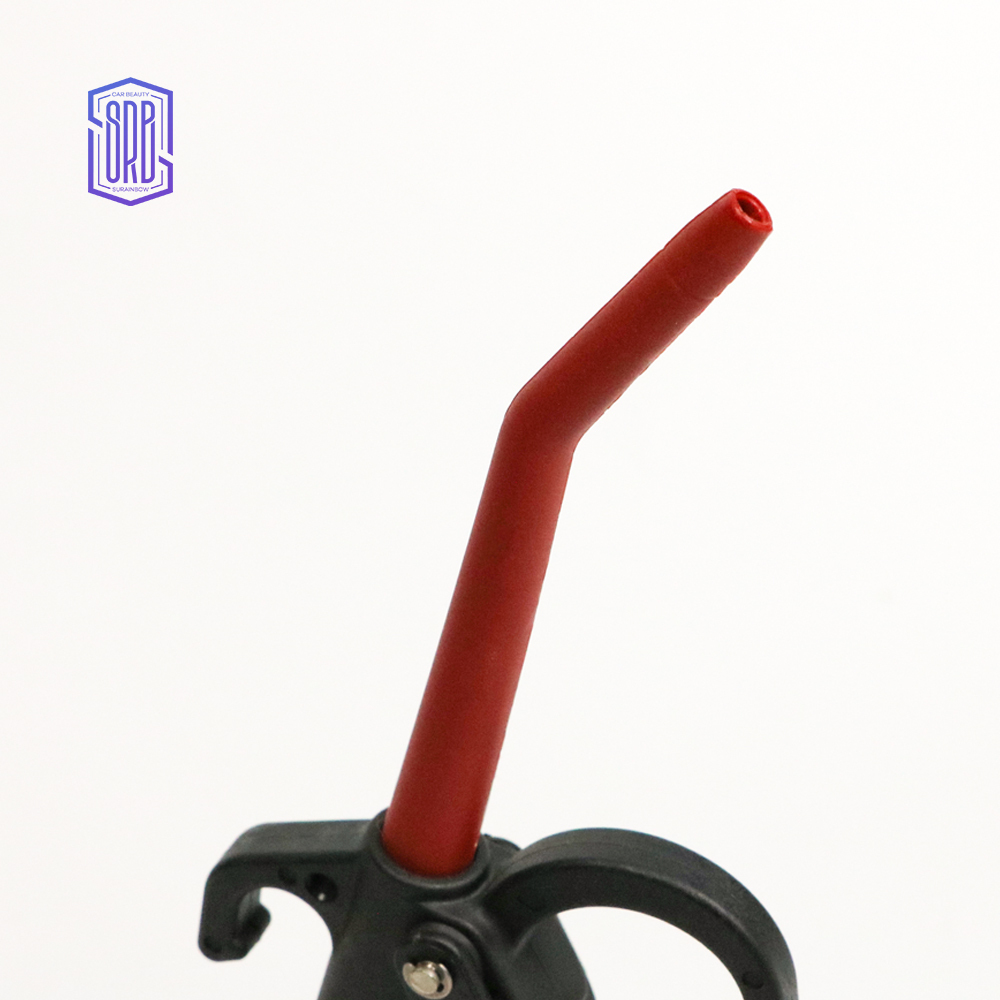
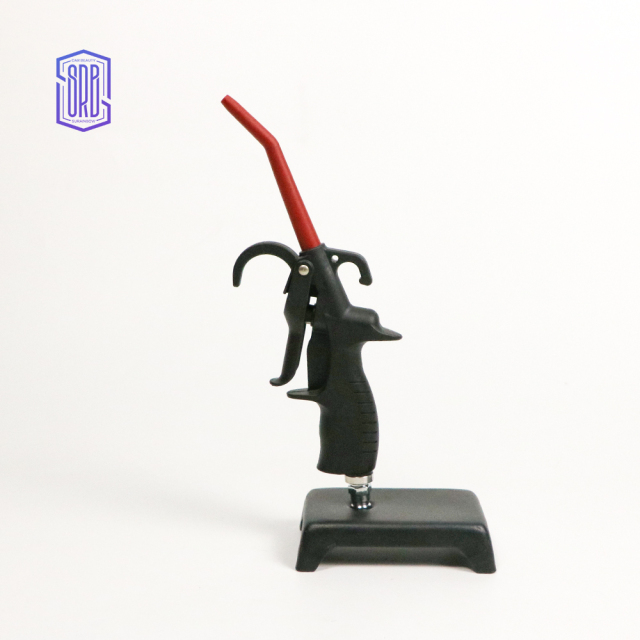
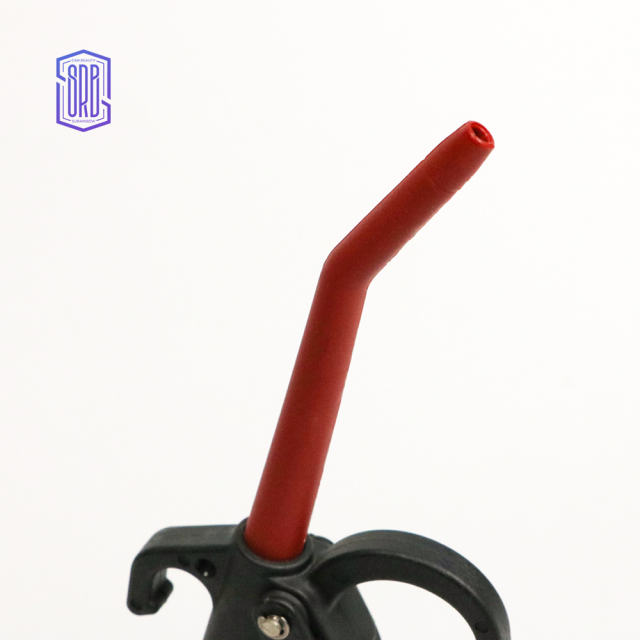
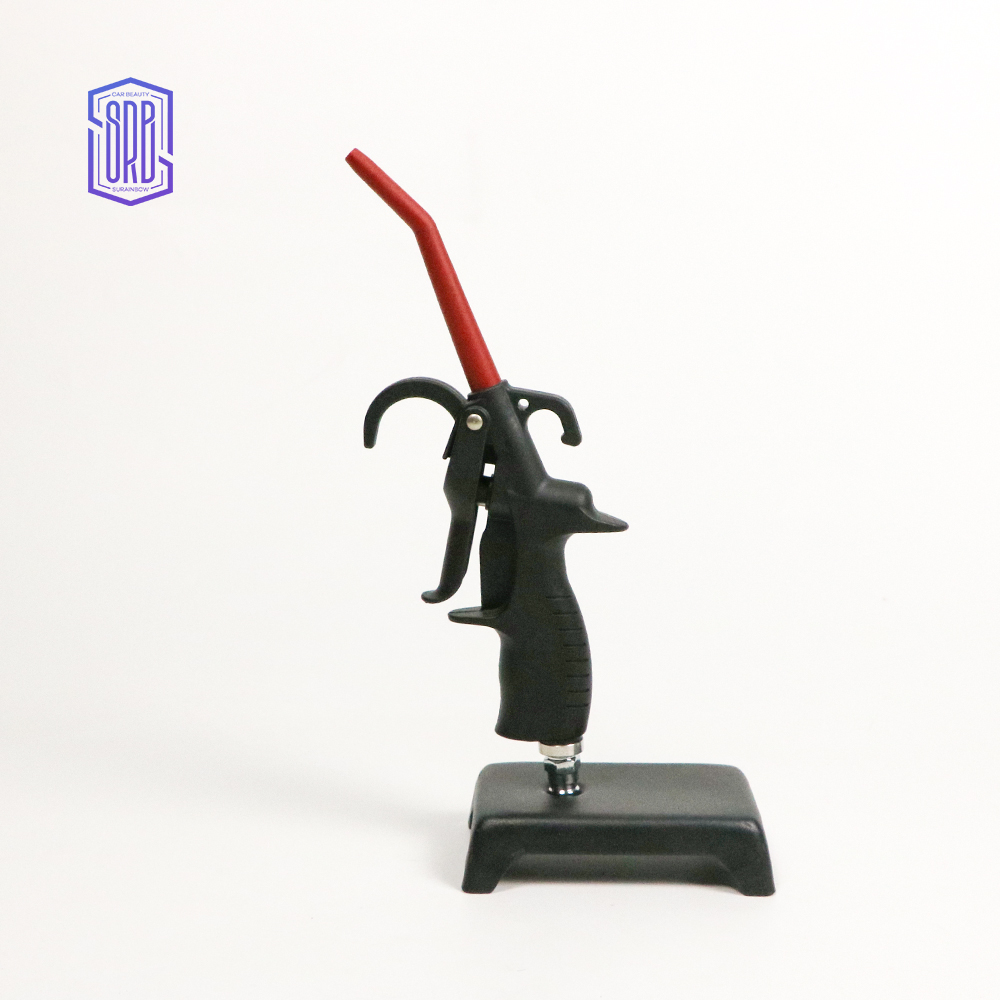
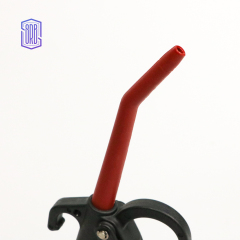
- The matte black body does not show every fingerprint, and the contrasting nozzle tube makes the business end easy to find when the tool is lying among others on a trolley.
- A car detailing air blow gun gets knocked about, and the finish is picked with that in mind.
- Balance rather than bulk.
- The grip puts the trigger under the finger and the weight over the palm, so the tool hangs naturally the moment you stop blowing and you can pick up a towel without putting it down.
- No wear parts to stock.
- There is no filter, cartridge or seal kit to keep on the shelf.
- Keep the air clean and dry and wipe the body at the end of the day; the tool has nothing else to ask for.
Key Features
- A trigger you can feather.
- A short pull releases a burst for one vent; a longer hold gives a steady stream for sweeping a door shut.
- That control is what keeps dust off the seats and glass you have already finished.
- Air only — nothing to fill or recharge.
- The tool runs off the workshop line and has no cartridge, bottle or battery behind it, unlike an interior car cleaning spray gun, so there is nothing to reorder alongside it and nothing to run out of mid-job.
- Short bursts suit a normal shop compressor.
- The trigger is meant to be feathered rather than held open, so the tool works within the air a bay already produces and does not compete with a polisher running on the same line.
- One tool for every car in the bay.
- Nothing about the nozzle is model-specific: the same unit handles a hatchback, an SUV, a van or a taxi interior, so a bay stocks one item instead of three.
- The training is one sentence long.
Interior Surfaces
Hard plastics and vents. Dash tops, door cards and vent slats hold a fine dust that clings until it is lifted rather than wiped. Swept across the slats, a car cleaning air blow nozzle clears the opening and the recess around it without wetting the plastic, so the dust leaves instead of turning into a smear across the grain.
Perforated leather and fabric seats. The perforations in leather and the weave of a fabric seat trap grit that a towel simply glides over. Hold the nozzle back and use short bursts: a car dust blowing gun lifts the material out of the holes, while air driven in at close range only pushes it deeper into the padding.
Gloss and piano-black trim. These finishes show every mark, so it pays to lift the dust off before anything touches them. A dry pass first means the towel is wiping a clean surface rather than dragging grit across a finish that scratches easily.
Mixed-material cabins. A modern interior mixes plastic, leather, fabric, metal and gloss inside a single console. Air behaves the same way on all of them, which is why technicians reach for the nozzle between the vacuum and the towel rather than choosing a different method for each material.
Using the Nozzle
- Check the line before the car.
- Connect the inlet, pull the trigger once and confirm the coupling is seated and the air is dry.
- If your bay runs a different fitting pattern, settle it with your sales contact before the order ships rather than after.
- Work from the top down.
- Headlining edges, sun visors, mirror housings and the top of the dash come first, so anything you disturb falls onto surfaces you have not cleaned yet rather than the ones you have just finished.
- Vents and louvres.
- Hold the nozzle a few centimetres back and sweep across the opening instead of driving air straight down the duct, so dust leaves the vent rather than moving deeper into it.
- Seat runners and under the cushion.
- Short bursts along the rail, with the vacuum following behind, clear grit and hair that a brush only pushes to the far end of the runner.
- A car dust blowing gun does this in a fraction of the time a cloth takes.
- Badges, grille lettering and door shuts.
- Raised lettering and shut lines trap dust a towel cannot get behind, and a car detailing air blow gun held at an angle lifts it clear in a single pass.
- Wipe once and stow.
- Pass a clean towel over what you have blown, then wipe the nozzle and hang the tool rather than dropping it into a wash bucket, where grit finds its way into the inlet.
Specifications
| Product type | Car cleaning air blow nozzle, trigger operated |
| Model | T03 |
| Body | ABS aluminum air blow nozzle shell, aluminum alloy inlet |
| Colour and finish | Matte black body, red nozzle tube |
| Dimensions | 22.8 × 11.2 × 5 cm |
| Weight | 0.15 kg |
| Air supply | Compressed air from a workshop air line |
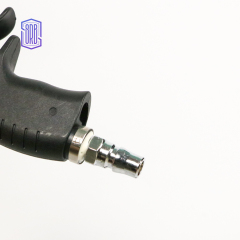
| Air inlet | Quick-connect fitting |
| Brand | SURAINBOW |
| Country of origin | Guangdong, China |
Sampling, Production & After-Sales
- Brief and sample.
- Tell us the destination market, the air line the tool will run on and whether it will carry your own branding.
- A sample can then be arranged so your technicians can run it on a real interior; confirm the scope and any charges with your sales contact before dispatch.
- If you are building a car cleaning tool OEM range, the sample can be produced with your label artwork from the start.
- Artwork and packaging approval.
- Label copy, barcode, carton marks and any printed insert are proofed and signed off before the run begins.
- Nothing goes to print on a verbal brief, and the approved proof becomes the reference for the shipment.
- Production and in-line checks.
- As an air blow nozzle manufacturer we build to the approved sample and keep batch records and retained samples from each run, so the goods can be compared against a physical reference rather than a description.
- After-sales and batch traceability.
- If a unit does not behave like the approved sample, quote the order reference and the batch number with photographs of the issue.
- The batch is checked against its retained sample and a written answer comes back to you.
Ordering & Packing
| Minimum order quantity | 100 pcs |
| Unit packing | 1 piece into a box |
| Availability | In stock and fast shipping |
| Order types | Stock orders and air blow gun wholesale runs |
| Supply | Direct from the air blow nozzle manufacturer in Guangzhou |
| Lead time | Confirmed against quantity and destination at quotation |
| Payment | Terms confirmed at order review |
Scale & Supply Capability
SURAINBOW is run by Guangzhou Liangdian Automotive Supplies Co., Ltd., a factory-trade operation set up in Guangzhou in 2010 and now 50 people strong. Sixteen years in car care have given us a one-stop supply position: our own SURAINBOW lines are held in stock for fast shipping, and an associate factory with modern production equipment and an established quality management system keeps replenishment moving. We take OEM and ODM work and our R&D team develops to your specification. Buyers in the Middle East, the United States, Southeast Asia, Europe, the UK, Russia, Africa and Australia already order from us.
FAQ
Is this the same as an interior car cleaning spray gun?
No — they are different tools that usually travel together. An interior car cleaning spray gun applies a liquid cleaner to a panel; this nozzle applies air only, so it lifts dust and loosened material out of seams, vents and lettering without wetting the surface. Buyers who sell interior kits normally carry both.
Will it fit the air line in my workshop?
The inlet is a quick-connect, and the coupling has to match the pattern your bay uses. Tell us the fitting on your hose before the order is confirmed and we will check the match; if your line runs something different, say so at quotation stage so the right version is quoted.
What is the body made of, and does the trigger need maintenance?
The body is an ABS aluminum air blow nozzle: a moulded ABS shell for the grip and trigger housing, with aluminum alloy at the inlet and nozzle end where the pressure and handling land. The trigger runs on a simple pivot with no adjustment, so there is no maintenance schedule beyond keeping the air clean and wiping the tool down.
Can we use it on exterior panels as well as interiors?
Yes, within reason. A car detailing air blow gun is useful around badges, grille lettering, panel gaps, wheel nut recesses and the water that sits in mirror housings and door shuts after a wash. Keep the nozzle back from soft trim and freshly coated surfaces, and use short bursts rather than a long blast at close range.
How do I clear dust from deep vents and narrow seams?
Work across the opening rather than straight into it. Hold the car cleaning air blow nozzle a few centimetres back, use a short burst and let the vacuum follow; driving air straight down a duct tends to push the dust further in. Two passes from different angles usually clear a vent faster than one long blast.
Does it replace a vacuum or a microfibre towel?
It complements both. A vacuum lifts loose material from carpets and seats, a towel finishes the flat surfaces, and a car dust blowing gun covers what sits between them — the dust packed into seams, vent slats and lettering that neither reaches cleanly. The usual order on a full interior is vacuum, cleaner, agitation, air, then a single wipe.
Can we have our own logo and packaging?
Yes. We build this as a car cleaning tool OEM item, so your mark can go on the tool and on the box, subject to the artwork being approved before production. Buyers running air blow gun wholesale programmes usually combine the branding with their own carton marks so the shipment arrives ready for their own customers.
Will a repeat order match the first one?
That is what the process is built around. As an air blow nozzle manufacturer we keep the approved sample and the batch records from every run, so a repeat order is built to the same reference and any query on a later batch is checked against the physical sample rather than against memory.
Will it work in vans, taxis and fleet cars?
The tool is sold for car interiors and that is where we can vouch for it, but nothing about the design ties it to a particular body style — hard plastics, vinyl, fabric and rubber mats behave the same way in a van or a taxi. If you plan to use it on boats, aircraft, caravans or plant cabs, tell us the surfaces and the air supply first so we can confirm suitability.