Product Overview
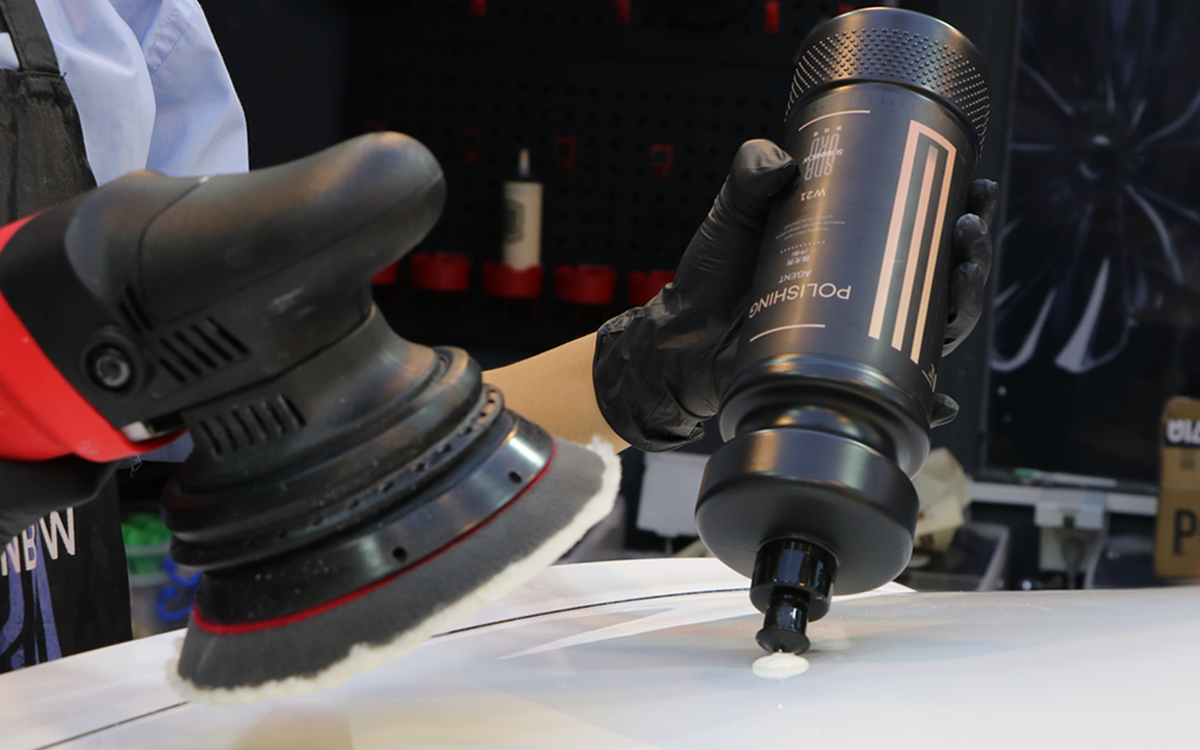
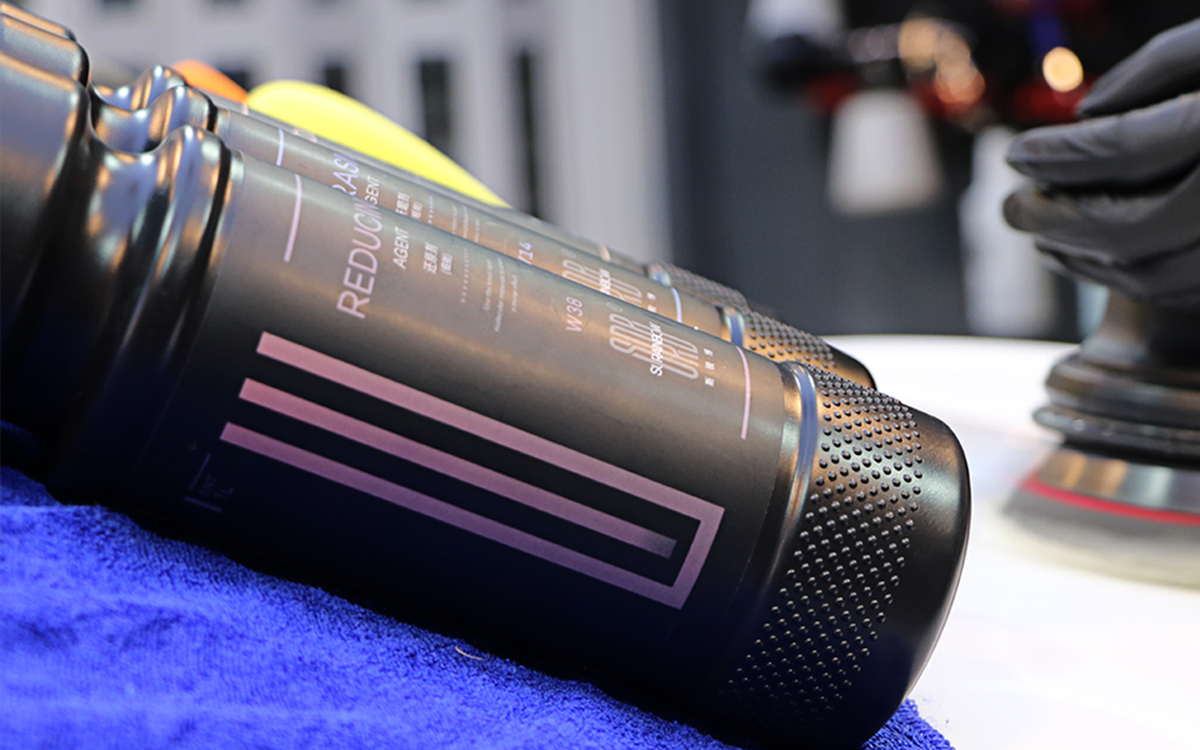
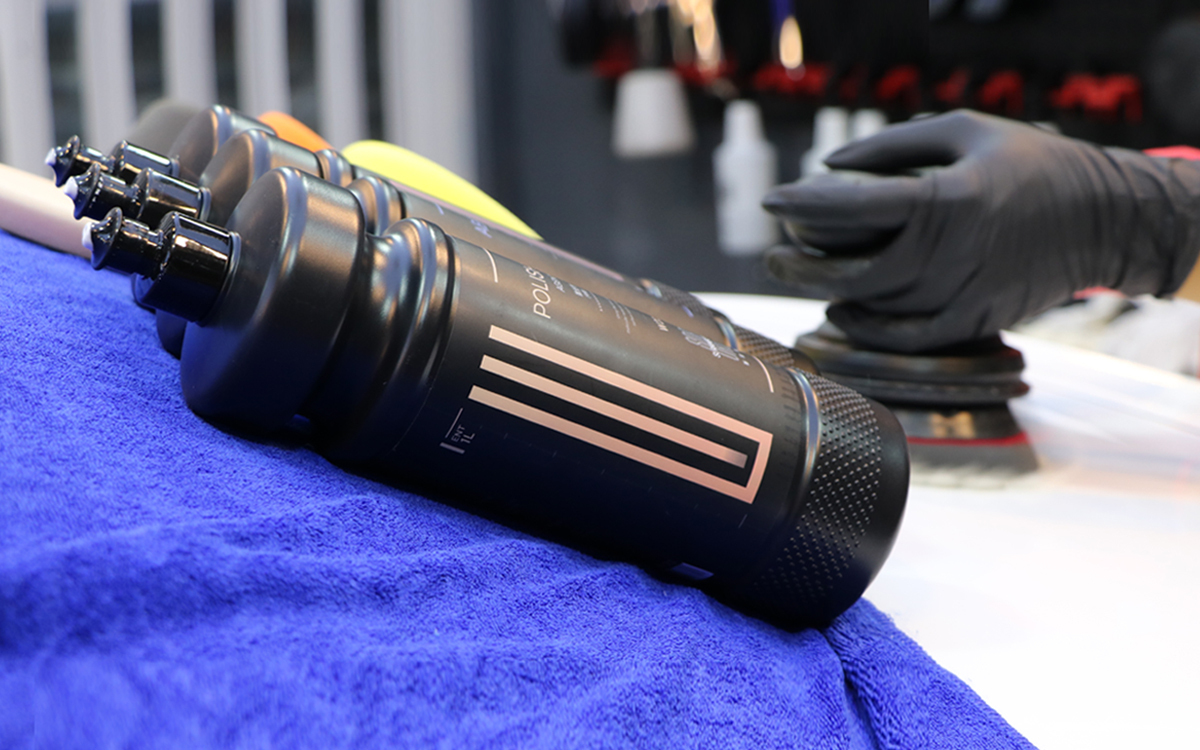
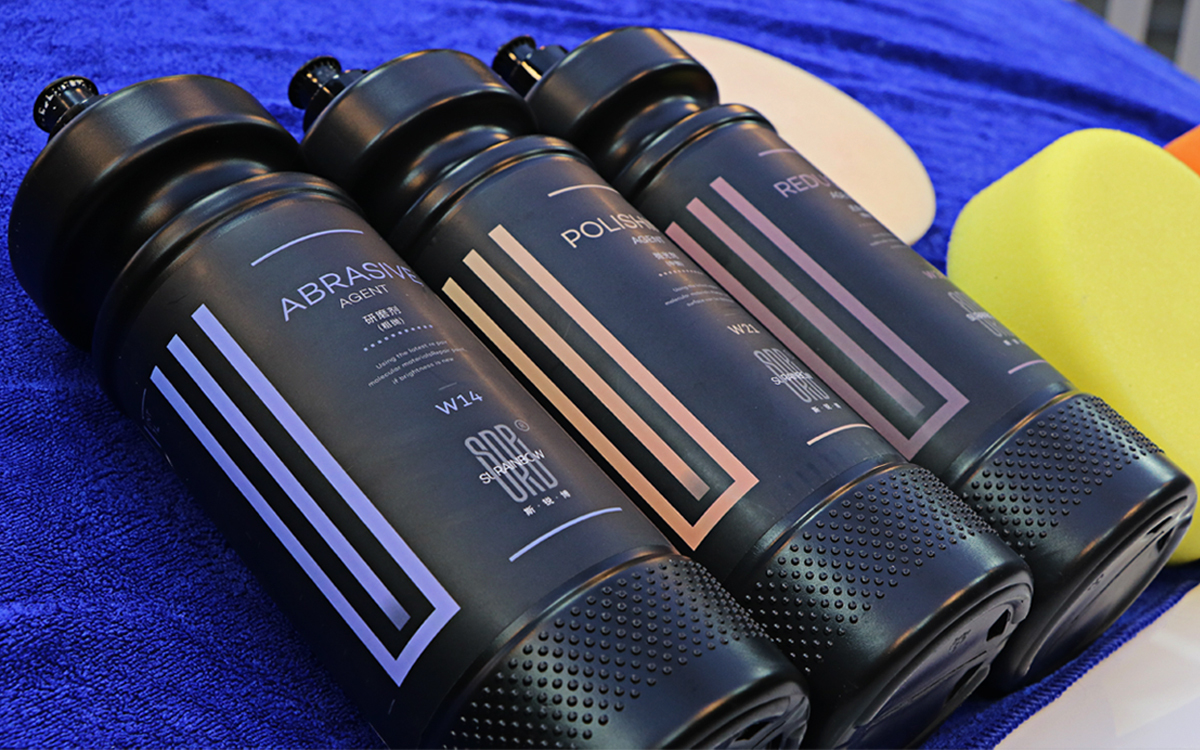
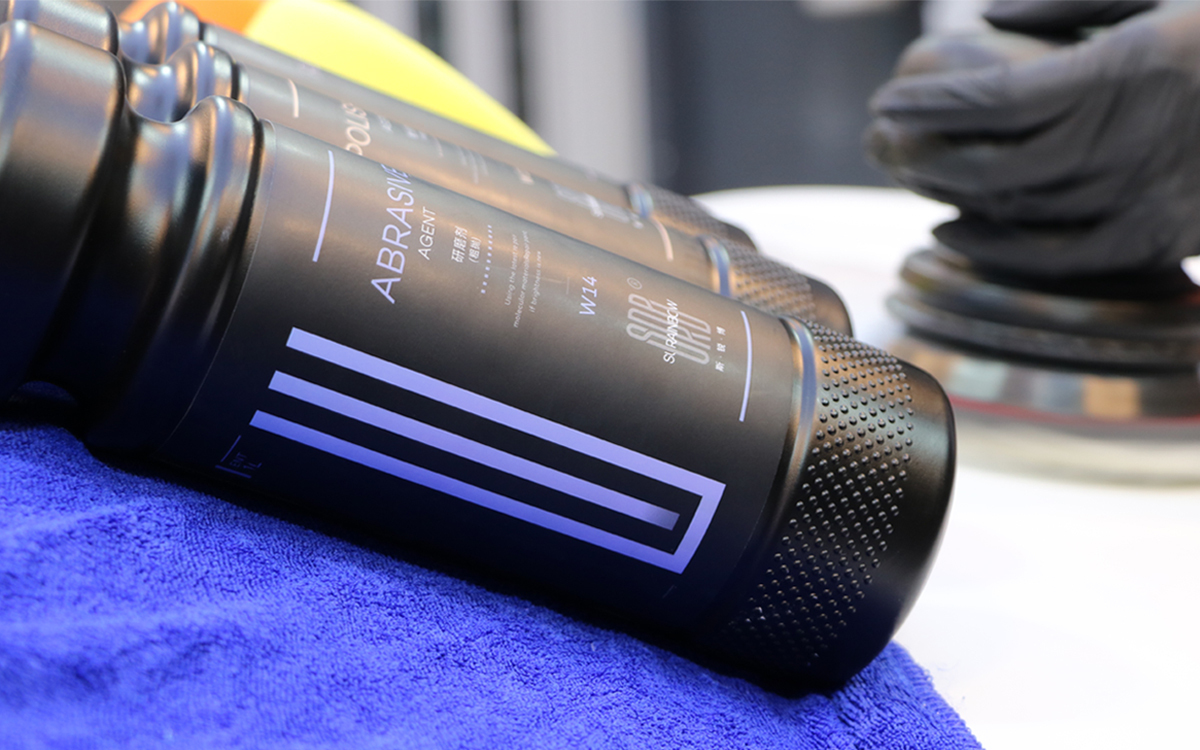
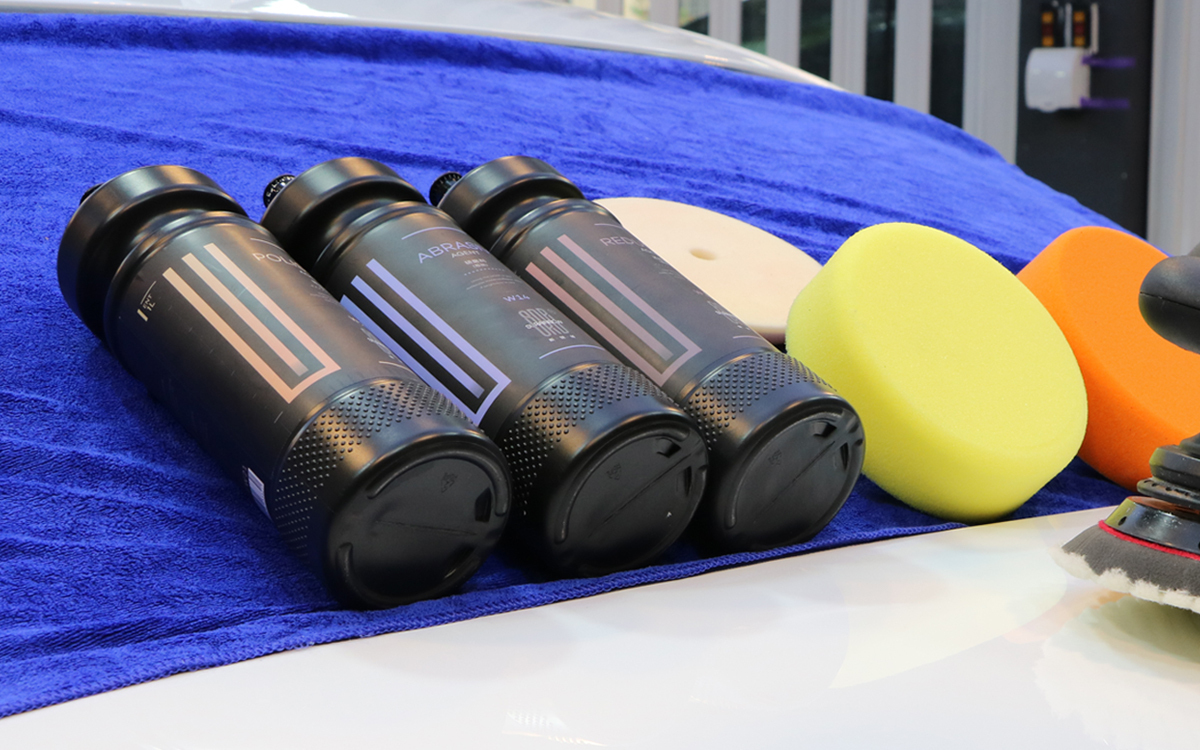
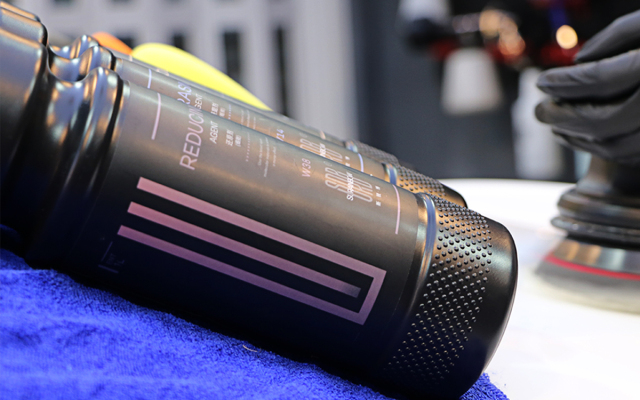
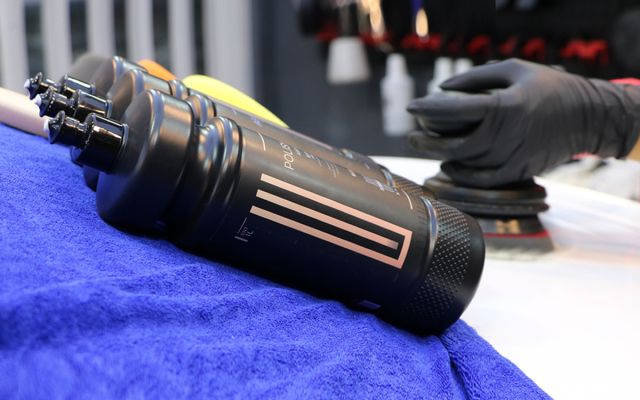
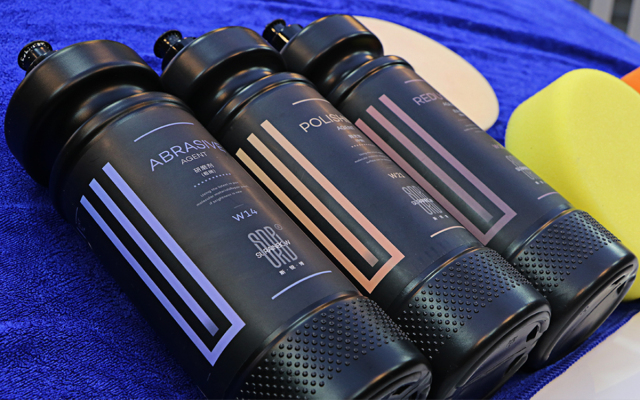
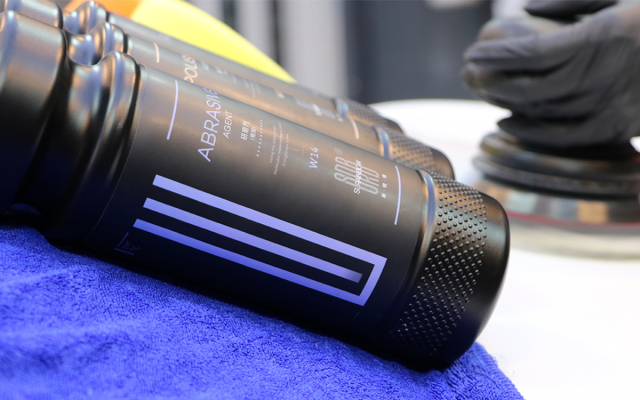
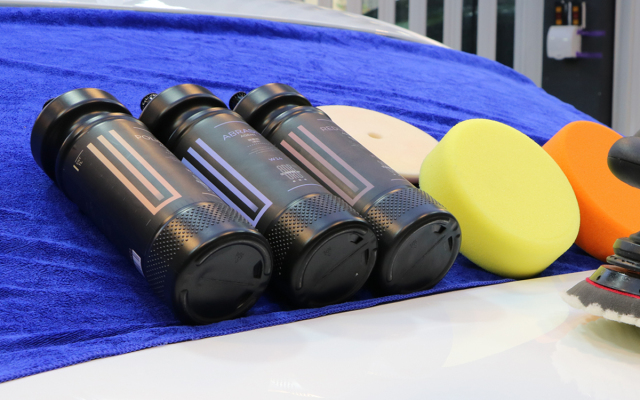
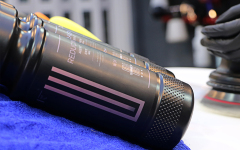
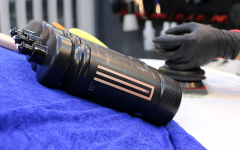
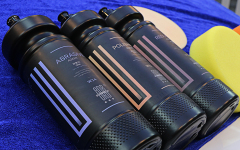
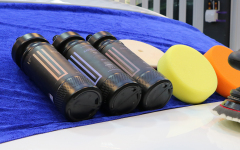
W14 is the opening stage of a multi-step paint correction: an abrasive compound built on a grinding process, made to take out what sanding and refinishing leave behind on automotive paint. Because this is a cutting stage rather than a finishing one, surface polishing and a refinement pass follow it, and that is where the gloss is actually produced. Detailing shops reach for it after a sanding job or a respray; body shops use it to bring a repaired panel back in line with the paint around it; and for distributors and private-label brands it is the wholesale car polish compound that opens their polishing range. It ships as a white cream in a black squeeze bottle with a pointed dispensing tip and a pink-striped label marked for the coarse abrasive grade, which makes it easy to pick out from the finer polishes on the same shelf.
Paint Defects Removed
- Moderate scratches. Marks that catch the light but not a fingernail. This is the polishing compound for car scratches that still sit inside the clear coat; anything you can feel with a fingernail has broken through and needs paint, not abrasives.
- Moderate oxidation. Chalky, dull, slightly washed-out colour on older or sun-exposed panels, where the top of the clear coat has weathered rather than failed.
- Water spots. Mineral rings that have etched lightly into the surface and survived normal washing and drying.
- Traces of sanding and refinishing. Polish residue, sanding slurry and the dull track of a repaired panel are all worked out in the same cutting pass, so the surface arrives at the polishing stage clean and level.
- Defects a finishing polish cannot move. Everything above sits below the level a fine polish can reach, which is why a heavy cut compound supplier starts here rather than with a finishing polish.
Polishing Sequence & Step Order
- Read the paint first. Clean the panel, inspect it under a bright angled light and identify the deepest defect — sanding marks, scratches, oxidation or water spots. The deepest defect decides how much of the sequence you need.
- Wash and decontaminate. Compound should never be worked over traffic film or bonded contamination; wash, dry and, where the paint feels rough to the hand, go over it with a clay cloth first.
- Run the cutting stage. This is where a compound polish for car paint does its work: small sections, machine flat, even pace, and a progress check after the first section rather than after the whole car.
- Stop when the defects are gone. If the paint is level and only a fine haze remains, stop cutting. Extra passes take clear coat and buy nothing back.
- Follow with a medium polish. A finer automotive polishing compound removes the haze from the cutting stage and starts returning gloss and depth to the panel.
- Finish with a refinement pass. A soft pad and a finishing polish clear any micro-marring left by the earlier steps and settle the finish.
- Protect the result. Wax, sealant or coating goes on last; a correction holds only as long as the protection sitting on top of it.
Application Steps
- Wash, dry and tape. As a polishing compound manufacturer, we recommend starting on clean, decontaminated paint: tape sharp body lines, trim edges and badges before the machine goes anywhere near them.
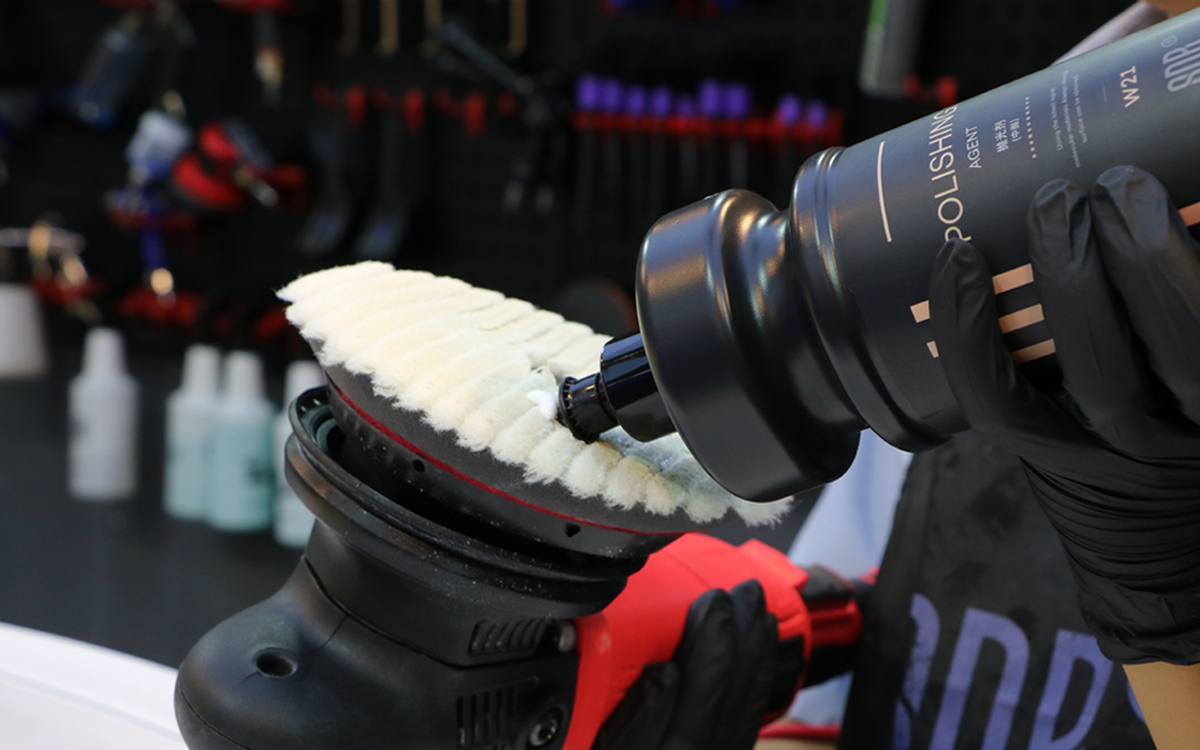
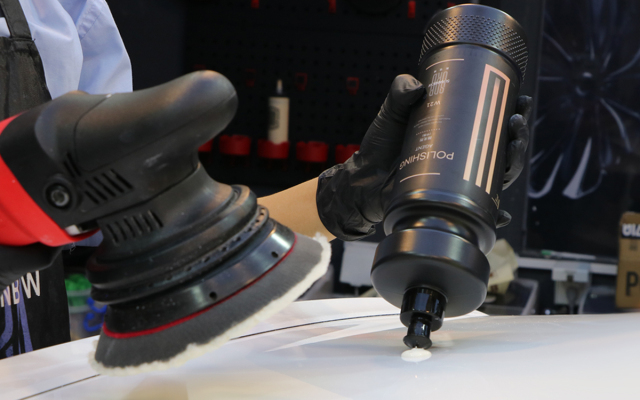
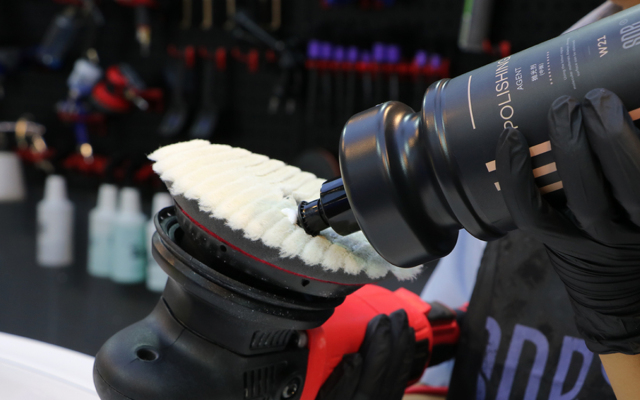
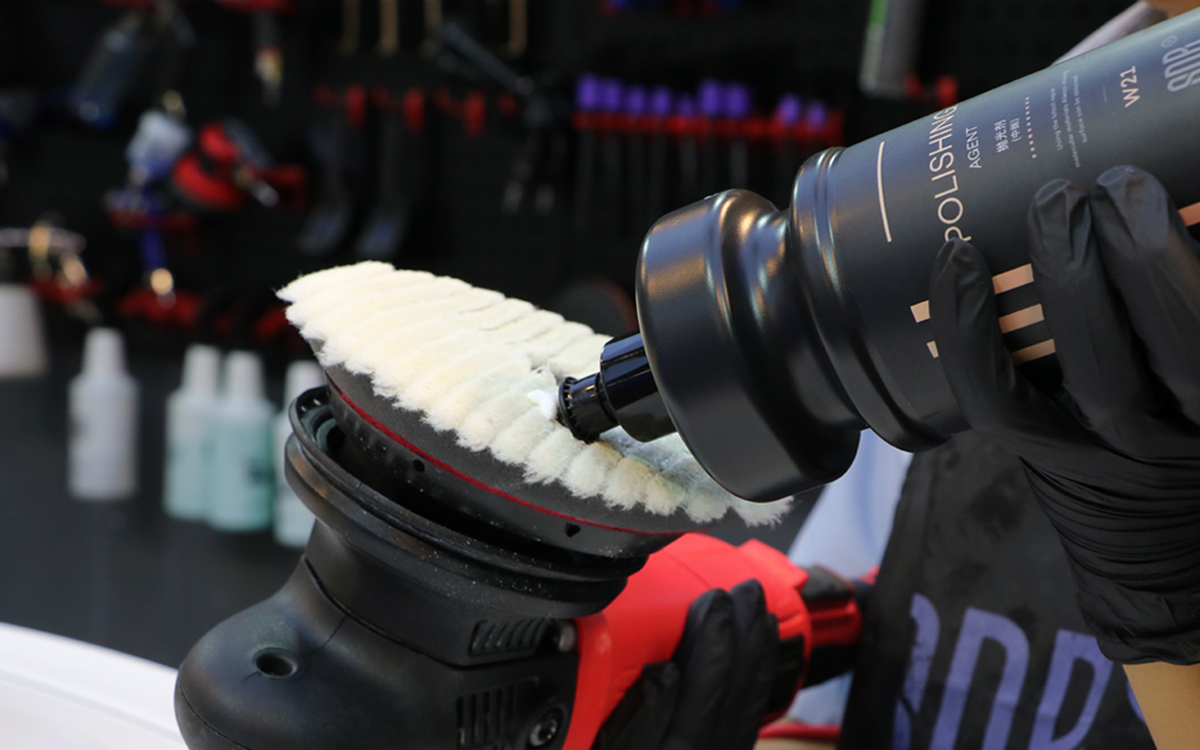
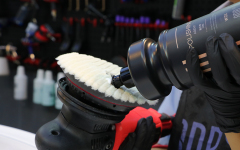
- Load the pad. Shake the bottle and lay a short bead across the pad face, or three small dots around it — the pointed tip keeps the dose small and even.
- Prime it. Spread the compound over the pad at low speed before the pad touches paint, so the abrasives are already working when you start the section.
- Choose the cut. A wool cutting pad on a dual-action polisher gives the most correction and is the most forgiving starting point; a firm foam cutting pad trades some cut for control on soft paint. A heavy cut compound supplier will tell you this stage responds to pad choice far more than to how hard you press.
- Work in sections. With this polishing compound for car scratches, work one door, half a hood, one wing at a time, machine flat, overlapping each pass by about half a pad width and keeping the pad moving at an even pace.
- Read the result, not the clock. Wipe the residue with a clean microfiber, inspect under angled light and repeat once with a fresh bead only if the defects are still there. Hard clear coats may take a second pass; soft paints usually correct on the first.
- Clean the pad between panels. A loaded pad glides instead of cutting, and brushing or swapping it is what keeps the cut consistent across a whole car.
Specifications
| Product type | Heavy cut compound polish for car paint |
| Model | No.W14 |
| Series | Polish series |
| Step | First stage — heavy cut |
| Working action | Abrasive grinding |
| Sanding marks removed | 1000-1500 grit |
| Other defects addressed | Moderate scratches, moderate oxide layer, water spots |
| Surface | Automotive paint |
| Form | White cream |
| Container | Black squeeze bottle with pointed dispensing tip |
| Typical setup | Dual-action polisher with a wool cutting pad |
| Next stage | Surface polishing, then refinement |
Ordering, Packing & Delivery
- Stock and dispatch. In stock and fast shipping — SURAINBOW stock items are held ready, so a trial order, a distributor replenishment and a private-label run all move without a long wait. Confirm the dispatch window for your quantity with your sales contact.
- Sampling and approval. Ask your sales contact about sample availability for the pack you intend to order, run it on your own paint system, and approve a sealed reference before bulk production starts.
- Pack, label and carton. As a polishing compound manufacturer we proof the bottle, cap, label, carton and shipping marks before print; artwork, barcode data and label language are agreed per order, and any change to pack or label scope is quoted with the order.
- Quantity and price. MOQ and price follow the formula, pack size, label scope, quantity and destination, and are confirmed on the quotation. The wholesale car polish compound tier and the private-label route are quoted the same way, so both can be compared on the same scope.
- Payment, balance and documents. Agree the payment method, currency and schedule with your sales contact; balance and final dispatch are confirmed together before the goods leave. Export documents — commercial invoice, packing list, SDS/MSDS, CoA and GHS label information — are prepared for the shipment, and the exact set depends on the product and the destination market, so confirm the list during quotation.
- After-sales and batch traceability. Keep the batch number from the carton. Report leaks, shortages or a performance concern with photos, the batch number and the quantity affected, as soon as the shipment arrives, so it can be checked against the retained sample.
- Delivery terms. Shipping method, Incoterm and transit plan are agreed per order; courier, air freight, LCL or a full container all depend on volume and destination.
Scale & Supply Capability
SURAINBOW is run by Guangzhou Liangdian Automotive Supplies Co., Ltd., a factory-trade operation set up in Guangzhou in 2010 and now 50 people strong. Sixteen years in car care have given us a one-stop supply position: our own SURAINBOW lines are held in stock for fast shipping, and an associate factory with modern production equipment and an established quality management system keeps replenishment moving. We take OEM and ODM work and our R&D team develops to your specification. Buyers in the Middle East, the United States, Southeast Asia, Europe, the UK, Russia, Africa and Australia already order from us.
Every run is checked against a sealed, approved sample rather than against a written description. Incoming raw materials are verified before mixing, the finished cream is compared with the reference for colour and body, filled bottles are inspected at the cap for leaks and correct fill before cartoning, and a retained sample from each batch is kept so that a single bottle can be traced back to the run that produced it. That routine is what a heavy cut compound supplier is really judged on across a season of reorders: the second and third shipment should cut the same way, stay workable on the pad for the same length of time and wipe off the same way as the first. Because we fill this as a wholesale car polish compound for distributors, detailing chains and private-label ranges, the reference is agreed once, sealed by both sides and then used as the acceptance standard for every later run. If a batch ever looks different in colour, thickness or behaviour, send the batch number, photos and a short note on how it was used, and the retained sample is pulled for comparison.
FAQ
What paint damage is this compound meant for?
It is built around 1000-1500 grit sanding marks and the surface left after a repair: moderate scratches, a moderate oxide layer, water spots and the dull track of a sanded panel. If the paint only carries light swirls, a finer polish will do the job without taking off clear coat — this heavy cut polishing compound is the stage you bring in when a finishing polish cannot move the defect.
Will one pass clear 1500 grit sanding marks?
On most panels, yes — the compound is made to clear 1000-1500 grit marks. The honest answer still depends on paint hardness and on the pad and machine behind the car paint polishing compound, so run a test spot, inspect under angled light and repeat once only if the marks are still visible. Two controlled passes work out cheaper than chasing a panel with five.
Which pad and machine should I run it with?
Start with a wool cutting pad on a dual-action polisher. That is the setup this polishing compound manufacturer recommends and the most forgiving way to get real correction. A firm foam cutting pad gives a milder, more controlled cut on soft or freshly cured paint. Tell us which paint system you work on most and we will confirm a sensible pad and speed combination for it.
Do I need a finishing polish afterwards?
Yes. The cutting stage levels the paint but leaves a light haze, and the gloss comes from the medium and refinement steps that follow. Going straight from a compound polish for car correction to a wax locks that haze in and makes the whole job look flat.
Is it safe on edges, trim and freshly painted panels?
Keep the pad flat and off sharp body lines, trim edges, badges and panel gaps — a heavy cut works fastest exactly there. Freshly resprayed panels should be fully cured first, and the cure time is set by your painter, so confirm it before compounding. Test plastic trim, headlights and any unfamiliar surface on a hidden area: this is a polishing compound for car scratches and sanding marks on paint, not a plastic polish.
How much product should I dispense per section?
A short bead across the pad face, or three small dots, is enough to start, and a fresh bead is only needed when the pad stops cutting. Overloading floods the section and hides what the abrasives are doing — a little automotive polishing compound worked properly corrects faster than a wet, gliding pad.