Product Overview
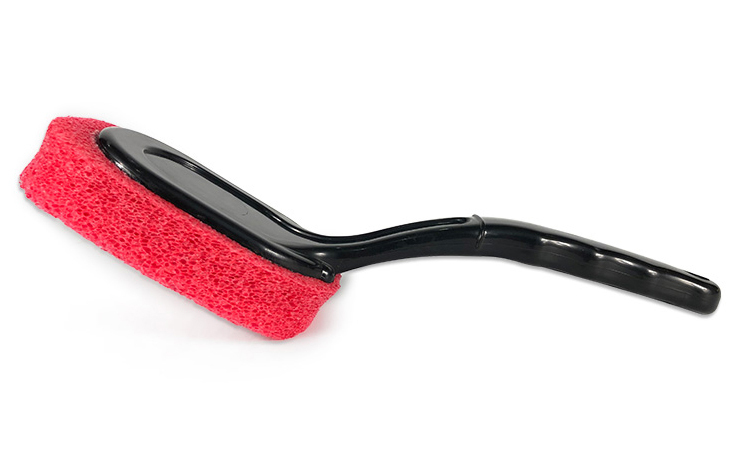
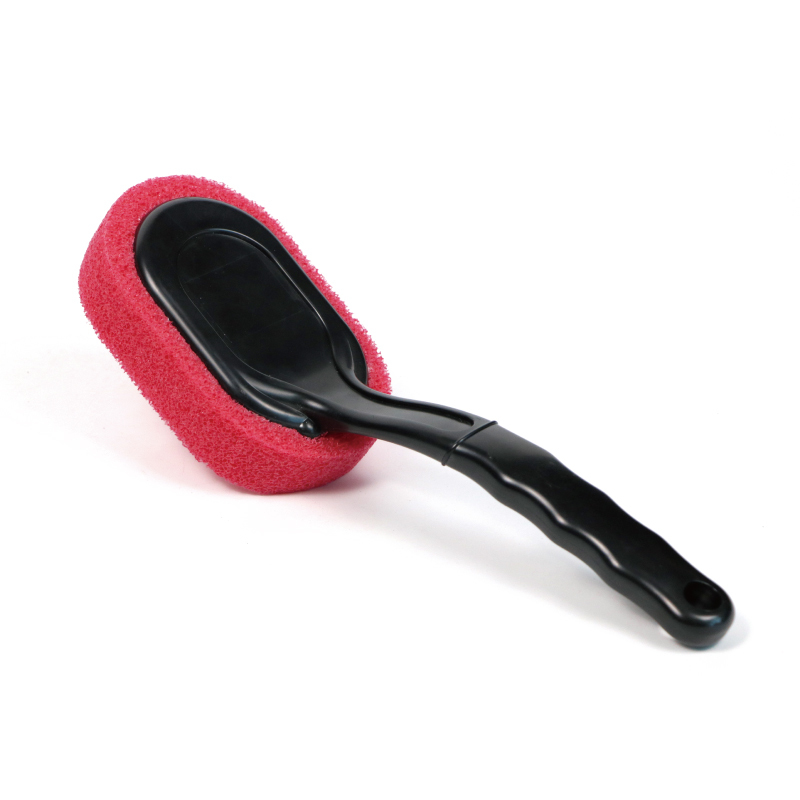
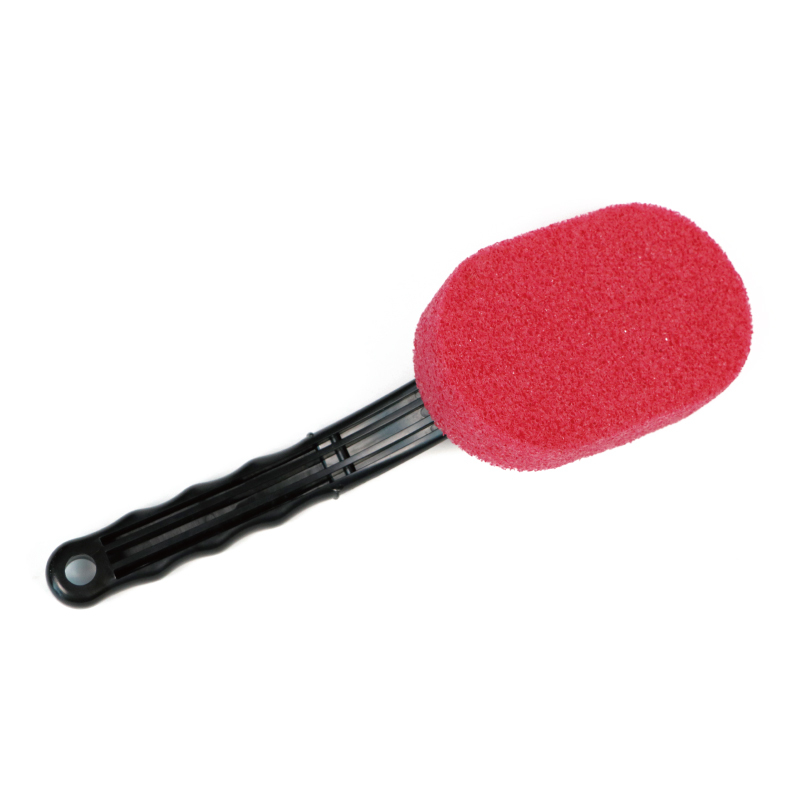
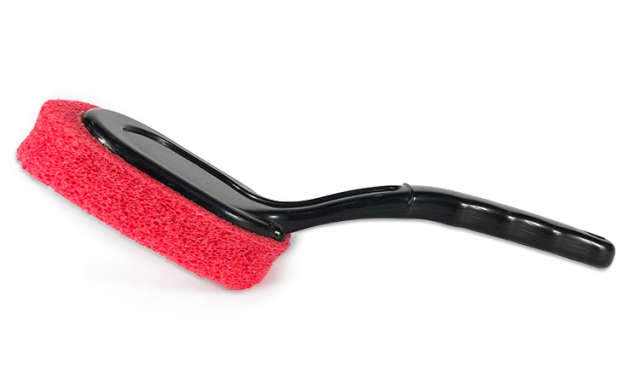
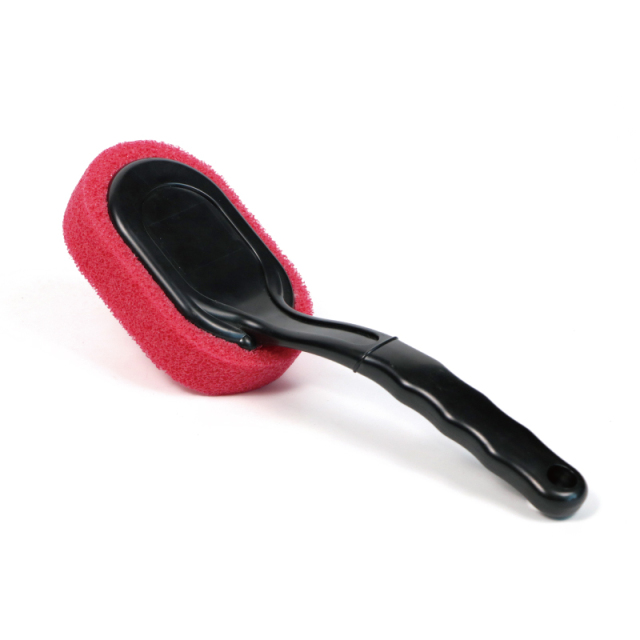
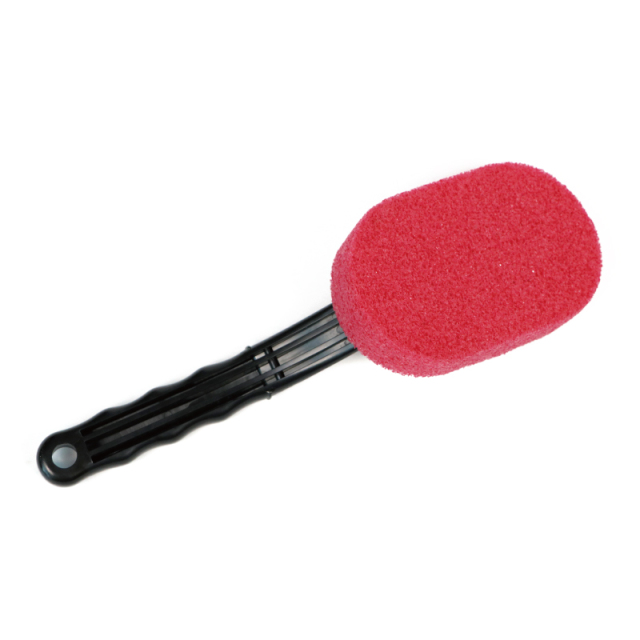
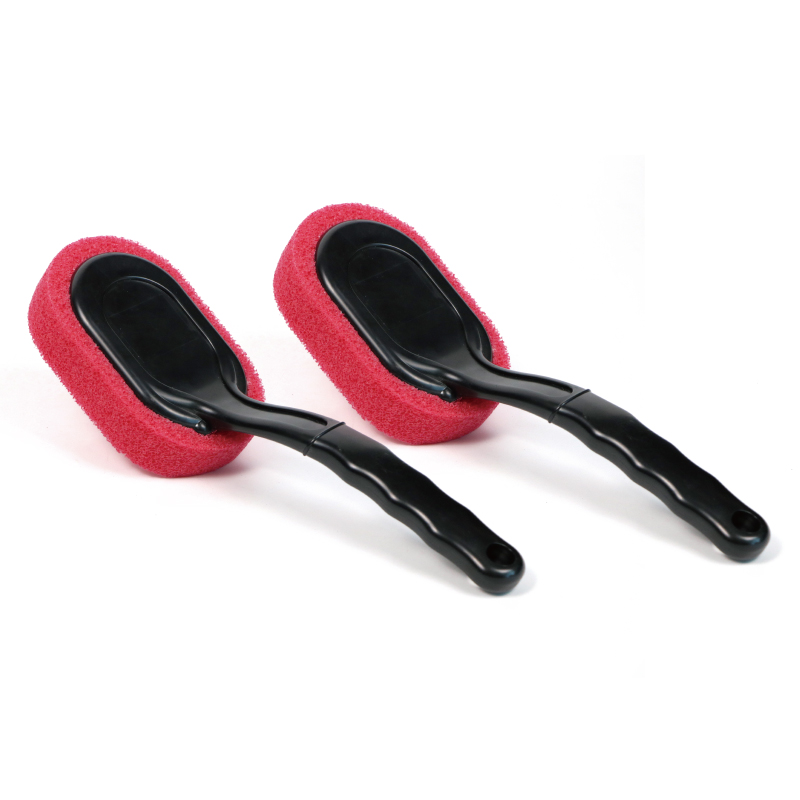
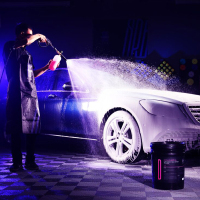
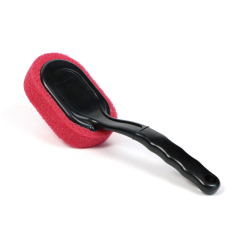
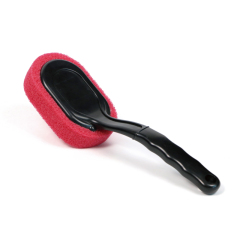
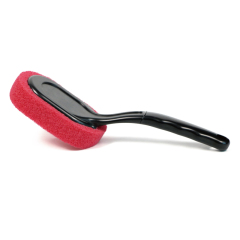
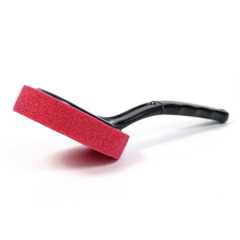
This is a tire and wheel polishing sponge brush: a red, open-cell sponge pad fixed to a black plastic handle. The pad takes dressing from the bottle or tin and lays it onto the sidewall in a thin, even film, and the handle keeps the tire shine products where they belong — on the rubber. It is the step up from a rag or a bare glove, and the alternative to a tire shine spray that lands on the paint as well as the tire. A sponge releases dressing gradually as you press, so the coat stays where it is worked in instead of running down the sidewall. In the wash sequence it belongs at the end. The tire and wheel are cleaned and rinsed first, then the sidewall is left to dry, because dressing applied to a wet tire dilutes and streaks. That makes the applicator the last tool on the car before the final wipe-down. Wash bays keep one within reach for every car, and detailing studios hand it to the technician dressing the tires as part of a paid package. Nothing on it needs priming or cleaning out mid-job — it is a pad on a handle, which is why it belongs in the everyday set of polishing products a bay goes through rather than in a specialist kit.
Handle & Sponge Build
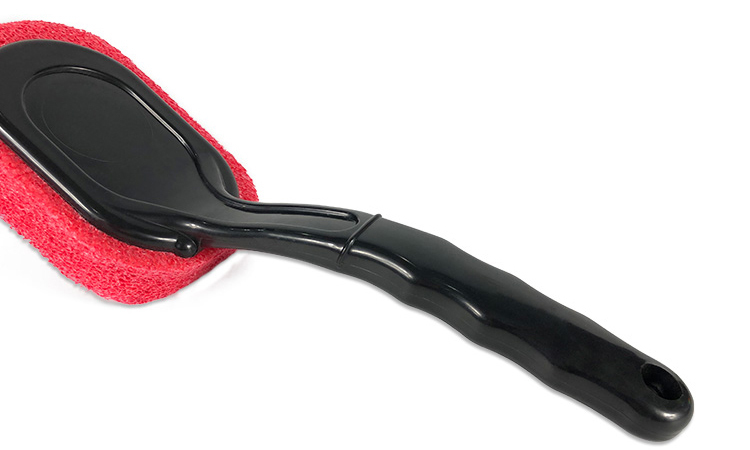
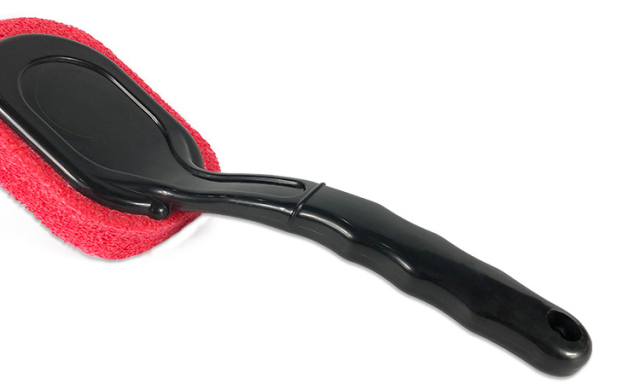
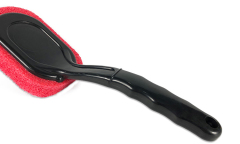
- Contoured plastic handle — the grip fills the palm and stays put while you work around a tire, even with dressing on your gloves.
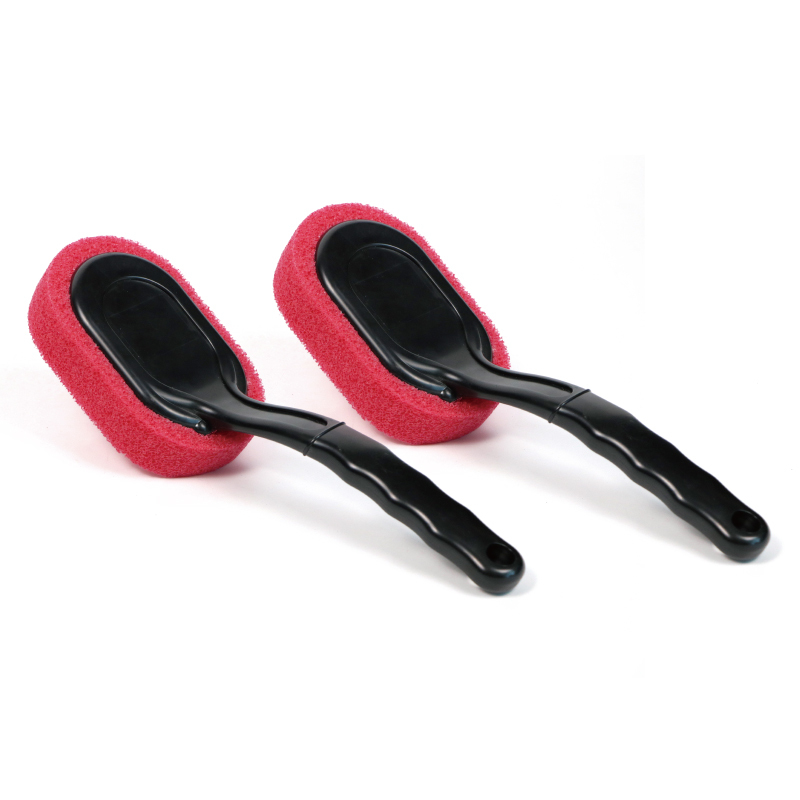
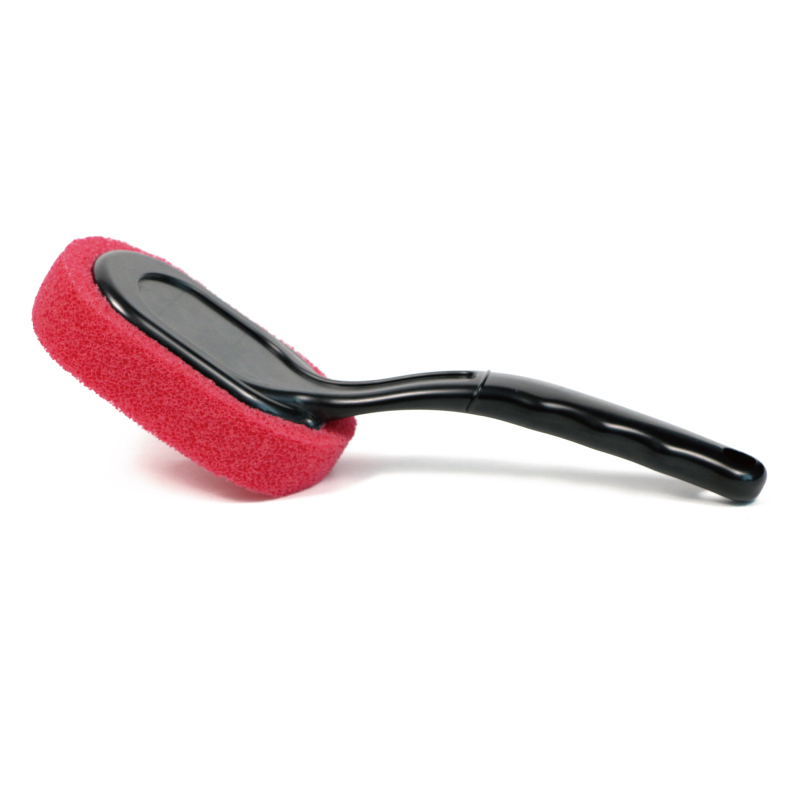
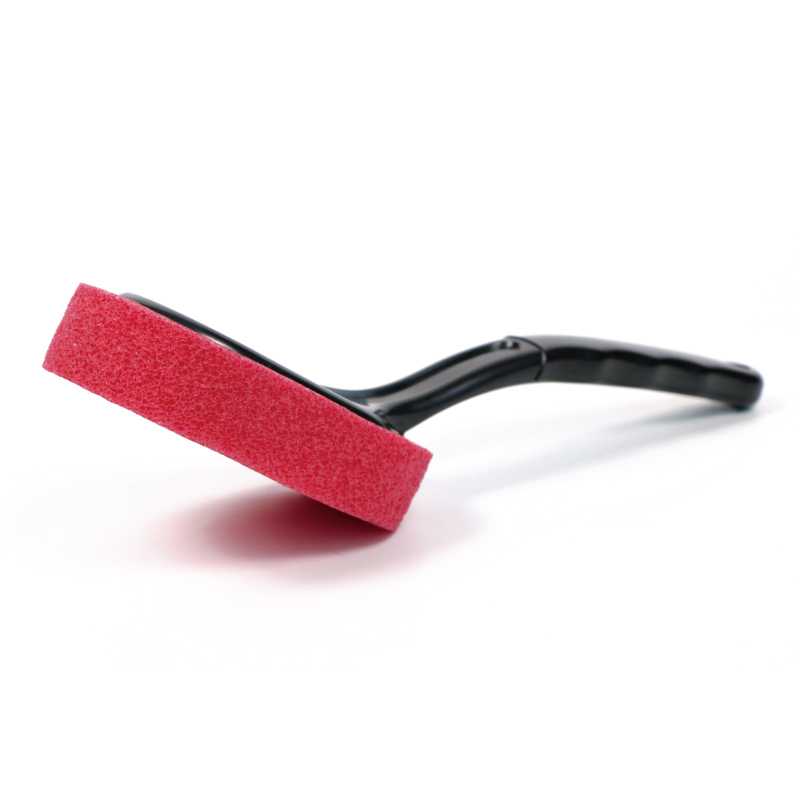
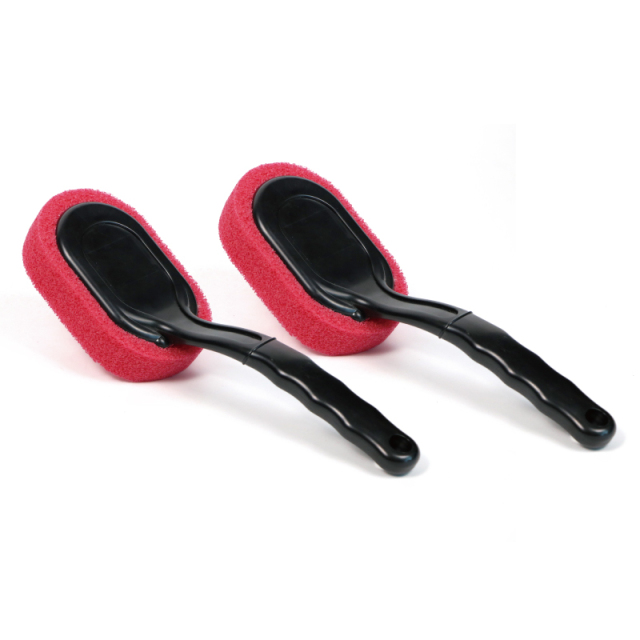
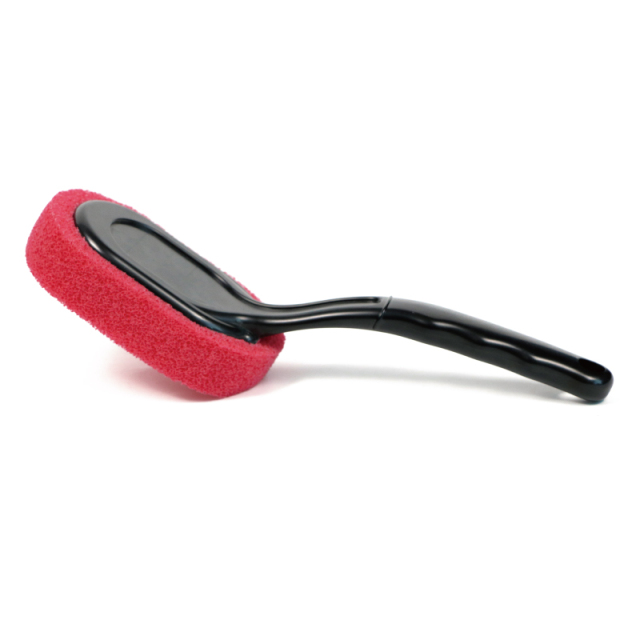
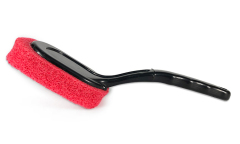
- Long handle with an angled neck — the head meets the sidewall at a natural angle, so the upper sidewall and shoulder can be worked without twisting the wrist or scraping knuckles.
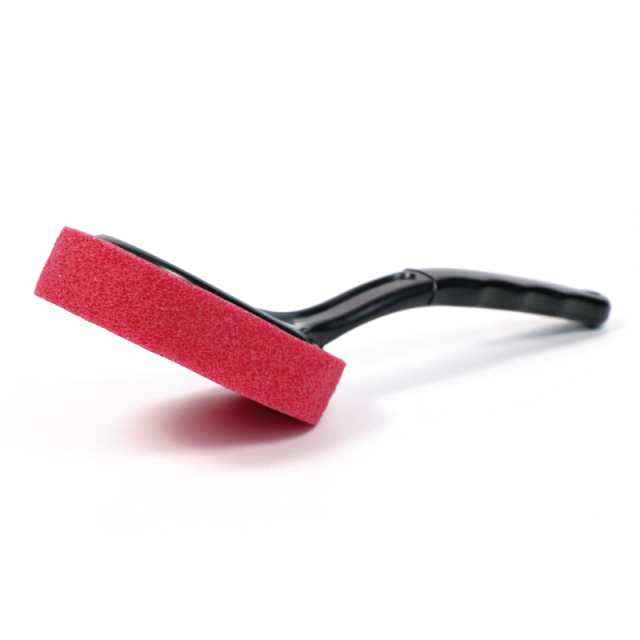
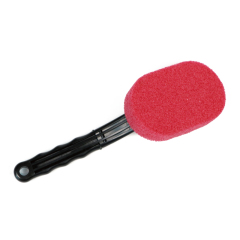
- Oval sponge head with a tapered edge — the rounded end follows the curve of the tire, and the edge reaches into raised lettering, ribs and the tread shoulder.
- Open-cell sponge — the cells hold the tire polish and give it back gradually under pressure, which is what produces a thin coat rather than a puddle at the first touch.
- Firm head behind the pad — pressure goes into the rubber instead of folding the sponge back on itself, so the same pad works on a soft sidewall and a stiff one.
- Red pad, black handle — the contrast shows how much polishing material is sitting on the sponge and whether it is lifting dirt off the tire.
- Hanging hole at the end of the handle — the applicator hangs clear of the bench between cars instead of sitting pad-down in whatever is on the trolley.
Applying Tire Dressing
- Clean and dry the sidewall first — wash off road film and old dressing, rinse, and let the tire dry before anything goes on.
- Load the pad with a small amount of tire shine and work it in with your thumb until the surface is evenly wet but not dripping.
- Start at the top of the sidewall and work down in sections, keeping the pad flat against the rubber so the tire polish spreads evenly instead of bunching at one point.
- Switch to the edge of the pad for lettering, ribs and the shoulder, using short strokes rather than a heavy press.
- Build the finish in light passes — one thin coat, then a second only where the surface looks uneven. Heavy coats are what run onto the wheel face and sling onto paint.
- Stay off the tread — keep dressing away from the tread blocks and the contact patch, and wipe the wheel face with a cloth if the pad touches it.
- Hang the applicator up when the set is done, so the pad drains and the handle stays clean for the next car.
Tire & Wheel Applications
- Wash-bay tire dressing — four tires dressed at the end of a wash, with the pad reloaded once or twice rather than re-dipped at every wheel.
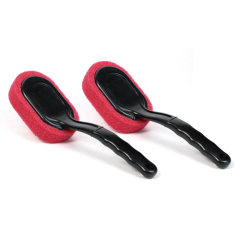
- Tire shine and gel work — the same pad handles the water-based and gel polishing products in our range, and a second applicator keeps two dressings from mixing.
- Detailing packages — where tire dressing is sold as an upgrade, a pad gives every car the same finish, which is easier to explain to a paying customer than a hand-applied coat.
- Bays moving off a tire shine spray — a pad puts product only where it is pressed, so less lands on the arch, the caliper or the paint.
- Arch lips and rubber trim — the oval head follows the arch and the tapered edge runs along rubber trim without dragging product onto the bodywork.
- Dealership and pre-delivery prep — repeatable dressing in a bay where the car cannot wait, with no overspray to wipe off the bodywork afterwards.
- Buyers building a wholesale tire shine line — the applicator goes on the shelf beside the bottle, so the dressing sells as part of a pair rather than on its own.
- Tool and dressing from one source — buyers choosing a tire shine supplier for the whole line take the applicator on the same order, so both arrive together on one set of documents.
Specifications
| Model | T-658 |
|---|
| Product type | Tire and wheel polishing sponge brush |
| Head | Oval red sponge pad |
| Handle | Black plastic with contoured grip |
| Handle details | Angled neck and hanging hole |
| Material | Plastic handle and sponge |
| Colours | Red sponge, black handle |
| Application | Tire and wheel dressing during washing and detailing; also for wholesale tire shine lines |
| Place of origin | Guangdong, China |
| Brand | SURAINBOW |
Care & Reuse
- Scrape the surplus off before it dries — a loaded pad carries more than a tire shine spray leaves behind, so wipe the excess onto a shop rag at the end of the set.
- Rinse the pad in warm water with a drop of mild detergent and work it through with your fingers until the water runs clear of tire polish.
- Squeeze rather than wring — press the water out gently so the sponge is not torn away from the head.
- Hang it by the handle hole, pad down, so water drains away from the joint instead of sitting in it.
- Let it dry fully before the next car — a damp pad dilutes the next dose of polishing material and gives an uneven finish.
- Retire the applicator when the pad hardens, tears or stops releasing an even coat, and keep a spare or two per bay so a worn pad does not hold up the line.
Ordering, Samples & Delivery
Samples and approval. If you want to check the pad against the dressing you actually run, ask your sales contact about sample availability. The sample scope and any applicable sample or courier charges are confirmed before dispatch, and an approved sample can be sealed as the reference the bulk order is measured against.
Packaging and proofing. Carton artwork, shipping marks, label language and barcode data are proofed and approved before production starts. Send the artwork and the pack specification with your inquiry, so the approved proof rather than a verbal description is what gets checked at packing.
Balance, shipment and documents. The balance and the shipping arrangement are confirmed against the order before dispatch, together with the document set for your market: a commercial invoice and packing list as standard, plus the shipping documents your forwarder asks for. Say at quotation stage which papers you have to file.
After-sales and batch traceability. Batches are recorded and retained samples kept, so a carton that arrives short, damaged or different from the approved sample can be checked against what was produced. Send the order reference, the batch number, the quantity affected and clear photos, and the review starts from those records.
Applicator and dressing together. The applicator can be quoted on the same order as the tire shine products in the range, so the dressing and the tool that applies it travel on one shipment and one set of documents.
Working with one supplier. Buyers who want a single tire shine supplier for the shelf can take the applicator alongside the chemicals and the rest of the detailing tools, instead of splitting the order between a tool trader and a chemical supplier.
Packing & Ordering Data
| Model | T-658 |
|---|
| Product | Tire wheel polishing sponge brush |
| Brand | SURAINBOW; OEM branding accepted |
| Handle material | Plastic |
| Pad material | Open-cell sponge |
| Colour | Red pad on a black handle |
| Place of origin | Guangdong, China |
| Order quantity | 100 pcs |
| Carton pack | 100 pcs per carton |
| Carton size | 54 × 54 × 43 cm |
| Gross weight per carton | 10.64 kg |
| Outer packing | Carton |
| Stock status | In stock and fast shipping |
Scale & Supply Capability
SURAINBOW is run by Guangzhou Liangdian Automotive Supplies Co., Ltd., a factory-trade operation set up in Guangzhou in 2010 and now 50 people strong. Sixteen years in car care have given us a one-stop supply position: our own SURAINBOW lines are held in stock for fast shipping, and an associate factory with modern production equipment and an established quality management system keeps replenishment moving. We take OEM and ODM work and our R&D team develops to your specification. Buyers in the Middle East, the United States, Southeast Asia, Europe, the UK, Russia, Africa and Australia already order from us.
FAQ
What kind of tire dressing works with this applicator?
It works with the tire dressings we supply, from thinner water-based shines to thicker gels; a very thick gel loads better if you work it into the pad with your thumb before the first tire. It is a dressing applicator, not a polishing compound pad, so keep abrasive compounds away from it.
Will the pad mark a wheel face or painted surface?
The pad is made for rubber and plastic trim, so keep it on the sidewall, the arch lip and rubber trim. If it touches a wheel face or paint, wipe the area with a clean microfibre cloth rather than rubbing the product in.
How long does one applicator last?
That depends on how many cars you dress and which polishing products you run through the pad. Rinse it after each use, hang it to dry, and replace it once the sponge hardens, tears or stops releasing an even coat.
Can the applicator carry our own brand?
Yes. OEM branding is accepted on this item, with the exact marking on the product and its packing confirmed against approved artwork before production. Distributors building a wholesale tire shine line often brand the applicator to match the dressing label.
Do you also supply the tire shine it applies?
Yes — the liquid and the tool that applies it come from the same place. Our range covers the tire shine products themselves as well as the applicators: spray-on dressings for volume work in a busy bay, and thicker gels and creams that load a sponge pad and stay where they are worked in. Buying the dressing and the applicator together means one purchase order, one set of shipping documents and one consolidated shipment instead of a chemical container from one supplier and a carton of tools from another.
It also keeps private label tidy. If the dressing carries your brand, the applicator can be branded to match and stand beside the bottle on the shelf, so the customer sees the pair as one product line rather than two unrelated items. Tell us the pack format you sell the dressing in — trigger spray, squeeze bottle or tin — and we will confirm which items in the range pair naturally with this pad. Formulations differ between markets, so check the specification sheet for the dressing you have in mind and ask for samples of both the liquid and the applicator before committing to a full order.