Product Overview
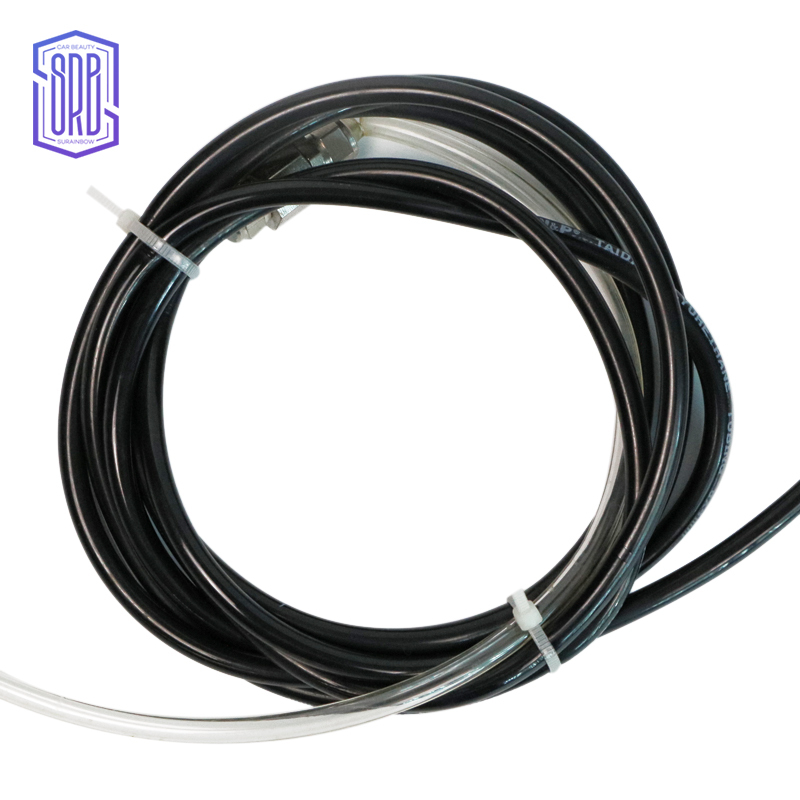
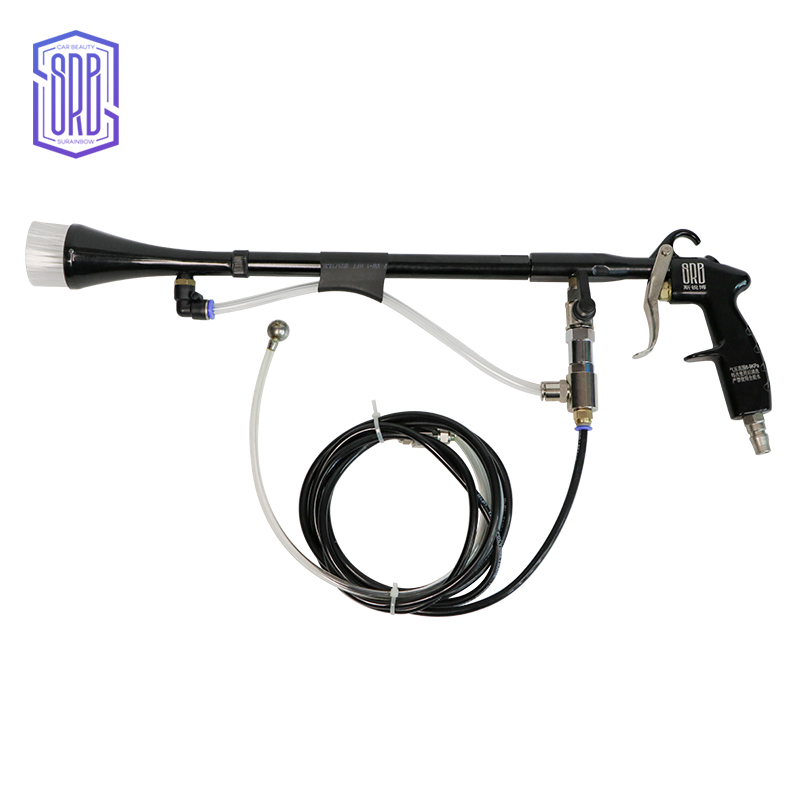
The T-120 is a compressed-air cleaning gun built around an extended tube. Air travels down the tube and out through a round brush head at the tip, so the part that does the work can be inside an engine bay or a deep seam while your hand stays outside it. That reach is the whole point. Detailing studios, engine-bay specialists and used-car reconditioning shops buy it for the jobs where a short gun stops at the radiator and a brush cannot get past the hoses — around the block, under the intake, along the inner wings and down into the seams where grime and rinse water collect. It replaces two slow habits at once. Instead of unclipping covers to reach a surface, you send the tube in; instead of pushing loosened dirt around with a rag, you let the air stream carry it out of the bay. On the job it is a fast tool rather than a forceful one. A pass takes seconds, and progress comes from repeated passes rather than pressure, which is why a technician reaches for it at the end of a wash when the car is already clean and only trapped water and last dust are left. Surainbow is one of the car cleaning chemical manufacturers behind this range and supplies the gun as part of a wider selection of cleaning tools for car and workshop use, built at the company's Guangzhou base alongside the tornado guns, blow-off nozzles and brushes that fill out a detailing kit. That range is why the gun rarely travels alone.
Nozzle, Controls & Build
- Brush head that loosens as it works.
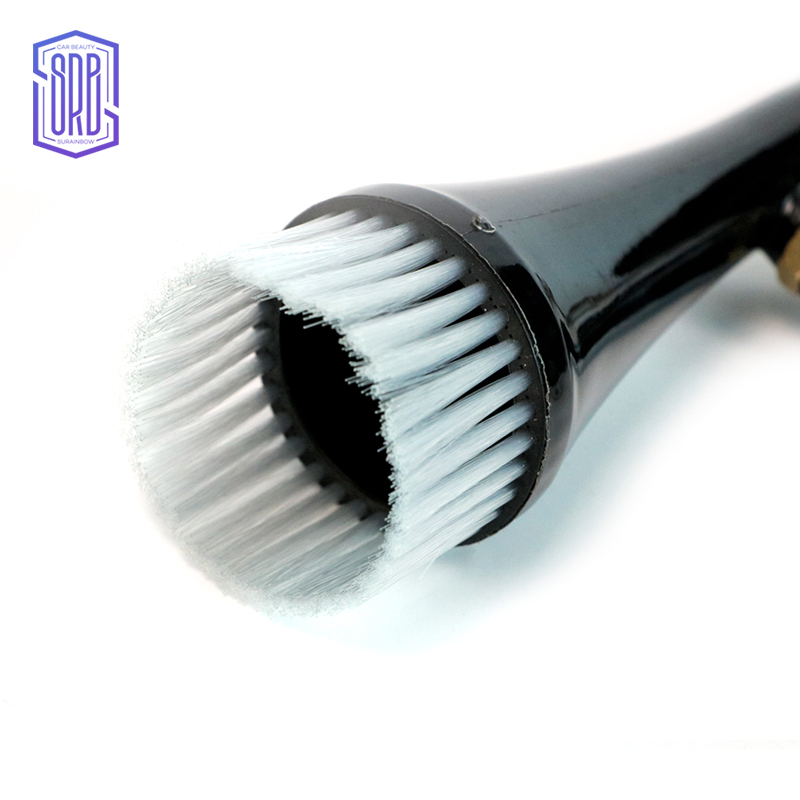
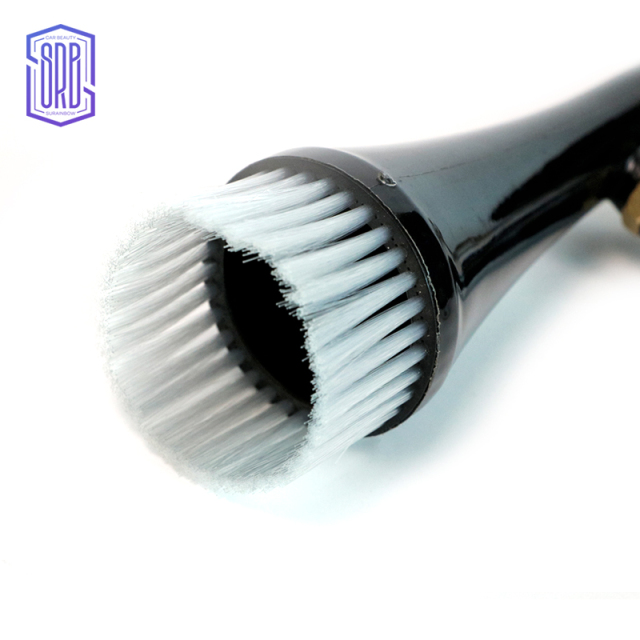
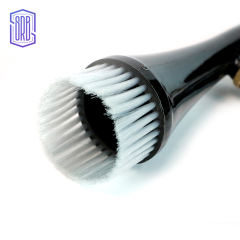
- A round head of soft white bristles sits at the tip, and the hollow centre lets air pass through the bristles so loosened dirt is carried away instead of being smeared across the surface.
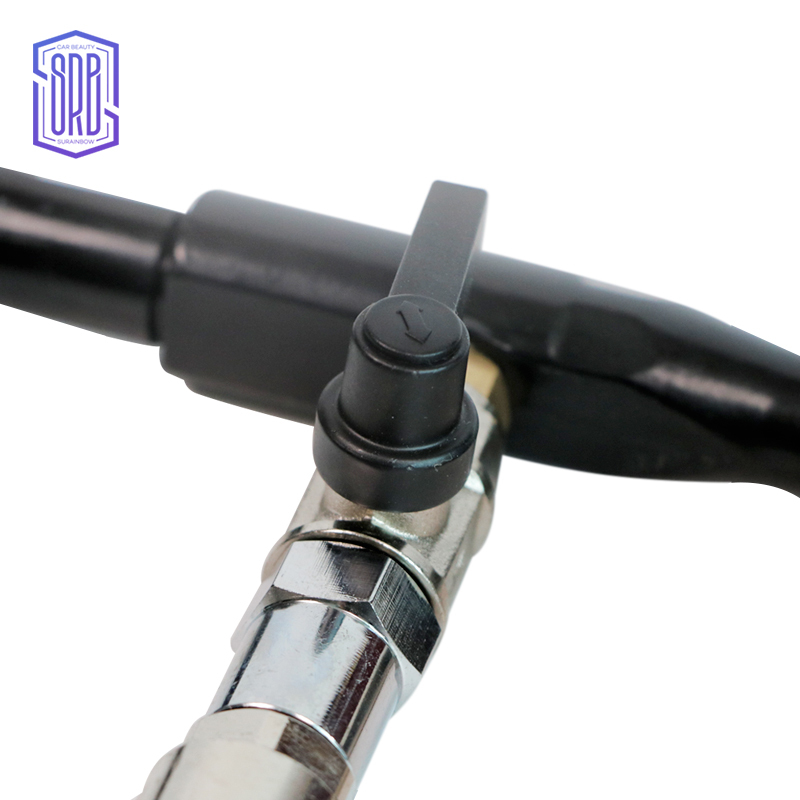
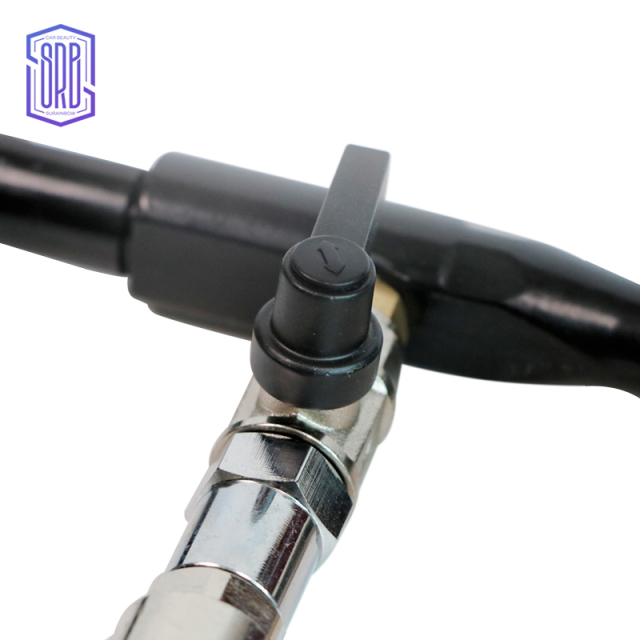
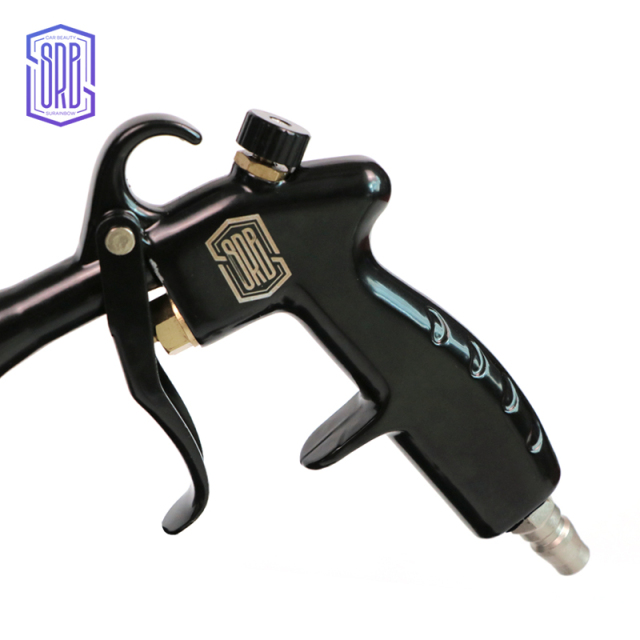
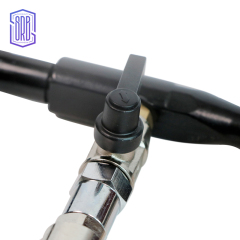
- Rotary air control built into the body.
- The knob sets how much air reaches the tip, and the arrow moulded beside it shows which way to turn.
- Drop it low around wiring and connectors, open it up for a caked bay.
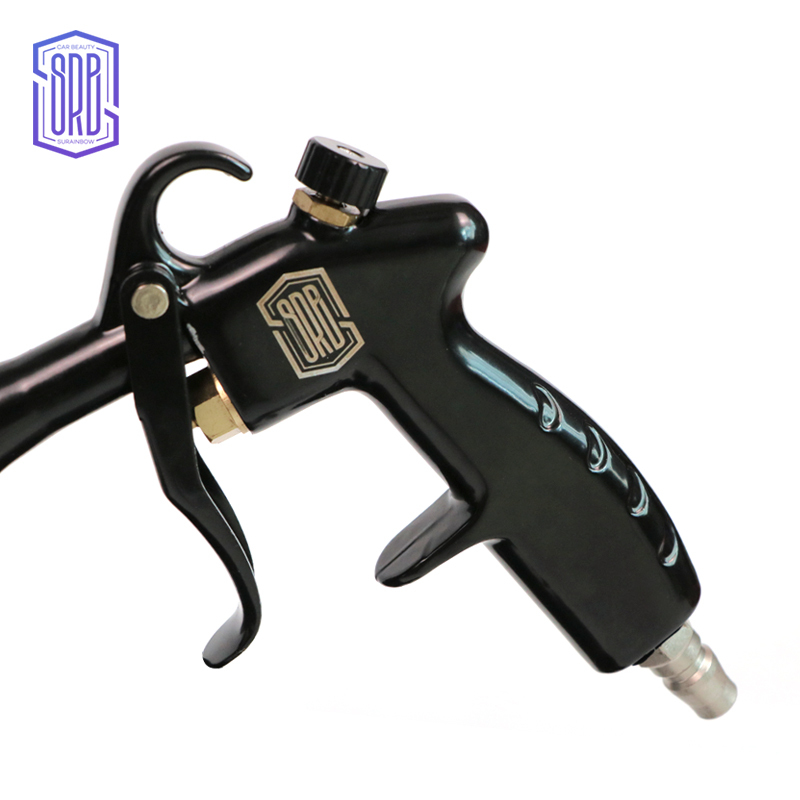
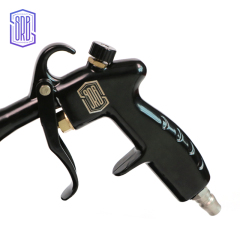
- One-hand weight. At 1.2 kg it handles like a compact spray gun — pistol grip, trigger held rather than squeezed — which matters once a bay has you working at arm's length for ten minutes.
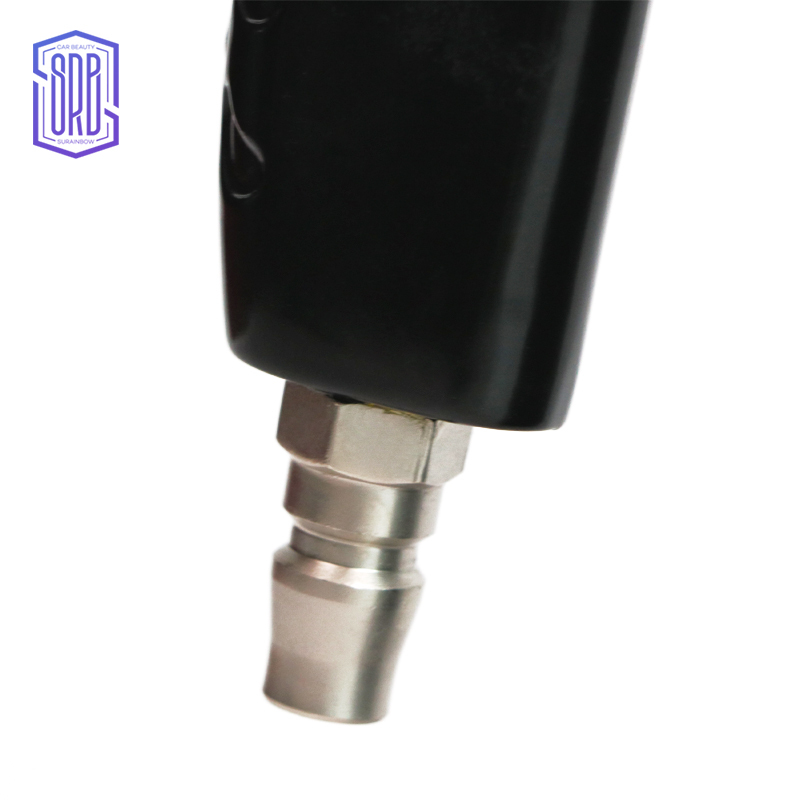
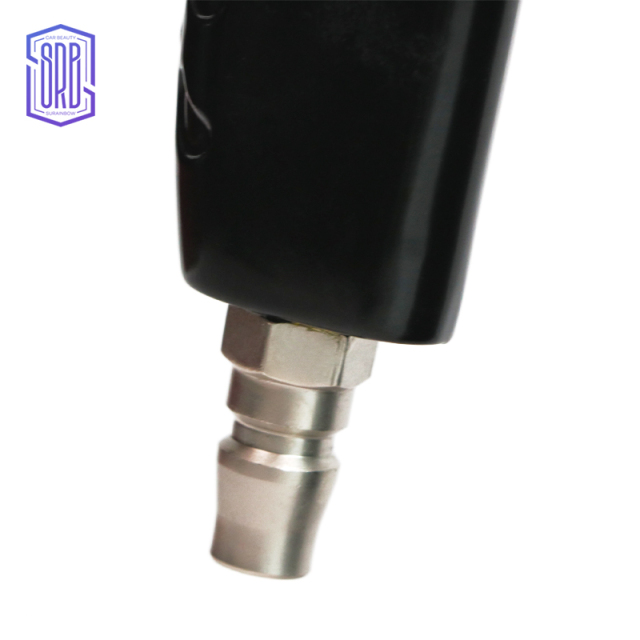
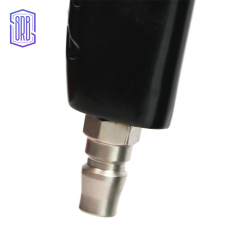
- Metal quick coupling at the inlet.
- The air connection is a metal fitting rather than a moulded plastic stub, so repeated coupling and uncoupling at the start of a shift does not wear it oval.
- A body that wipes clean.
- The glossy black housing takes a wipe after a wet job instead of holding grime in a texture, and the white brush head makes it obvious when the tip needs rinsing.
- ABS shell, aluminium alloy where it counts.
- That is the combination we use across the cleaning tools in this range: light enough to hold all morning, solid enough for a bay that runs every day.
Applications
- Engine bays in a detailing studio.
- A car wash engine cleaner goes on first and is left to dwell; the long tube then reaches the block, hoses and inner wings to lift the loosened grime out of the bay.
- Used-car and fleet reconditioning.
- When a bay has to look presentable before a handover, the gun takes the water out of the seams and the dust out of the corners, so the car goes to dressing instead of back to the wipe-down bench.
- Panel seams, badges, grilles and mirror housings.
- These are the places water sits after a wash and runs down the paint later; a pass with the tube clears them before the car leaves the bay.
- Interior cavities and tight trim.
- Seat rails, door shuts, console gaps and the space under the seats — the long tube doubles as the interior cleaning gun for crevices a vacuum nozzle cannot follow.
- Wheel arches and lower panels.
- Arches hold water long after the rest of the car looks dry, and a short pass there prevents the drip marks that show up on sills and lower doors.
- Alongside the rest of the cleaning tools for car.
- It works next to a wheel brush, a detailing brush set and a blow-off nozzle — the gun takes the deep, awkward, air-only jobs while the brushes handle what you can see and reach.
Engine-Bay Workflow
- Let the engine cool completely, then cover the fuse box, any open intake and exposed connectors before a drop of cleaner goes on.
- Blow the loose dust off first, working from the top of the bay downwards and keeping the nozzle moving so nothing is driven into a connector.
- Apply your engine cleaner — a car wash engine cleaner or a mild detergent mixed at the dilution on its label — to the surfaces you can reach, and let it dwell instead of scrubbing straight away.
- Rinse with a controlled, low-volume stream, keeping water away from the parts you covered and off the electrical connections.
- Switch to the long tube and drive the standing water out of the seams, plug wells and the top of the block, easing the brush tip into the corners rather than jabbing at them.
- Wipe the bay down with a dry microfibre, let it dry fully, and only then apply an engine dressing.
Specifications
| Product name | Tornado engine long-tube cleaning gun |
| Model | T-120 |
| Working type | Pneumatic, compressed air |
| Body material | ABS with aluminium alloy parts |
| Colour | Black body, white brush head |
| Overall size | 55 × 23.5 × 9.4 cm |
| Weight | 1.2 kg |
| Single package size | 57 × 25.5 × 11.4 cm |
| Single package gross weight | 1.2 kg |
| Air control | Rotary knob with direction marking |
| Inlet connection | Metal quick coupling |
| Packing | 12 pcs per box, sold as single items |
| Minimum order quantity | 12 pcs |
| Place of origin | Guangdong, China |
Care, Storage & Service Life
Most trouble with an air gun starts behind it. Drain the compressor and the line before a job, and run a water trap if your bay is humid — a dry line is what keeps moisture out of the nozzle and off a surface you have just cleaned.
Rinse the white bristles in clean water after a greasy bay and straighten them with your fingers while they are wet. Dried-on engine grime stiffens the head and costs the brush the flex it needs inside a seam.
A drop of air-tool oil at the inlet every few jobs keeps the internal action smooth. Do not flood it: excess oil travels down the tube and lands on the panel as a film you then have to remove.
Store the gun dry — hanging by the handle or lying with the tube supported — rather than in a bucket or on the wash-bay floor where it gets kicked and soaked.
Check the inlet coupling and the collar behind the brush head every week. A loose fitting leaks air quietly and cuts working power long before anything looks broken. If the bristles splay or start shedding, ask your sales contact about a replacement head rather than pressing harder.
None of this needs special products. A dry cloth, a soft brush and a drop of oil cover the routine, which is the same advice we give for the rest of the cleaning tools in the range.
Ordering, Packing & Delivery
- Model and quantity.
- Order by the model number and the quantity you need.
- The minimum order is 12 pcs, which is also the box quantity, so a trial carton and a stock carton are the same unit.
- Samples and approval.
- If you want to handle the gun before committing, ask your sales contact about sample availability.
- A sealed, approved sample can then serve as the reference the bulk carton is checked against.
- Packaging and label proofing.
- Carton artwork, shipping marks and label language can be discussed with your sales contact and are settled on a proof you approve; printing follows the approved version, not a spoken description.
- Balance, documents and dispatch.
- Before shipment, confirm the balance and payment method, the shipping method and consignee details, plus the document set your market needs — commercial invoice, packing list and the safety data sheet where it is required for clearance.
- Stock and shipping.
- In stock and fast shipping: as car cleaning products manufacturers we hold this model on the shelf rather than building it to order, so a repeat carton does not wait for a production run.
- Mixed orders.
- We work as car cleaning chemical manufacturers as well as tool suppliers, so guns and liquids can be quoted on one order.
- Tell your sales contact what you are combining and the packing is confirmed per item.
- After-sales and batch records.
- Keep the carton label and the order reference.
- If a gun arrives damaged, or a batch does not match the approved sample, send the order reference, the batch number, the quantity affected and photos to your sales contact so the batch can be traced against its production and inspection records.
Scale & Supply Capability
SURAINBOW is run by Guangzhou Liangdian Automotive Supplies Co., Ltd., a factory-trade operation set up in Guangzhou in 2010 and now 50 people strong. Sixteen years in car care have given us a one-stop supply position: our own SURAINBOW lines are held in stock for fast shipping, and an associate factory with modern production equipment and an established quality management system keeps replenishment moving. We take OEM and ODM work and our R&D team develops to your specification. Buyers in the Middle East, the United States, Southeast Asia, Europe, the UK, Russia, Africa and Australia already order from us.
FAQ
What air supply does this gun run on?
It is pneumatic: compressed air enters through the metal quick coupling at the base of the handle and drives the tornado action at the tip. Check that your airline coupler matches the inlet and that the line is dry before the first job — as car cleaning products manufacturers we see far more weak guns traced back to a wet, unregulated line than to the gun itself. The working pressure that suits your compressor should be confirmed with your sales contact.
How is this long-tube model different from the shorter tornado guns?
Length, and what the length is for. The shorter guns in the line are made for interior seams and close work; this one carries its tip to the back of an engine bay and down beside the block, so a bay can be cleaned without pulling covers. It is the longest of the cleaning tools for car in this family, and at 1.2 kg it is still a one-hand tool.
Are the white bristles safe on paint and delicate trim?
The bristles are soft and the head is round with a hollow centre, so it flexes rather than digs in. Keep the gun moving, use light contact and let the air lift the dirt. On fresh paint, soft plastics or a wrapped panel, test on a hidden area first — the brush is there to loosen dirt, not to scrub a surface dry.
Can the brush head be replaced when it wears?
The brush head is the first part to wear, especially on hot, greasy engine surfaces. Ask your sales contact about a replacement head when you place a repeat order, and keep one with your cleaning tools so a worn brush does not take the gun off the job for the rest of the day.
Does the gun need water or foam to work?
No — it runs on air alone. The cleaning comes from what you put on the surface (a car wash engine cleaner, a degreaser or a mild detergent) and from the brush, while the air stream lifts the loosened dirt and drives standing water out of the bay. Because we work as car cleaning chemical manufacturers, the cleaner and the dressing for the same job come from the same range.
What should I check before putting a new gun into service?
Unpack it and look over the body, brush head and inlet coupling for shipping damage, then connect it to a dry, regulated line and open the rotary knob slowly to see how the air responds. Set the knob by feel on a scrap panel before you take it to a car, and if anything looks wrong out of the box, photograph it and contact your sales contact before the first job.