Product Overview
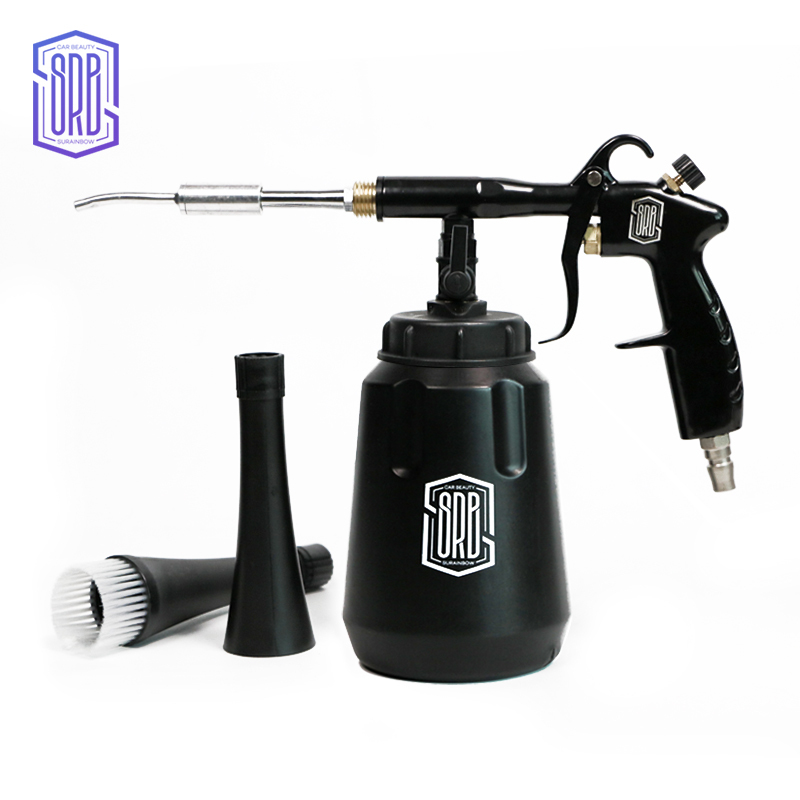
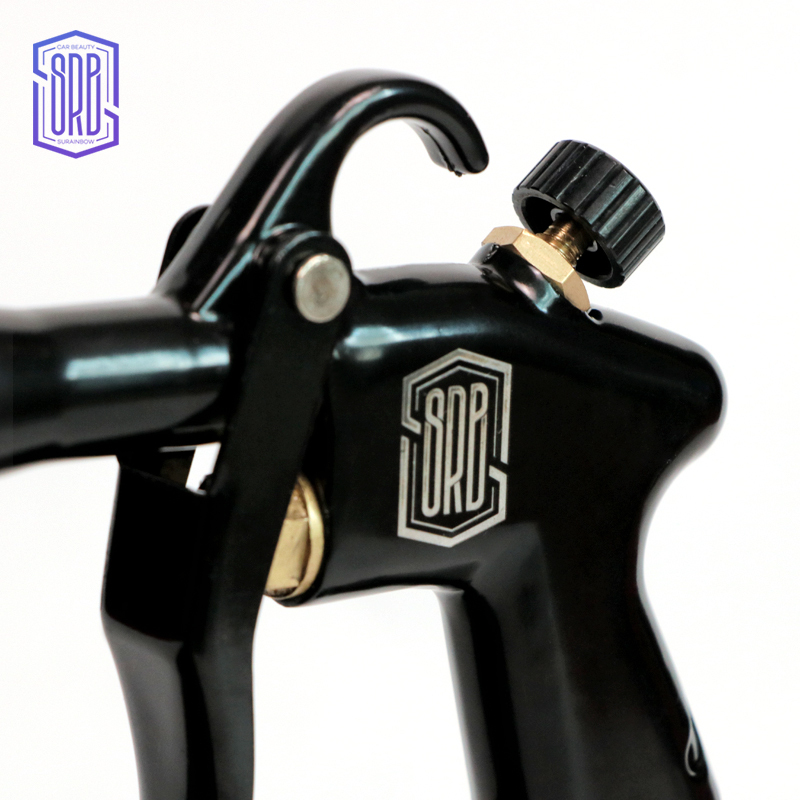
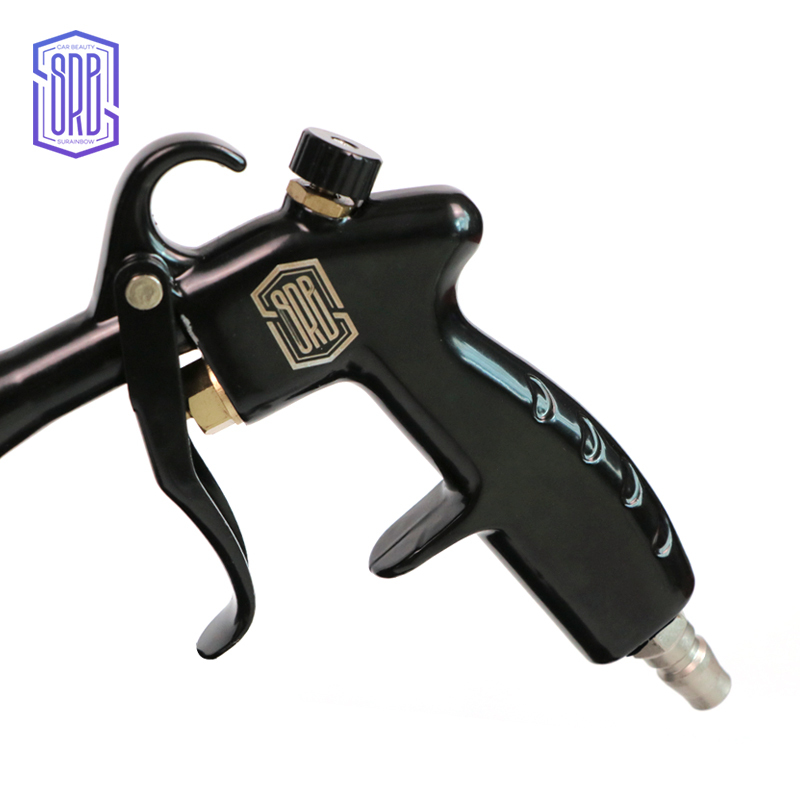
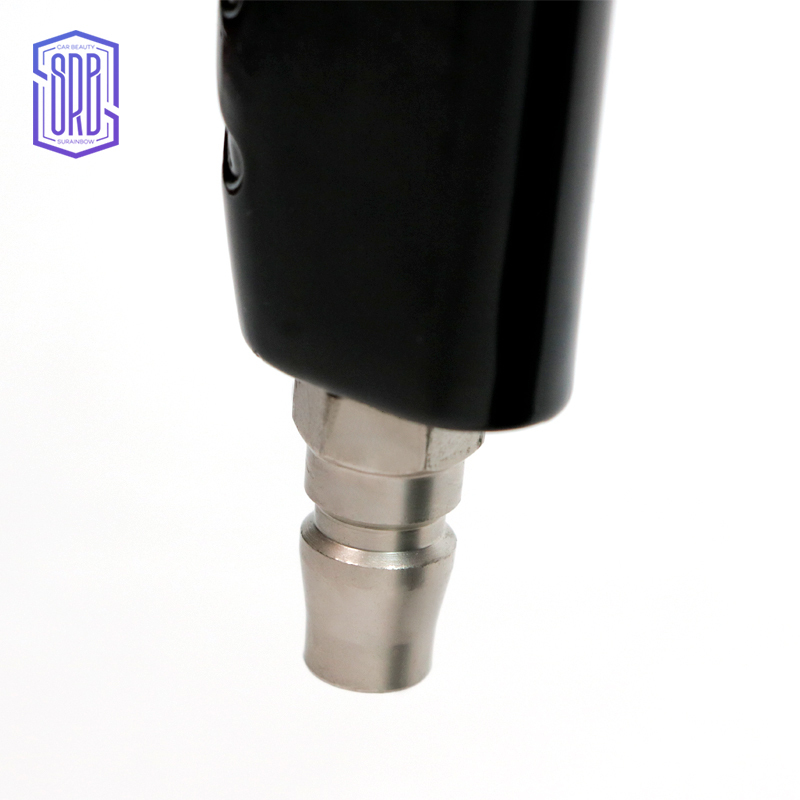
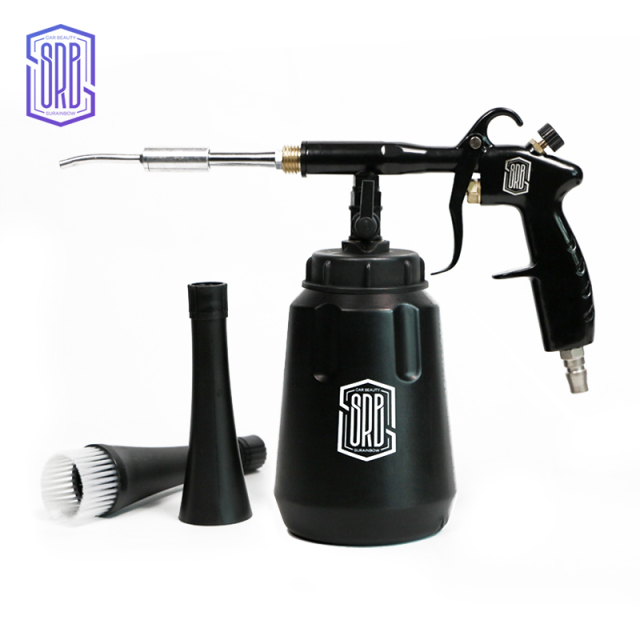
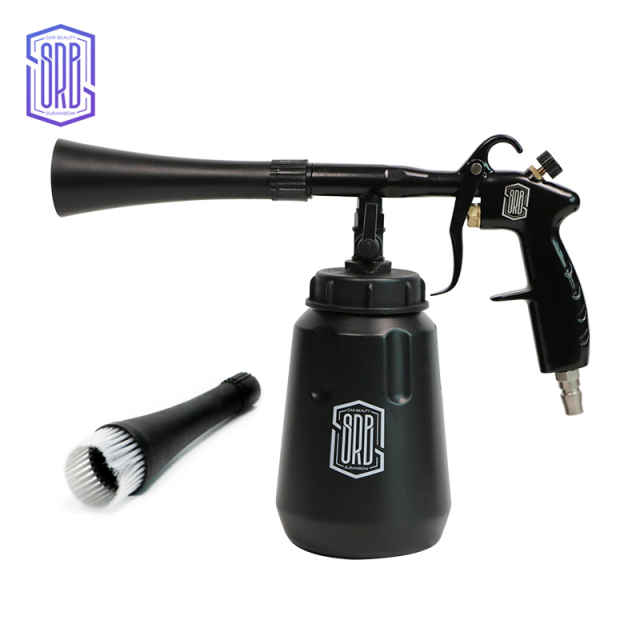
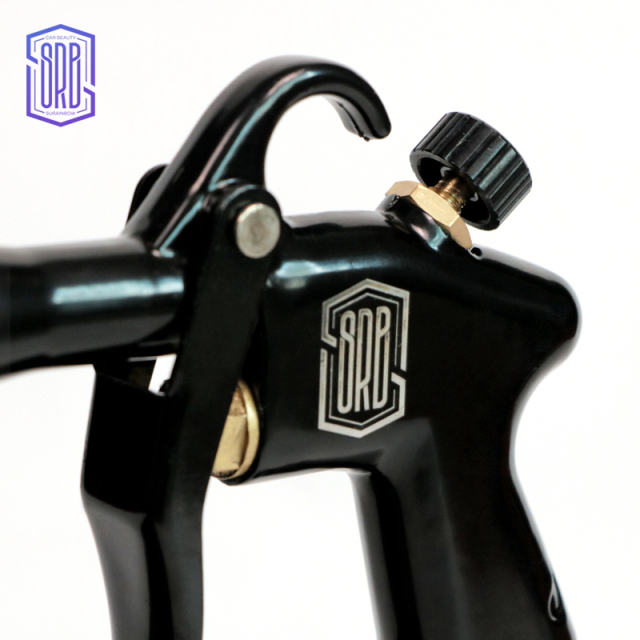
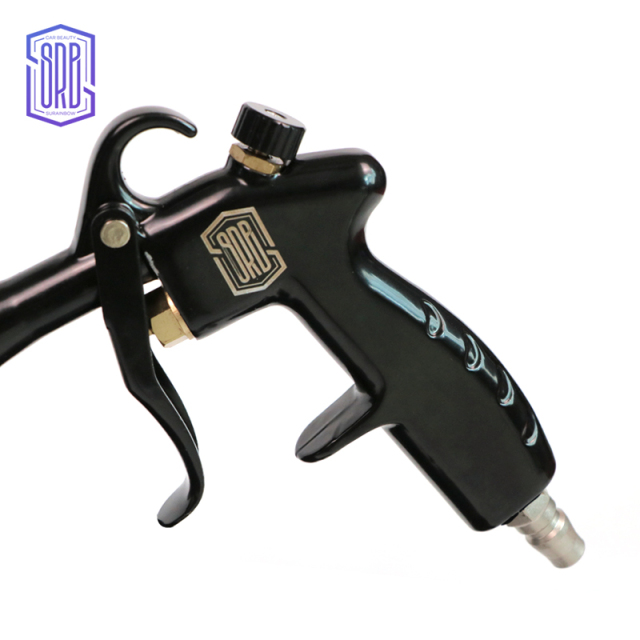
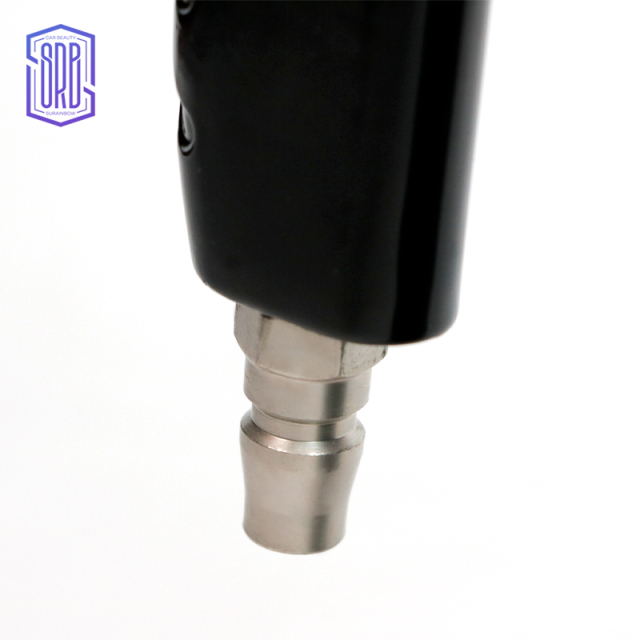
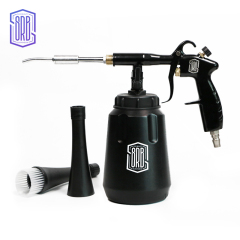
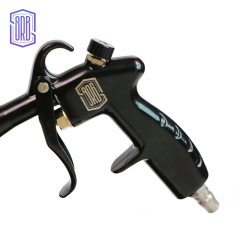
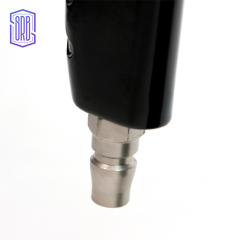
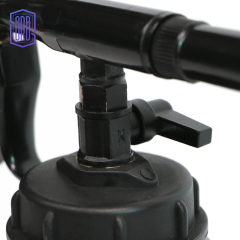
This is an interior cleaning spray gun run on compressed air. Cleaning solution sits in the canister under the handle, air enters through the metal fitting at the base of the grip, and the two meet at the nozzle and leave as a fast, focused mist. The trigger starts and stops the spray; the knob on top of the body sets how wet each pass is.
It belongs to the group of cleaning tools for car interiors that a bay keeps within reach all day, because it covers seats, carpets, door cards, vents and trim without being changed out. The rigid body holds the nozzle where you point it on flat surfaces, which is exactly what a seat cushion or a door panel needs — a wandering spray means rework.
Detailers use it as the everyday interior gun, and used-car or rental prep teams use it where a cabin has to be turned around between customers. For a distributor it is a straightforward line to stock and demonstrate: one gun, one nozzle set, one carton count.
In a normal interior detail it comes after the vacuum and before the trim is dressed. Loose grit comes out first, then the gun for anything bonded into fabric, seams and texture, then a wipe or an extractor, then protection.
The gun comes from the same Guangzhou workshop as our liquid car care lines. As car cleaning products manufacturers we supply it as a stocked item, so a distributor can add it to an existing interior range without finding a second supplier for the tool side.
Key Features
- Cleaning power that comes from the air. The spray hits fabric and seams with enough force to lift dirt out of the weave, so a seat that would take several passes with a cloth comes up in one or two.
- Higher output per bay. The same gun covers carpets, seats, door cards and vents, so there is no swapping between an applicator, a brush and a spray bottle. The interior stage gets shorter and more consistent between operators.
- One gun, several nozzle jobs. Nozzles thread on and off by hand, so a bay can move from a carpet to a vent slat without hunting for a second tool — one of the few cleaning tools that covers both without being swapped over.
- No electrics near a wet vacuum. The gun takes its power from the air line, so there is no battery, cable or motor to protect when the floor is wet. It is one of the cleaning tools for car interiors that can be running while the vac is working next to it.
- Built for interior work first. This is an interior cleaning spray gun, not a general-purpose air gun: the nozzle sizes, the flow range and the canister are chosen for cabin surfaces rather than for engine bays or wheels.
- Metal where it wears. The shell is ABS and the parts that are handled and re-threaded every day — the inlet fitting, the nozzle threads and the control knob — are aluminium alloy rather than plastic.
Nozzles & Spray Control
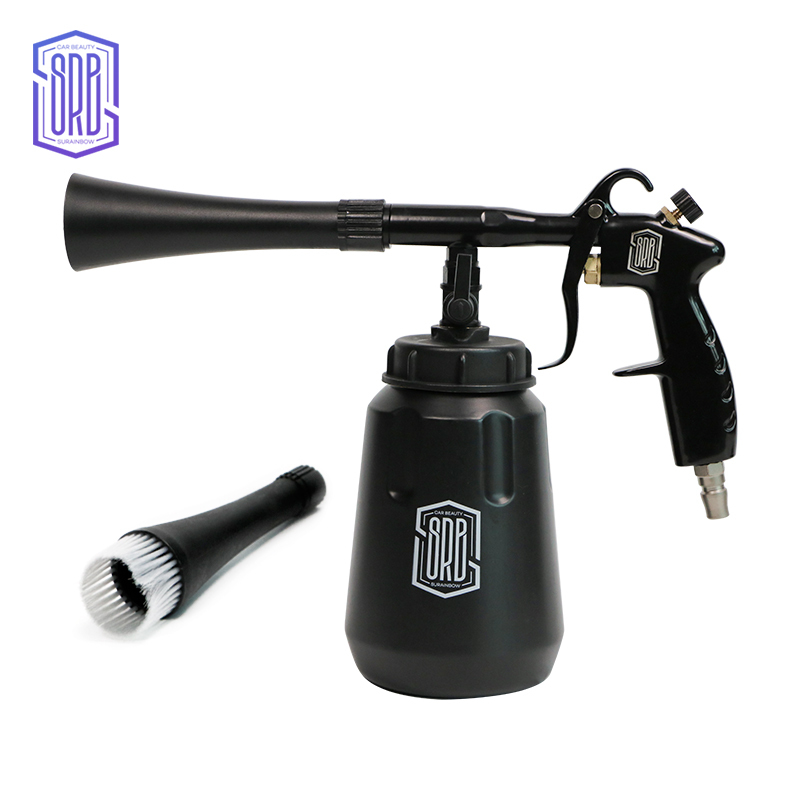
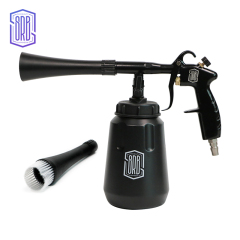
- Trumpet nozzle. The wide, flared pattern covers a seat cushion, a floor mat or a boot liner in a couple of passes.
- Most interiors will be cleaned with this one.
- Curved metal nozzle. The bend reaches under seat rails, behind the pedals, along the console gap and around the base of the dashboard, where a straight nozzle only points at the obstruction.
- Conical nozzle. A tighter stream for vent slats, seams and switch recesses. Hold it back a little so the air cleans the slats instead of bending them.
- Brush attachment. The bristles agitate dust out of textured plastic and perforated seat panels while the air carries it away, which saves a separate dusting step.
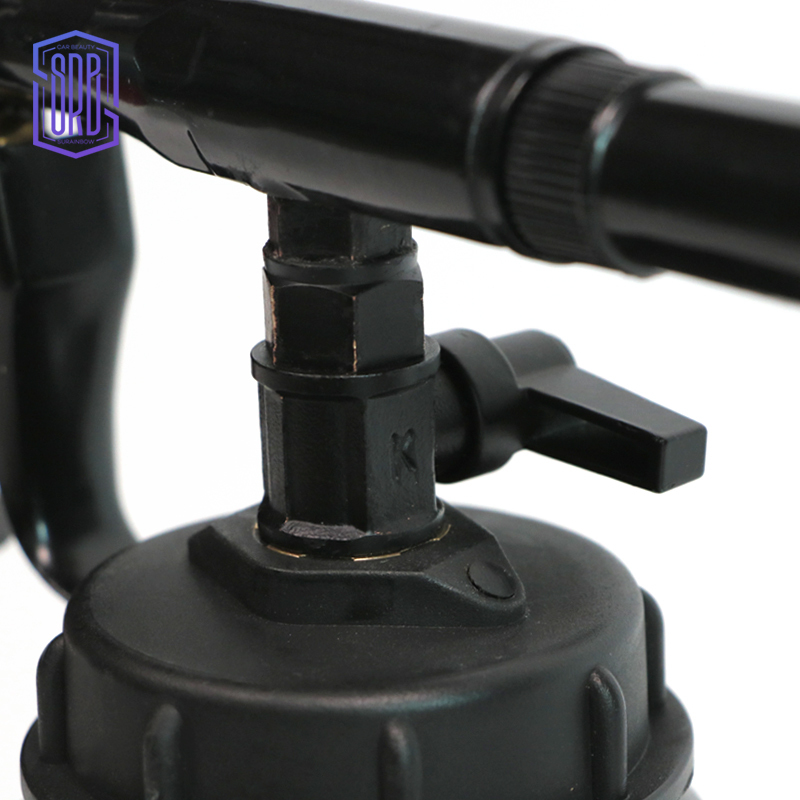
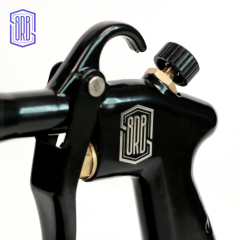
- The top knob. It sets how much solution the air picks up: closed down for a light mist over a headliner, open for a wet pass on mats, and shut fully for a dry blow-out along a seam.
- Where the tornado name comes from. Air and solution leave the nozzle as a fast, swirling mist rather than a flat fan, which is why the tornado cleaning gun works into the weave instead of sitting on top of it.
- Distance and angle. Two hands' width back and angled along the panel keeps dirt moving out of the surface.
- Short bursts beat one long soak every time.
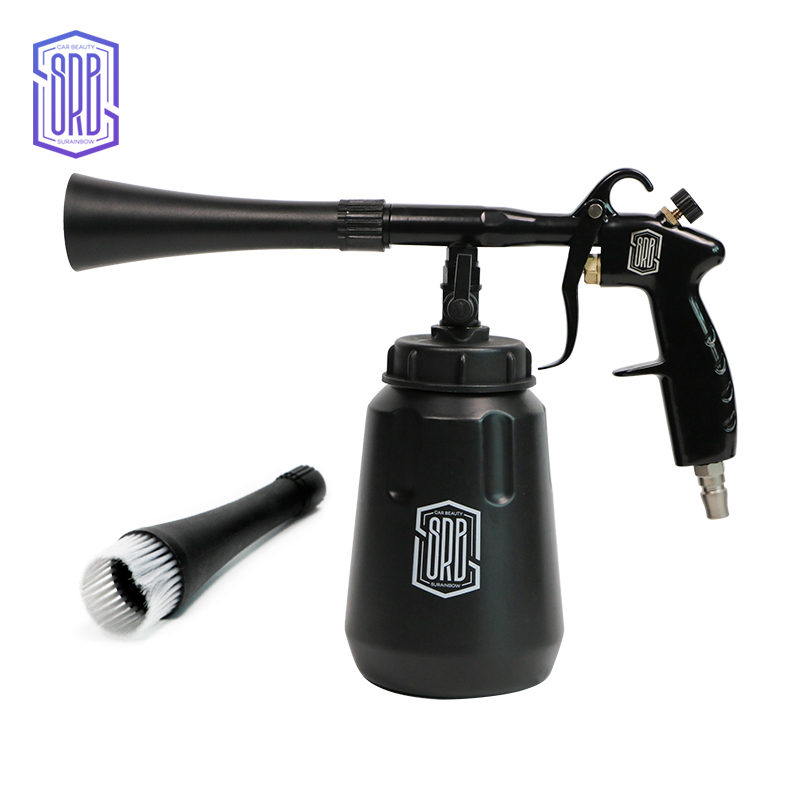
- The set shown. The gun is photographed with the trumpet nozzle fitted and the curved, conical and brush attachments alongside. Confirm the exact contents you need for your order if your operators work mainly on one type of surface.
Interior Applications
Seats and carpets are the main job. Spray the section, let the cleaner work for the time its label recommends, agitate the pile with a brush and extract or wipe. The gun reaches into the bolster seams and the gap where the cushion meets the frame, which is where a cloth tends to smear dirt rather than lift it.
Door cards, armrests and map pockets collect hand oils and dust in the grain of the plastic. A light mist and a soft brush lift it out of the texture, and the curved attachment gets along the window ledge and behind the pull handle.
Vents, seams and switch recesses are where a rigid nozzle earns its place: a narrow stream goes into a slat or a button surround without soaking the surrounding panel. Keep the flow low here so the slats are pushed clean rather than bent.
Under the seats and around the console — rails, the gap beside the handbrake, the well behind the pedals — is a reach problem rather than a dirt problem. The curved attachment follows the rail and flushes out grit that a vacuum cannot pick up.
Used-car and rental turnaround is where the gun shows its commercial value. A cabin that has to be ready for the next customer gets one repeatable process instead of a judgement call per operator, and because it covers so many surfaces it takes the place of several separate cleaning tools on the trolley.
Operating Steps
- Set up the air line. Push the hose coupler onto the metal inlet at the base of the handle. Check that the line is dry, because moisture in the air supply will spot fabric, and set the regulator low before the first pass.
- Mix and fill. Dilute your interior cleaner to the ratio the car cleaning chemical manufacturers specify on that product's label, pour it into the canister and screw the cap down firmly so the gun does not pull air past the seal.
- Fit a nozzle. Thread on the attachment for the surface you are starting with and check it is seated before you trigger the gun. Nozzles go on hand-tight; there is no need to force them.
- Test the pattern. Trigger a short burst onto a hidden section — under a seat, or a spare mat — and open the top knob until the spray is wet enough to work without soaking through the panel.
- Work a section at a time. Keep the nozzle moving and angle it along the surface rather than straight into it, overlapping each pass. Follow immediately with a brush or a microfibre so the lifted dirt is taken off before it dries back in.
- Finish dry. Ease the top knob closed and give the panel a short, drier pass to push out the last of the moisture, then leave the doors open while the surface dries.
Use & Care
- Empty the canister. Pour out what is left at the end of the day and rinse the reservoir. Cleaner left standing overnight is the most common reason a gun starts spitting, and the dilution advice car cleaning chemical manufacturers give assumes the mix is used fresh.
- Flush with clean water. Fill the canister with clean water and spray it through until it runs clear. Doing this on the tornado cleaning gun at the end of every working day keeps the pick-up tube and the nozzle free of dried product.
- Clear the nozzle. If the pattern weakens or turns uneven, unscrew the nozzle and rinse it, then refit it hand-tight. A nozzle tightened with pliers distorts the seat and starts to weep.
- Look after the air side. Release the trigger and let the line down before disconnecting, then wipe the inlet fitting dry. Moisture and grit in the coupling are what wear the seal at the base of the handle.
- Store it dry. Hang or stand the gun with the canister empty, the nozzle fitted loosely and the body away from damp floors. A dry gun with clean threads is ready for the next shift without a strip-down.
Specifications
| Model | T-115 |
|---|
| Product type | Interior cleaning spray gun, air-driven |
| Product name | Tornado Interior Cleaning Gun |
| Material | ABS body with aluminium alloy fittings |
| Colour | Black |
| Size | 34 × 13.5 × 26 cm |
| Weight | 0.96 kg |
| Nozzle | Trumpet-shaped front nozzle, with interchangeable attachments |
| Controls | Trigger and top-mounted adjustment knob |
| Air inlet | Metal fitting at the base of the handle |
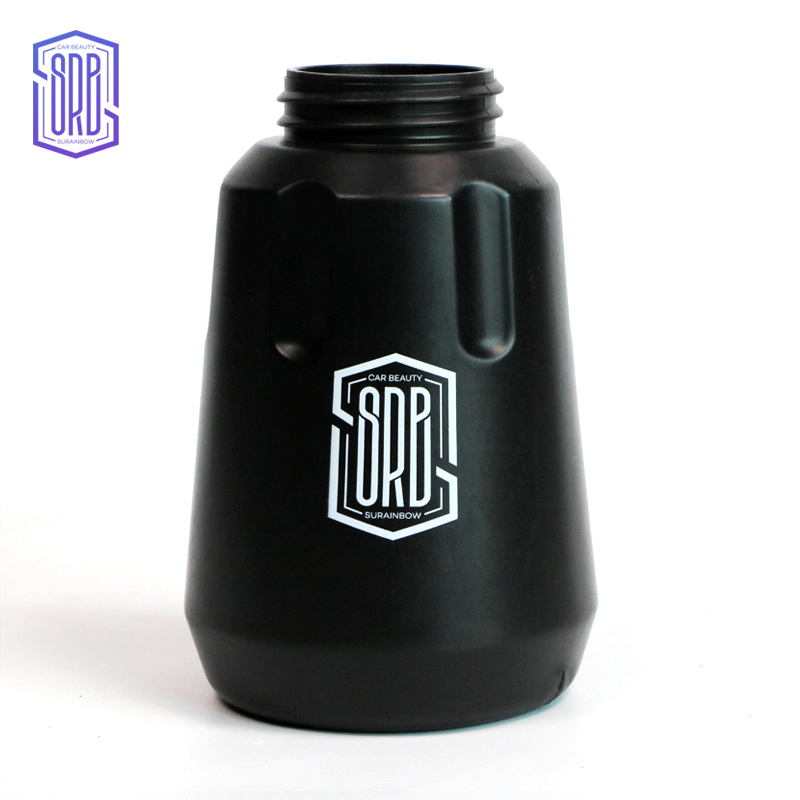
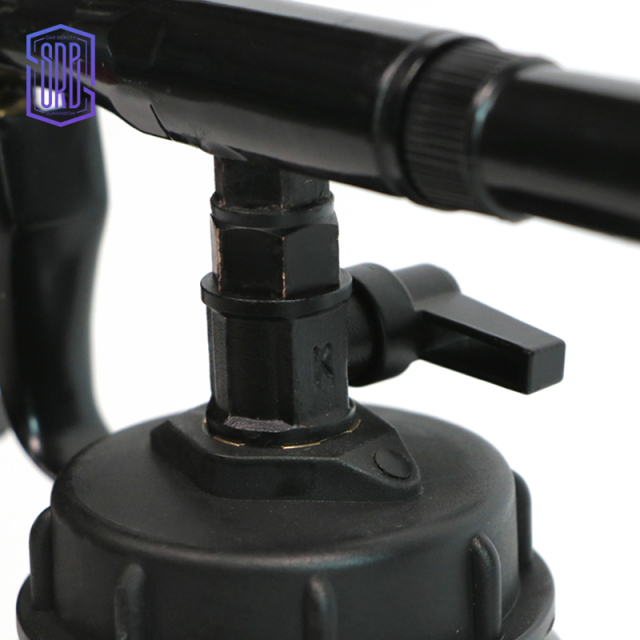
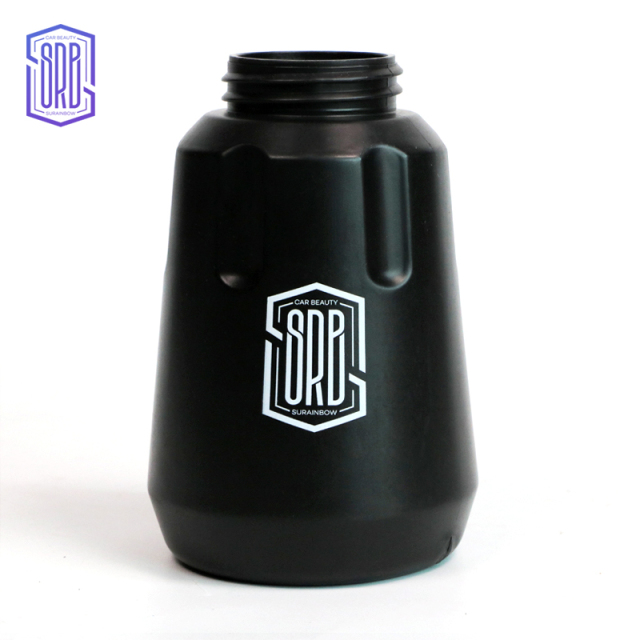
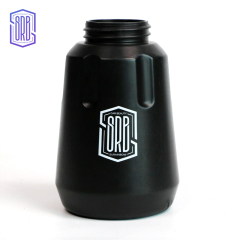
| Canister | Screw-on reservoir below the handle |
| Finish | Glossy black body with metal nozzles and fittings |
| Brand | SURAINBOW |
| Origin | Guangdong, China |
Sample & Packaging Approval
Before a bulk order, ask for a sample gun and run it in your own bay on the surfaces you actually clean. As car cleaning products manufacturers we would rather spend that step with you than ship a carton you have never handled, and any sample or courier charges are confirmed with your sales contact before dispatch.
Test the things that decide whether an operator keeps using it: trigger feel, whether the canister seats and seals without weeping, how each nozzle threads on, and the spray pattern on scrap fabric at your normal working distance.
Packaging has its own approval step. Label artwork, carton marks, the inner packing that protects each gun and the outer carton are proofed before production, so what arrives matches what your market expects.
If your market asks for test reports or declarations, raise it at this stage so the document set is agreed before the carton is closed rather than after it has landed.
Once approved, the sample, the written specification and the packaging proof become the reference for the bulk order. Keep your own copies: comparing a delivery against an agreed sample is faster and fairer than comparing it against a description.
Ordering & Delivery
| Selling unit | Single item |
| Minimum order | 12 pcs |
| Packing | 12 pcs per box |
| Single package size | 36 × 15.5 × 28 cm |
| Single gross weight | 0.96 kg |
| Availability | In stock and fast shipping |
| Brand | SURAINBOW |
| Origin | Guangdong, China |
| OEM and private label | Discussed with our team for your own brand and artwork |
| Payment terms | Confirmed on the quotation |
| Export documents | Confirmed per order to match your destination market |
| Shipping | Agreed by destination and order size |
After-Sales & Batch Traceability
- A batch you can trace. Every order can be tied to its production batch and a retained sample — the record set car cleaning products manufacturers normally hold for a tool like this. Tell us at quotation which records your business needs to keep.
- Report problems in the right window. Packaging damage, leakage or a short count within 7 days of receipt; a performance concern within 30 days. A quick report while the carton is still intact is far easier to resolve.
- Send the detail that makes a review possible. Order or sample reference, batch number, affected quantity, clear photos or video, and a description of how the gun was used, cleaned and stored.
- How a claim is reviewed. The batch is compared with the approved sample and the approved packaging proof. If the fault sits on our side, that comparison also shows what to change on the next run.
- Spare nozzles and brushes. Ask your sales contact about spare nozzle sets and brush attachments when you order, so a bay is not standing still while a worn part is replaced.
- Keep a reference carton. Retaining one carton and one nozzle set from each delivery makes it simple to compare a new batch and to show a carrier exactly how the goods were packed.
Scale & Supply Capability
SURAINBOW is run by Guangzhou Liangdian Automotive Supplies Co., Ltd., a factory-trade operation set up in Guangzhou in 2010 and now 50 people strong. Sixteen years in car care have given us a one-stop supply position: our own SURAINBOW lines are held in stock for fast shipping, and an associate factory with modern production equipment and an established quality management system keeps replenishment moving. We take OEM and ODM work and our R&D team develops to your specification. Buyers in the Middle East, the United States, Southeast Asia, Europe, the UK, Russia, Africa and Australia already order from us.
FAQ
Does the gun need a compressor to run?
Yes. It is air-driven: the compressed-air line connects to the fitting at the base of the handle and does the work a motor would do on an electric tool. That also makes it one of the cleaning tools for car interiors that is safe to use beside a wet vacuum, because there is no cable or battery in the working area. Start with the regulator low and open the top knob gradually.
How does this differ from the flexible-tube tornado gun?
This tornado cleaning gun has a rigid body, which keeps the nozzle steady and easy to aim on flat panels, cushions and door cards. A flexible-tube version follows ducts and deep crevices that a straight gun cannot reach. Many shops keep both — two cleaning tools for two different kinds of reach.
Which liquids can go in the canister?
Interior cleaners diluted to the ratio on their own label, plus clean water for the rinse pass. Thick gels and abrasive polishes do not atomise well and can block the nozzle. If you plan to run a strong solvent-based product, check that product's own guidance first and flush the gun thoroughly afterwards. Supplying the chemistry and the tool together is the practical advantage of buying from car cleaning chemical manufacturers rather than from a tool seller alone.
Can it be used on leather and delicate trim?
Yes, at low flow and with the brush attachment used lightly over stitching and perforations. Keep the nozzle moving and do not let the surface stay wet; follow with a microfibre wipe and let the trim dry naturally rather than with heat.
Can it be run from a mobile detailing van?
Yes, as long as the van carries a compressor and a regulator that holds a steady line, because the gun itself needs nothing beyond air and a filled canister. Keep a spare nozzle and a bottle of mixed cleaner on board and the interior stage can be finished on site instead of back at the unit.